 How to resolve AdBlock issue?
Recreation
- Details
- Written by: Cal Fire
effective Nov. 1.
Seasonal camping will remain closed throughout the wet season.
The forest will be open for day use only from sunrise to sunset by foot, bicycle and equestrian use regardless of weather conditions.
Forest roads will be subject to temporary closure pending wet weather conditions.
Cal Fire asks recreators to limit vehicle travel to improved rocked roads and avoid seasonal dirt roads when vehicle access is open.
These temporary closures are for public safety, environmental quality and to prevent long term closures from overuse when roads are saturated or snowed in.
OHV and off roading is strictly prohibited forestwide.
Forest staff will be committed to forest management duties such as maintaining recreational facilities, prescribed burning, road work, fuels reduction and timber operations.
Firewood and rock permits are sold by appointment only and are $20 per permit, cash or check only.
Cal Fire encourages forest visitors to plan ahead before arriving to the forest and avoid recreating during inclement weather conditions.
Call the Boggs Mountain Demonstration State Forest office at 707-928-4378 or visit them online at www.fire.ca.gov for more information.
- Details
- Written by: Elizabeth Larson
Come see what autumn is bringing to the park.
The October nature walk will be led by Henry Bornstein, a volunteer State Parks docent and a Certified California Naturalist.
The walk will begin at 8:30 a.m. and will last between one and a half and two hours.
There is no charge for the guided nature walks and parking is free for those attending.
No pets are permitted on the park trails. The route on Saturday will depend on the condition of the trails.
Bring binoculars and meet in the parking lot at 8:15 a.m. for time to experience the early morning wildlife that can be found in the Ranch House and Barn complex yard — the walk will begin at 8:30 a.m.
Everyone is invited to take a walk in the park and experience the benefits of getting out into nature for some healthy exercise.
Anderson Marsh State Historic Park is located on Hwy 53, between Lower Lake and Clearlake.
- Details
- Written by: Elizabeth Larson
Free Fishing Days are a great opportunity to enjoy one of California’s most popular pastimes and to get introduced to fishing at no cost.
Those interested in fishing in California’s lakes, streams and rivers can find information about inland fishing locations and species on the CDFW website. Information is also available about year-round free fishing opportunities found on specific piers, jetties and breakwaters along the coast, to help with planning pier fishing adventures.
Other helpful tools for anglers include the fish planting schedule, fishing guide and various Recruit, Retain, Reactivate Program resources.
Virtual offerings are also available from CDFW’s Fishing in the City program, which focuses on teaching Californians how and where to fish in metropolitan areas. General information about the Fishing in the City program can be found on the CDFW website.
Children 15 and younger can fish for free every day of the year in California, but Free Fishing Days offer a time when families and friends can experience the hobby together. As a licensed angler, utilize Free Fishing Days as an opportunity to introduce non-angling friends to fishing and the outdoors.
All fishing regulations, such as bag and size limits, gear restrictions, report card requirements, fishing hours and stream closures remain in effect. CDFW encourages potential anglers to check rules and regulations for each water they plan to fish.
CDFW hopes more Californians get “hooked” on fishing. If that happens, be sure to purchase an annual resident sport fishing license.
Beginning in 2023, annual sport fishing licenses are valid for a full 365-days from the date of purchase. The revenue generated from license sales helps conserve fish populations and habitats while supporting California's longstanding angling opportunities for future generations.
- Details
- Written by: Elizabeth Larson
The California Department of Fish and Wildlife announced that as of 12:01 a.m. Monday, Aug. 21, the 50 fathom Rockfish Conservation Area, or RCA, boundary line for the Northern Groundfish Management Area, from the California/Oregon state line to Cape Mendocino, will take effect.
This will be the first “offshore only” fishery in the Northern Groundfish Management Area, or GMA.
In the Northern GMA, recreational boat-based groundfish fishing will only be allowed seaward (away from land) of the boundary line.
The 50-fathom RCA boundary line is defined by straight lines connecting a set of waypoints as adopted in federal regulations (50 CFR Part 660, Subpart G).
With the exception of sablefish and flatfish as described below, only shelf rockfish, slope rockfish and lingcod may be taken or possessed. It shall be unlawful to take or possess nearshore species (shallow and deeper nearshore rockfish, cabezon and greenlings) in the Northern GMA.
Fishing for and retention of sablefish and flatfish are not affected by this action and may be targeted, taken and possessed year-round in all depths.
However, no gear may be deployed shoreward of the 50-fathom RCA boundary line when shelf rockfish, slope rockfish or lingcod are possessed onboard the vessel.
Vessels may transit shoreward of the 50-fathom RCA boundary line with shelf rockfish, slope rockfish or lingcod in possession if no gear is deployed.
Additionally, vessels fishing in the adjacent Mendocino GMA and transiting back to the Northern GMA must adhere to the “offshore only” provisions effective in the Northern GMA and may not return with nearshore species aboard. Changes in retention allowances described here for boat-based modes do not apply to shore-based anglers or divers.
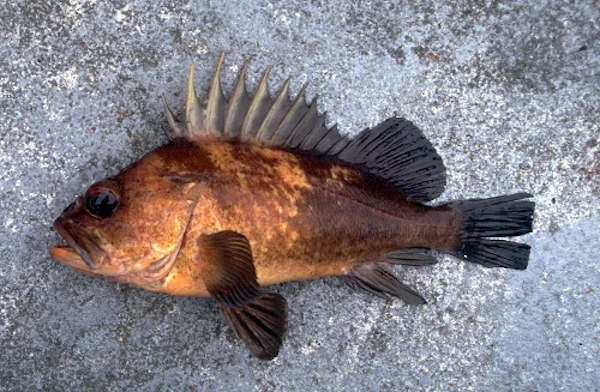
CDFW is carefully monitoring the harvest of quillback rockfish from both the recreational and commercial fisheries throughout the state.
The quillback rockfish harvest limit specified in federal regulation for 2023 has been exceeded in the Northern GMA, and additional in-season action authorized by Title 14, Section 27.20 (e) to adjust the fishing depth is necessary to prevent further overage.
CDFW took in-season action on Aug. 7 to prohibit retention of quillback rockfish, the first in what is likely to be a series of steps to reduce the total impacts to quillback rockfish.
CDFW anticipates that additional action(s) may be needed for this and other GMAs in the remainder of 2023 and in 2024, in response to the most recent quillback rockfish stock assessment indicating the population is in severe decline.
CDFW urges anglers to use best fishing practices to reduce impacts to quillback rockfish and other prohibited groundfish species. These include reducing mortality when releasing fish by utilizing a descending device and relocating to different fishing grounds or switching targets if quillback rockfish or other prohibited species are encountered.
CDFW recommends reviewing the Summary of Recreational Groundfish Fishing Regulations page before each trip to ensure anglers are up to date on the most recent groundfish regulations.
For information on groundfish visit CDFW’s Marine Region Groundfish page.
Pursuant to California Code of Regulations Title 14, section 27.20(e), when federal harvest limits are exceeded or projected to be exceeded, CDFW has authority to make in-season changes, including adjustments to bag and sub-bag limits, seasons and depths.