In most American families led by couples, both parents are in the workforce. Almost three-quarters of American mothers with children under 18 work. At the same time, nearly 1 in 4 U.S. children are being raised by single moms.
Around the world, however, most employed women automatically get paid maternity leave. And in most wealthy countries, they also have access to affordable child care.
These holes in the U.S. safety net are a problem for many reasons, including one I’ve been researching with my colleagues for years: Paid parental leave and child care help women stay in the workforce and earn higher wages over time. This lack of parental leave and child care may explain why the U.S. is no longer a leader in women’s workforce participation.
Maternity leave
The U.S. is one of a handful of countries worldwide that doesn’t mandate paid maternity leave. The others are Papua New Guinea and some small Pacific island nations.
Paid maternity leave, which typically lasts at least three months, needs to be designed thoughtfully. When women can and do take 15 months or more off after having a baby, as they may in a few countries, long leaves can limit mothers’ work experience and lead to discrimination.
Denmark offers what I think is a strong example of a national policy.
There, moms get almost 22 weeks of paid maternity leave and dads get two weeks of paid paternity leave. On top of that, mothers can take another 19 weeks and fathers can take another 11 weeks of paid parental leave. This policy, which includes additional flexibility, grants parents both the time and resources necessary to care for children, without “mommy tracking” mothers.
Child care
In many wealthy countries, child care and preschool are considered a mainstay of the educational system. But in the U.S., only about two-thirds of all children between the ages of 3 and 6 are getting publicly supported child care of any kind, including kindergarten, versus nearly all of the kids that age in France.
High-quality early childhood education programs are associated with many excellent outcomes for children from lower-income families, including higher rates of educational attainment, employment and wages.
In other words, when governments invest in child care and maternity leave, it fosters a more productive, healthy and creative workforce.
This article, originally published April 19, 2018, was updated on May 10, 2024, with more recent data.
LAKE COUNTY, Calif. — In an effort to help North Coast residents kickoff National Wildfire Preparedness Month, Senate President pro Tempore Mike McGuire (D-North Coast) hosted his annual virtual Wildfire Preparedness and Prevention Town Hall with Cal Fire Director/Fire Chief Joe Tyler on Wednesday.
During the Town Hall, Senate Leader McGuire and Chief Tyler discussed how communities can best prepare for wildfire season, with summer approaching and temperatures on the rise.
The state of California has made record investments during the past several years to hire thousands of additional firefighters, expand the ground and aerial attack firefighting fleets, modernize emergency alert policies, manage changing landscapes through dead and dying tree and vegetation removal, and create new fire breaks surrounding communities.
“As fire season becomes longer and more extreme, we are taking big, bold action to better prevent and respond to wildfires,” Pro Tem McGuire said. “California is on the frontlines of our climate crisis and we are making historic investments to increase our firefighting resources and capabilities in every corner of the state. We have seen our communities devastated by wildfires over the years – we’ve seen lives lost, homes burned to the ground, and beloved communities forever changed. California is committed to ensuring lasting change through new fire prevention projects and that our communities are more equipped and prepared than ever before.”
Over the past eight years, the state has expanded Cal Fire ranks from 6,700 to 12,000 positions, including positioning a few hundred new Cal Fire and county firefighters in the North Bay and North Coast, and California will hire an additional 1,000 full-time Cal Fire firefighters over the next few years.
California also has expanded training facilities to bring on new firefighters and formerly incarcerated residents to enter the fire service, and expanded the number of new firefighting planes and helicopters.
And just last year, Pro Tem McGuire secured funding for new fire trucks, fire training facilities and equipment in all corners of the North Bay and North Coast.
In recent years, California also has treated more than 545,000 acres of California forest lands to make them more fire safe and resilient, treated 96,500 acres of wildlands with prescribed burns, and invested millions of dollars to deploy wildfire detection cameras to areas most under threat of fire danger, which aids in response to pinpointed incident locations.
“It’s never too early to start preparing for wildfire season in California,” said Cal Fire Director/Fire Chief Joe Tyler. “By taking steps now to harden homes and create defensible space, Californians can dramatically reduce their risk of fire damage. At Cal Fire, we are deploying firefighting resources throughout the state to keep families and communities safe this upcoming fire season.”
With more than 25 percent of Californians living in areas considered at risk of very high or extreme fire threat, the need to get fire-ready is more important than ever.
Click here to see tips from Cal Fire on hardening your home, creating a defensible space and more.
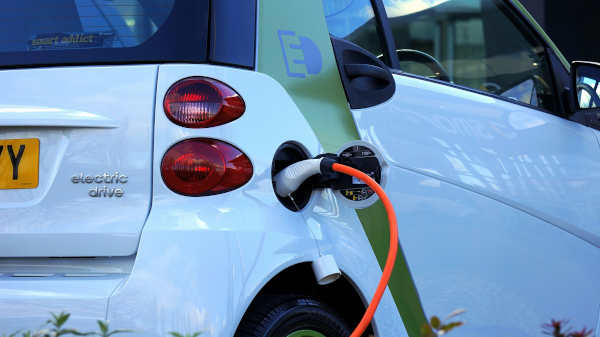
Electrification of passenger vehicles in the Bay Area is slowly driving down CO2 emissions, though not enough to meet the state's ambitious climate goals. Photo credit: Mike Bird via Pexels. An extensive CO2 monitoring network set up around the San Francisco Bay Area by an atmospheric chemist from the University of California, Berkeley, has recorded the first evidence that the adoption of electric vehicles is measurably lowering the area's carbon emissions.
The network of sensors, most of them in the East Bay, is the brainchild of Ronald Cohen, UC Berkeley professor of chemistry, who envisions inexpensive, publicly funded pollution and carbon dioxide monitors widely distributed around urban areas to pinpoint emission sources and the neighborhoods most affected.
An estimated 70% of global CO2 emissions come from cities, yet few urban areas have granular data about where those emissions originate.
In 2012, Cohen began setting up a Bay Area sensing network that has now grown to more than 80 stations, including seven in San Francisco, that stretches from Sonoma County through Vallejo and down to San Leandro.
Between 2018 and 2022, 57 of the sensors in the Berkeley Environmental Air Quality and CO2 Network, or BEACO2N, recorded a small but steady decrease in CO2 emissions — about 1.8% annually — that translates to a 2.6% yearly drop in vehicle emission rates.
Looking at California data for electric vehicle adoption — which is very high in the Bay Area — Cohen and graduate student Naomi Asimow concluded that the decrease was due to passenger vehicle electrification.
“That's 2.6% less CO2 per mile driven each year,” said Asimow, who is in the Department of Earth and Planetary Science.
The study, Cohen said, shows the utility of an urban network for monitoring and managing federal, state and city mandates for CO2 reduction.
“We show from atmospheric measurements that adoption of electric vehicles is working, that it's having the intended effect on CO2 emissions,” Cohen said.
This good news is tempered by the fact that, to meet California and Bay Area carbon reduction goals, the yearly decrease needs to be much greater.
“The state of California has set this goal for net zero emissions by 2045, and the goal is for 85% of the reduction to come from actual reduction of emissions, as opposed to direct removal of CO2 from the atmosphere. What we report is around half as fast as we need to go to get to net zero emissions by 2045,” Asimow said.
“We're at 1.8% per year today. To get to the state's goal, we would need 3.7%,” Cohen added. “So it's not crazy higher than where we are; we're almost half of the way to that goal. But we have to sustain that for another 20 years.”
The results emphasize the urgent need for accelerated actions to reduce CO2 in order to achieve the ambitious zero emission targets that cities seek, he said.
Asimow, Cohen and their colleagues published their findings online today, April 4, in the journal Environmental Science & Technology.
How to monitor climate goals
One impetus for the study was to see whether the BEACO2N network could detect any downward trend in vehicle emissions since the state set goals for greenhouse gas reduction and the electric vehicle market has blossomed.
“We were curious if our data would show us our progress toward meeting California's emissions goals,” Asimow said.
Typically, CO2 emissions are estimated from known sources of carbon: how much gas is used in heating and, for vehicles, the fuel efficiency of registered vehicles in an area and overall fuel consumption.
Asimow and Cohen noted that this "bottom-up" method for estimating carbon dioxide emissions did not predict the small but significant downward trend in CO2 emissions.
The UC Berkeley team's estimates combined direct CO2 measurements with meteorological data to calculate ground-level emissions — an approach using atmospheric observations that did pick up the modest downturn in CO2 levels.
The researchers employed a Bayesian statistical analysis that started with estimates based on economic data, but they revised them based on their network's measured CO2 concentrations and a meteorological model to predict where the emissions originated.
Cohen argues that his sensors are inexpensive enough — less than $10,000 per sensor, versus 20 times as much for pollution monitoring stations operated by the Environmental Protection Agency — that major cities could afford to install a network to get a more granular view of unhealthy areas and sources of pollution.
The network sensors also measure five critical air pollutants: carbon monoxide, nitrous oxides (NO and NO2), ozone and particulates (PM 2.5).
Los Angeles, California; Providence, Rhode Island; and Glasgow, Scotland, have already adopted Cohen's sensors to create their own pollution monitoring networks.
"We show that you can make observations and measure changes due to policies of all kinds in a cost-effective and relatively rapid way," Cohen said. "The network involves about half a million dollars' worth of equipment — a one-time investment — and a person per year thinking about it. One of our goals is to demonstrate, both on the CO2 and the air quality side of what we do, that this is cost-effective and translatable and easily accessible to the public in a way that nothing else is."
In the future, satellites could monitor carbon dioxide levels across wide areas and with more granularity, but those satellites are not yet available, Cohen said.
"The optimal solution will be some combination of space-based assets and ground-based measurements," he said.
Asimow was supported by a National Science Foundation Graduate Research Fellowship (1752814). Former Miller Postdoctoral Fellow Alexander Turner, now at the University of Washington in Seattle, also contributed to the research.
Robert Sanders writes for the UC Berkeley News Center.
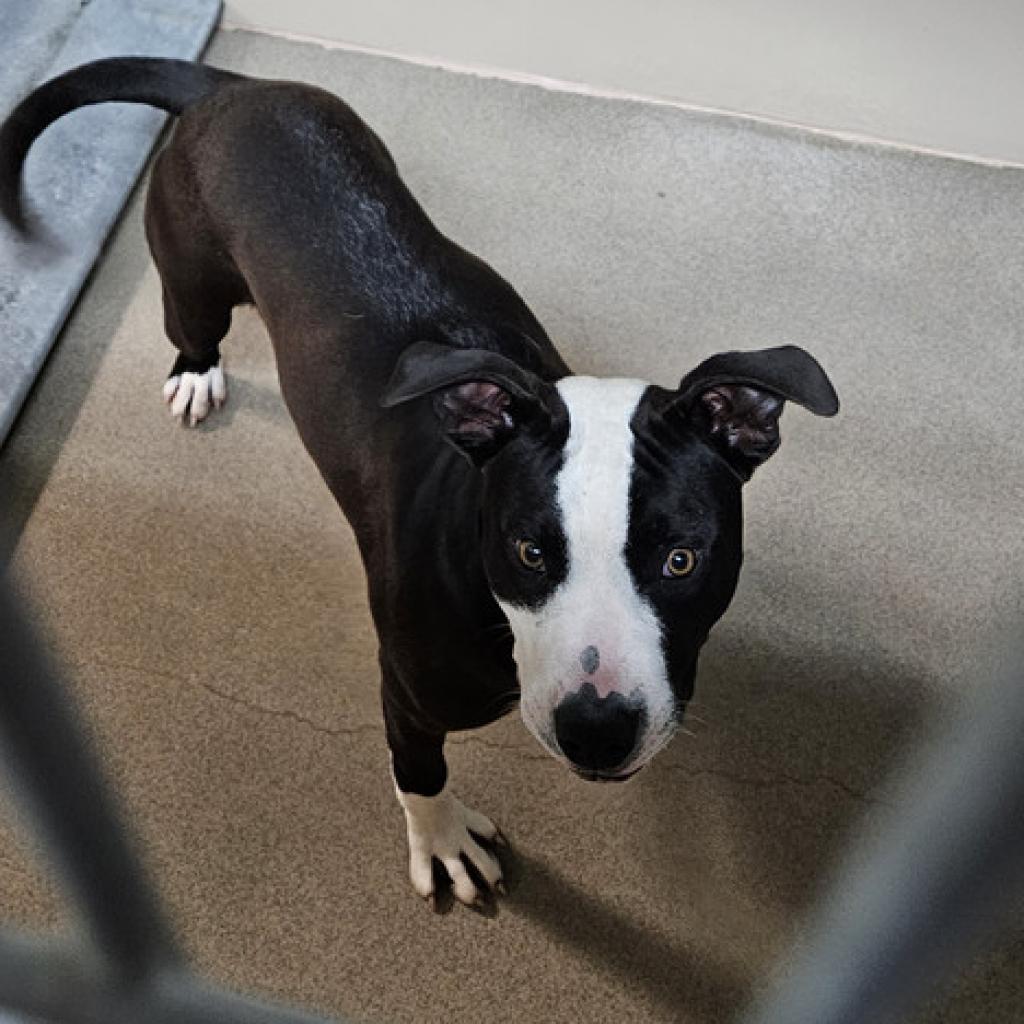
LAKE COUNTY, Calif. — Lake County Animal Care and Control has many dogs waiting for new homes this week.
Dogs available for adoption this week include mixes of Alaskan husky, Anatolian shepherd, Chesapeake Bay retriever, Chihuahua, German shepherd, hound, Labrador Retriever, pit bull terrier, Rottweiler and terrier.
Dogs that are adopted from Lake County Animal Care and Control are either neutered or spayed, microchipped and, if old enough, given a rabies shot and county license before being released to their new owner. License fees do not apply to residents of the cities of Lakeport or Clearlake.
Those dogs and the others shown on this page at the Lake County Animal Care and Control shelter have been cleared for adoption.
Call Lake County Animal Care and Control at 707-263-0278 or visit the shelter online for information on visiting or adopting.
The shelter is located at 4949 Helbush in Lakeport.
Email Elizabeth Larson at This email address is being protected from spambots. You need JavaScript enabled to view it.. Follow her on Twitter, @ERLarson, or Lake County News, @LakeCoNews.
 How to resolve AdBlock issue?