How to resolve AdBlock issue?
Refresh this page
How to resolve AdBlock issue?
Refresh this page
Lake County News,California
  • Home
    • Registration Form
  • News
    • Community
      • Obituaries
      • Letters
      • Commentary
    • Education
    • Veterans
    • Police Logs
    • Business
    • Recreation
    • Health
    • Religion
    • Legals
    • Arts & Life
    • Regional
  • Calendar
  • Contact us
    • FAQs
    • Phones, E-Mail
    • Subscribe
  • Advertise Here
  • Login
How to resolve AdBlock issue?
Refresh this page
How to resolve AdBlock issue?
Refresh this page

News

California Highway Patrol swears in 106 new CHP officers

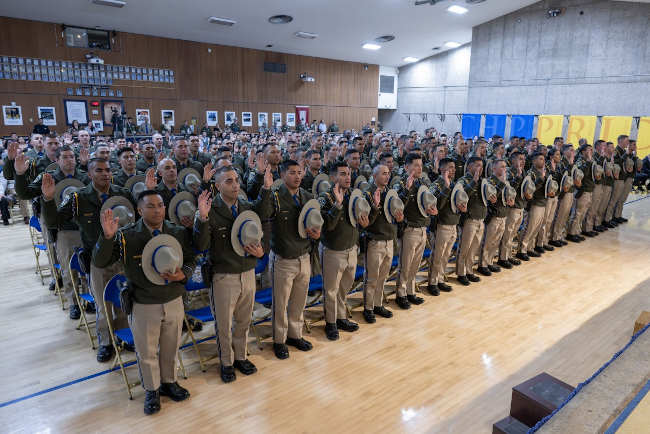
The 106 members of the California Highway Patrol Academy’s latest cadet class are sworn in at their graduation ceremony on Friday, May 10, 2024. Photos courtesy of the CHP.

The newest members of the California Highway Patrol were sworn in on Friday during a graduation ceremony at the CHP Academy in West Sacramento.

The 106 officers are part of the CHP’s multiyear recruiting campaign to fill 1,000 vacant officer positions by hiring qualified individuals from California’s diverse communities.

“These men and women have chosen to dedicate themselves to a career in public service. They have completed several months of rigorous training at the CHP Academy to prepare them to serve the people of California,” said CHP Commissioner Sean Duryee. “While this job is one of the most difficult things they will do in their entire life, it is also the most rewarding thing that they will do, and we are proud to have them as part of the CHP family.”

The swearing-in ceremony for the new officers marks the completion of a challenging 26-week journey at the CHP Academy.

They will report to one of the 103 CHP Area offices throughout the state to begin serving the people of California.

At the CHP Academy, cadet training starts with nobility in policing, leadership, professionalism and ethics, and cultural diversity.

Additionally, cadets receive instruction on mental illness response and crisis intervention techniques.

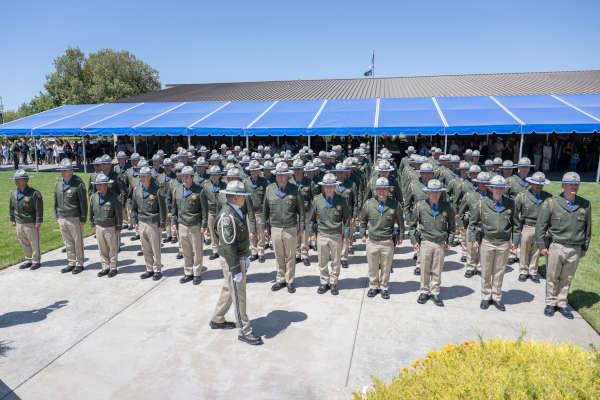
The CHP Academy graduating cadets at their graduation ceremony on Friday, May 10, 2024. Photos courtesy of the CHP.


Training also covers vehicle patrol, crash investigation, first aid, and the apprehension of suspected violators, including those who drive under the influence.

Cadets also receive training in traffic control, report writing, recovery of stolen vehicles, assisting the motoring public, issuing citations, emergency scene management and various codes, including the California Vehicle Code, Penal Code, and Health and Safety Code.

The CHP has seen an outpouring interest in joining the ranks since the onset of a multiyear recruitment campaign in June 2022.

In the first four months of 2024, the CHP received more than 7,600 cadet applications — a more than 100% increase from the same period in 2022.

To accommodate the surge of interest, the CHP has been holding three Academy classes simultaneously for the first time in the Department’s history.

The next cadet graduation from the CHP Academy is scheduled for July 12.

For more information about a life-changing career with the CHP, visit the agency’s website and register for our online hiring seminar at 6:30 p.m. on May 22.


The CHP Academy graduating cadets at their graduation ceremony on Friday, May 10, 2024. Photos courtesy of the CHP.
Details
Written by: Lake County News reports
Published: 11 May 2024

Governor unveils revised state budget to address deficit


Gov. Gavin Newsom on Friday released a May Revision proposal for the 2024-25 fiscal year that his office said ensures the budget is balanced over the next two fiscal years by tightening the state’s belt and stabilizing spending following the tumultuous COVID-19 pandemic, all while preserving key ongoing investments.

Under the governor’s proposal, the state is projected to achieve a positive operating reserve balance not only in this budget year but also in the next.

This “budget year, plus one” proposal is designed to bring longer-term stability to state finances without delay and create an operating surplus in the 2025-26 budget year.

In the years leading up to this May Revision, Newsom’s office said the administration recognized the threats of an uncertain stock market and federal tax deadline delays — setting aside $38 billion in reserves that could be utilized for shortfalls. That has put California in a strong position to maintain fiscal stability.

“Even when revenues were booming, we were preparing for possible downturns by investing in reserves and paying down debts — that’s put us in a position to close budget gaps while protecting core services that Californians depend on,” Newsom said. “Without raising taxes on Californians, we’re delivering a balanced budget over two years that continues the progress we’ve fought so hard to achieve, from getting folks off the streets to addressing the climate crisis to keeping our communities safe.”

Below are the key takeaways from Governor Newsom's proposed budget:

A BALANCED BUDGET OVER TWO YEARS. The governor is solving two years of budget problems in a single budget, tightening the state’s belt to get the budget back to normal after the tumultuous years of the COVID-19 pandemic. By addressing the shortfall for this budget year — and next year — the governor is eliminating the 2024-25 deficit and eliminating a projected deficit for the 2025-26 budget year that is $27.6 billion (after taking an early budget action) and $28.4 billion respectively.

CUTTING SPENDING, MAKING GOVERNMENT LEANER. Gov. Newsom’s revised balanced state budget cuts one-time spending by $19.1 billion and ongoing spending by $13.7 billion through 2025-26. This includes a nearly 8% cut to state operations and a targeted elimination of 10,000 unfilled state positions, improving government efficiency and reducing non-essential spending — without raising taxes on individuals or proposing state worker furloughs. The budget makes the California government more efficient, leaner, and modern — saving costs by streamlining procurement, cutting bureaucratic red tape, and reducing redundancies.

PRESERVING CORE SERVICES & SAFETY NETS. The budget maintains service levels for many key housing, food, health care, and other assistance programs that Californians rely on while addressing the deficit by pausing the expansion of certain programs and decreasing numerous recent one-time and ongoing investments.

NO NEW TAXES & MORE RAINY DAY SAVINGS. Gov. Newsom is balancing the budget by getting state spending under control — cutting costs, not proposing new taxes on hardworking Californians and small businesses — and reducing the reliance on the state’s “Rainy Day” reserves this year.

HOW WE GOT HERE: California's budget shortfall is rooted in two separate but related developments over the past two years.

First, the state's revenue, heavily reliant on personal income taxes including capital gains, surged in 2021 due to a robust stock market but plummeted in 2022 following a market downturn. While the market bounced back by late 2023, the state continued to collect less tax revenue than projected in part due to something called "capital loss carryover," which allows losses from previous years to reduce how much an individual is taxed.

Second, the IRS extended the tax filing deadline for most California taxpayers in 2023 following severe winter storms, delaying the revelation of reduced tax receipts. When these receipts were able to eventually be processed, they were 22% below expectations. Without the filing delay, the revenue drop would have been incorporated into last year's budget and the shortfall this year would be significantly smaller.

CALIFORNIA’S ECONOMY REMAINS STRONG: The Governor’s Office said his revised balanced budget sets the state up for continued economic success. California’s economy remains the 5th largest economy in the world and for the first time in years, the state’s population is increasing and tourism spending recently experienced a record high. California is No. #1 in the nation for new business starts, No. 1 for access to venture capital funding, and the #1 state for manufacturing, high-tech, and agriculture.

Additional details on the May Revise proposal can be found in this fact sheet and at www.ebudget.ca.gov.
Details
Written by: LAKE COUNTY NEWS REPORTS
Published: 11 May 2024

Space News: Venus is losing water faster than previously thought – here’s what that could mean for the early planet’s habitability


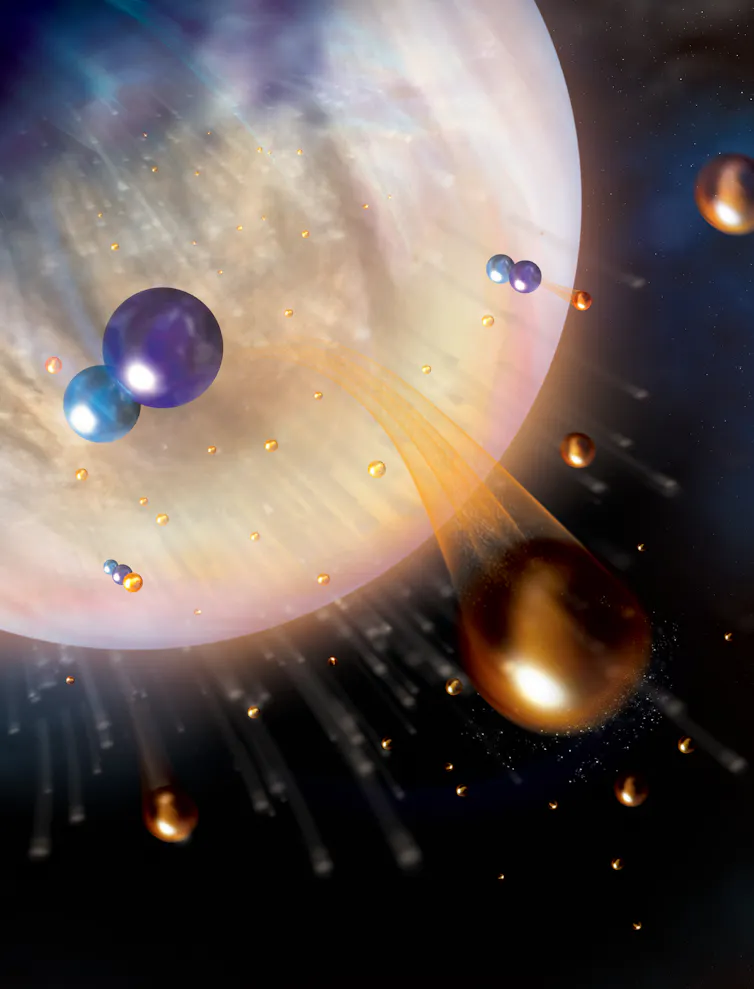
An artist’s illustration of hydrogen disappearing from Venus. Aurore Simonnet/ Laboratory for Atmospheric and Space Physics/ University of Colorado Boulder

Today, the atmosphere of our neighbor planet Venus is as hot as a pizza oven and drier than the driest desert on Earth – but it wasn’t always that way.

Billions of years ago, Venus had as much water as Earth does today. If that water was ever liquid, Venus may have once been habitable.

Over time, that water has nearly all been lost. Figuring out how, when and why Venus lost its water helps planetary scientists like me understand what makes a planet habitable — or what can make a habitable planet transform into an uninhabitable world.

Venus, with clouds visible on its surface, photographed using UV light.
Venus, Earth’s solar system neighbor. JAXA/ISAS/DARTS/Kevin M. Gill, CC BY

Scientists have theories explaining why most of that water disappeared, but more water has disappeared than they predicted.

In a May 2024 study, my colleagues and I revealed a new water removal process that has gone unnoticed for decades, but could explain this water loss mystery.

Energy balance and early loss of water

The solar system has a habitable zone – a narrow ring around the Sun in which planets can have liquid water on their surface. Earth is in the middle, Mars is outside on the too-cold side, and Venus is outside on the too-hot side. Where a planet sits on this habitability spectrum depends on how much energy the planet gets from the Sun, as well as how much energy the planet radiates away.

The theory of how most of Venus’ water loss occurred is tied to this energy balance. On early Venus, sunlight broke up water in its atmosphere into hydrogen and oxygen. Atmospheric hydrogen heats up a planet — like having too many blankets on the bed in summer.

When the planet gets too hot, it throws off the blanket: the hydrogen escapes in a flow out to space, a process called hydrodynamic escape. This process removed one of the key ingredients for water from Venus. It’s not known exactly when this process occurred, but it was likely within the first billion years or so.

Hydrodynamic escape stopped after most hydrogen was removed, but a little bit of hydrogen was left behind. It’s like dumping out a water bottle – there will still be a few drops left at the bottom. These leftover drops can’t escape in the same way. There must be some other process still at work on Venus that continues to remove hydrogen.

Little reactions can make a big difference

Our new study reveals that an overlooked chemical reaction in Venus’ atmosphere can produce enough escaping hydrogen to close the gap between the expected and observed water loss.

Here’s how it works. In the atmosphere, gaseous HCO⁺ molecules, which are made up of one atom each of hydrogen, carbon and oxygen and have a positive charge, combine with negatively charged electrons, since opposites attract.

But when the HCO⁺ and the electrons react, the HCO⁺ breaks up into a neutral carbon monoxide molecule, CO, and a hydrogen atom, H. This process energizes the hydrogen atom, which can then exceed the planet’s escape velocity and escape to space. The whole reaction is called HCO⁺ dissociative recombination, but we like to call it DR for short.

Water is the original source of hydrogen on Venus, so DR effectively dries out the planet. DR has likely happened throughout the history of Venus, and our work shows it probably still continues into the present day. It doubles the amount of hydrogen escape previously calculated by planetary scientists, upending our understanding of present-day hydrogen escape on Venus.

Understanding Venus with data, models and Mars

To study DR on Venus we used both computer modeling and data analysis.

The modeling actually began as a Mars project. My Ph.D. research involved exploring what sort of conditions made planets habitable for life. Mars also used to have water, though less than Venus, and also lost most of it to space.

To understand martian hydrogen escape, I developed a computational model of the Mars atmosphere that simulates Mars’ atmospheric chemistry. Despite being very different planets, Mars and Venus actually have similar upper atmospheres, so my colleagues and I were able to extend the model to Venus.

We found that HCO⁺ dissociative recombination produces lots of escaping hydrogen in both planets’ atmospheres, which agreed with measurements taken by the Mars Atmosphere and Volatile EvolutioN, or MAVEN, mission, a satellite orbiting Mars.
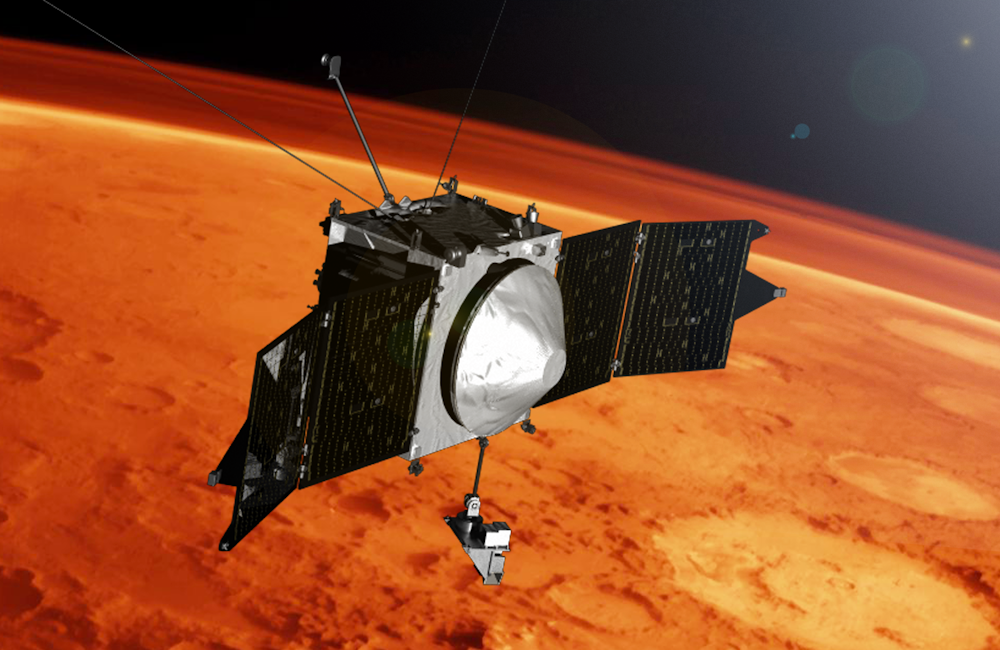
A spacecraft that looks like a metal box with two solar panels attached on either side and a small limb extending downward.
An illustration of the MAVEN mission orbiting Mars. NASA’s Goddard Space Flight Center

Having data collected in Venus’ atmosphere to back up the model would be valuable, but previous missions to Venus haven’t measured HCO⁺ – not because it’s not there, but because they weren’t designed to detect it. They did, however, measure the reactants that produce HCO⁺ in Venus’ atmosphere.

By analyzing measurements made by Pioneer Venus, a combination orbiter and probe mission that studied Venus from 1978-1992, and using our knowledge of chemistry, we demonstrated that HCO⁺ should be present in the atmosphere in similar amounts to our model.

Follow the water

Our work has filled in a piece of the puzzle of how water is lost from planets, which affects how habitable a planet is for life. We’ve learned that water loss happens not just in one fell swoop, but over time through a combination of methods.

Faster hydrogen loss today via DR means that less time is required overall to remove the remaining water from Venus. This means that if oceans were ever present on early Venus, they could have been present for longer than scientists thought before water loss through hydrodynamic escape and DR started. This would provide more time for possible life to arise. Our results don’t mean oceans or life were definitely present, though – answering that question will require lots more science over many years.

There is also a need for new Venus missions and observations. Future Venus missions will provide some atmospheric measurements, but they won’t focus on the upper atmosphere where most HCO⁺ dissociative recombination takes place. A future Venus upper atmosphere mission, similar to the MAVEN mission at Mars, could vastly expand everyone’s knowledge of how terrestrial planets’ atmospheres form and evolve over time.

With the technological advancements of recent decades and a flourishing new interest in Venus, now is an excellent time to turn our eyes toward Earth’s sister planet.The Conversation

Eryn Cangi, Research Scientist in Astrophysical & Planetary Sciences, University of Colorado Boulder

This article is republished from The Conversation under a Creative Commons license. Read the original article.

Details
Written by: Eryn Cangi, University of Colorado Boulder
Published: 11 May 2024

Lakeport Memorial Day Parade set for May 25

One of the entries from the Lakeport Memorial Day Parade in May 2023. Photo courtesy of the Lake County Chamber of Commerce.

LAKEPORT, Calif. — A favorite community event is set to roll through downtown Lakeport this month.

The Lake County Chamber of Commerce, in partnership with the volunteer organization known as Ladies of the Lake, announced the Lakeport Memorial Day Parade, continuing a cherished tradition that has delighted families for decades.

The parade is scheduled to take place on Saturday, May 25, starting at 11 a.m. and will wind its way down Main Street, Lakeport.

The Lakeport Memorial Day Parade holds a special place in the hearts of residents and visitors alike, serving as a poignant tribute to the brave men and women who have made the ultimate sacrifice in service to our nation.

It also provides an opportunity for the community to come together in celebration and remembrance.

“We are honored to once again coordinate the Lakeport Memorial Day Parade, now with the help of a group of amazing volunteers known as Ladies of the Lake,” said Laura McAndrews Sammel, CEO of the Lake County Chamber of Commerce. “This event not only pays tribute to our fallen heroes but also fosters a sense of unity and camaraderie within our community. It's a time for families to come together, enjoy the festivities, and reflect on the true meaning of Memorial Day.”

The parade welcomes participants from all walks of life, including community groups, businesses, schools, individuals, and equestrians.

Those interested in participating in the parade are encouraged to submit an application by visiting www.tinyurl.com/lakeportparade24.

The deadline for applications is May 15.

“We invite everyone to join us for this beloved tradition,” said Sammel. “Whether you're marching in the parade, cheering from the sidelines, or simply enjoying the day with loved ones, the Lakeport Memorial Day Parade is sure to be a memorable experience for all. We are delighted to work with the Ladies of the Lake — their dedication to a thriving Lakeport is contagious.”

For more information about the Lakeport Memorial Day Parade and sponsorship opportunities, please visit www.lakecochamber.com or contact the Lake County Chamber of Commerce at 707-263-5092 or This email address is being protected from spambots. You need JavaScript enabled to view it..
Details
Written by: Lake County News reports
Published: 10 May 2024
  1. California regulators approve new electricity rate structure to lower bills amid soaring rate increases
  2. Clearlake Animal Control: ‘Austin,’ ‘Pablo’ and ‘Layla’
  3. Pet-owners: watch out for foxtail seed pods that can harm your dog or cat this summer

Subcategories

Community

  • 679
  • 680
  • 681
  • 682
  • 683
  • 684
  • 685
  • 686
  • 687
  • 688
How to resolve AdBlock issue?
Refresh this page
Copyright © 2026 Lake County News,California. All Rights Reserved.