How to resolve AdBlock issue?
Refresh this page
How to resolve AdBlock issue?
Refresh this page
Lake County News,California
  • Home
    • Registration Form
  • News
    • Community
      • Obituaries
      • Letters
      • Commentary
    • Education
    • Veterans
    • Police Logs
    • Business
    • Recreation
    • Health
    • Religion
    • Legals
    • Arts & Life
    • Regional
  • Calendar
  • Contact us
    • FAQs
    • Phones, E-Mail
    • Subscribe
  • Advertise Here
  • Login
How to resolve AdBlock issue?
Refresh this page
How to resolve AdBlock issue?
Refresh this page

News

May is Calfresh Awareness Month

LAKE COUNTY, Calif. — May is “CalFresh Awareness Month,” a month of public outreach to increase awareness and enrollment in the CalFresh program.

CalFresh, known federally as the Supplemental Nutrition Assistance Program or SNAP, provides monthly food benefits to individuals and families with low-income and provides economic benefits to communities.

EBT is the automated system that allows CalFresh recipients to use a card, much like a debit card, to access their food benefits for purchases at grocers.

There are 17,169 individuals in Lake County currently receiving CalFresh benefits totaling $3.08 million per month, $32.73 million in benefits over the course of the last year.

Every $1 in CalFresh generates $1.79 in local economic activity.

Many individuals and families who need food are unaware that they may qualify for assistance.

For instance, a family of four earning up to $4,626 gross per month may qualify for up to $939 in CalFresh benefits each month.

Spending benefits locally helps our local economy. Through the Market Match program, you can double your CalFresh spending power at our local farmers markets, that’s like shopping for 50% off at farmers markets.

See the farmers market host for additional details, or visit www.marketmatch.org.

The application process is confidential. Your county has 30 days to decide if you are eligible. Households with very low income and resources may get benefits within three days.

Get help putting healthy, nutritious food on the table. Go to www.benefitscal.com to apply now, or call 707-995-4200 (TTY 711) Monday through Friday, 8 a.m. to 5 p.m. for information on other ways to apply.
Details
Written by: Lake County News reports
Published: 08 May 2024

Lung cancer is the deadliest of all cancers, and screening could save many lives − if more people could access it


Lung cancer screening can save lives, but it isn’t accessible to everyone at risk of developing the disease. sudok1/iStock via Getty Images Plus

Many medical organizations have been recommending lung cancer screening for decades for those at high risk of developing the disease.

But in 2022, less than 6% of people in the U.S. eligible for screening actually got screened. Compared with other common cancer screenings, lung cancer screening rates fall terribly behind. For comparison, the screening rate in 2021 for colon cancer was 72%, and the rate for breast cancer was 76%. Why are lung cancer screening rates so poor?

I am a pulmonologist who specializes in screening and diagnosing lung cancer. In my research to improve early detection of lung cancer, I’ve found that numerous complex barriers hinder the widespread adoption of lung cancer screening.

Basics of lung cancer screening

Lung cancer is the leading cause of cancer-related death in the world. But early detection can significantly improve outcomes.

Survival rates for early stage lung cancer are nearly seven times higher than lung cancer that has spread in the body. Between 2015 and 2019, survival rates for lung cancer have improved by 22%, in part because of an increase in earlier diagnosis.

Most patients with early-stage lung cancer, however, have no symptoms and aren’t diagnosed until they reach more advanced stages that are harder to treat, underlining the need for effective lung cancer screening.

The U.S. Preventive Services Task Force recommends lung cancer screening for people 50-80 years old, people who currently smoke or previously smoked but quit within the past 15 years, and people who smoked at least 20 pack-years. Pack-years is an estimate of cigarette exposure in a person’s lifetime, calculated by multiplying the total number of years someone has smoked by the average number of packs smoked per day. For example, if someone smoked half a pack per day for 40 years, they would have smoked for 20 pack-years.

Low-dose CT scan for lung cancer

One of the primary barriers to lung cancer screening is lack of public awareness and understanding. Many people are unaware they qualify for lung cancer screening or have misconceptions around what to expect from the screening process.

Lung cancer screening involves a yearly low-dose computed tomography, or CT, scan, a diagnostic imaging tool that uses X-rays to create detailed cross sections of the inside of the body. Screening 250 patients can prevent one lung cancer death. In comparison, 645 people screened with a mammogram can prevent one breast cancer death.

Some people have reservations surrounding the scan itself because of radiation exposure. The radiation from a low-dose CT scan, however, is about 1.4 millisieverts – the scientific unit used to measure ionizing radiation – which is less than the 3 to 5 millisieverts of background radiation a person may be exposed to in a given year on average while living on Earth.
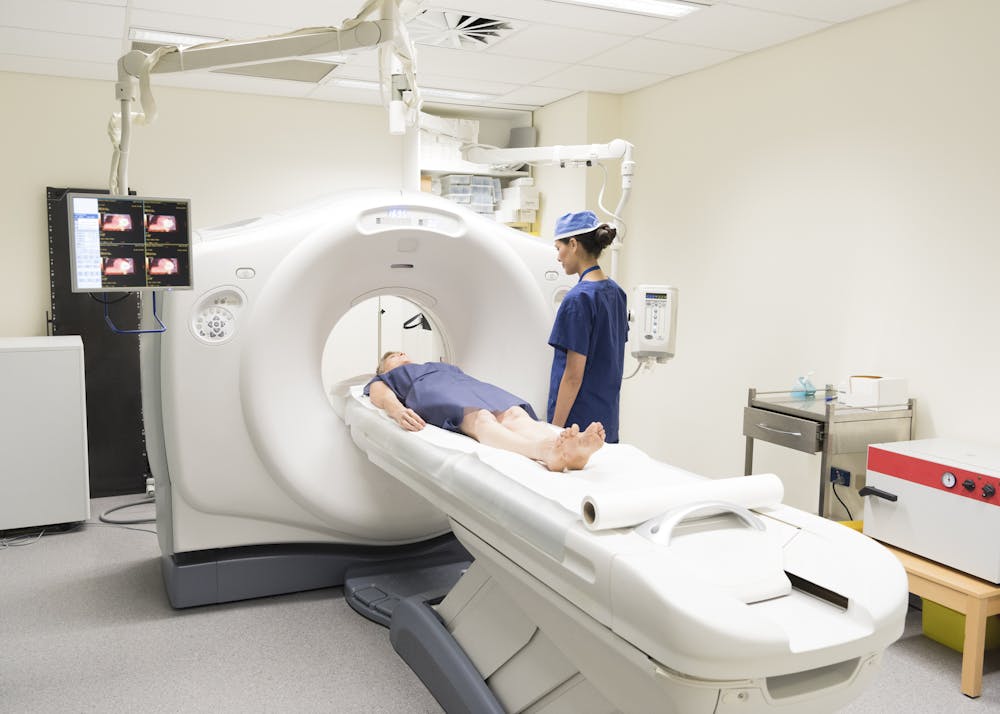
Patient lying in CT machine while radiologist looks on
Lung cancer screening typically involves a low-dose CT scan. Johnny Greig/E+ via Getty Images

The whole process takes only a few minutes and does not require any needles, medications or infusions. During the scan, the patient lies on the scanner’s sliding table and raises their arms above their head. The technologist may ask them to hold their breath for 5 to 10 seconds as the table passes through the scanner.

A radiologist summarizes the results of the test for their doctor in a report. If the result is negative for findings in the lungs, the patient would return in one year for another scan. If the result is positive, it usually means the radiologist saw a lung nodule, or a spot on the lung. Not all lung nodules are cancer, and patients may require additional imaging or a biopsy to confirm.

Disparities in lung cancer screening

Public health campaigns and education initiatives work to engage the public and increase awareness of the availability and benefit of lung cancer screening. However, these efforts have been less effective in some of the communities most at risk for developing lung cancer.

African American men have the highest rates of developing and dying from lung cancer compared with other groups, even at younger ages and among those with less smoking history. The tobacco industry has explicitly targeted the Black community with pervasive marketing tactics in predominantly Black neighborhoods and stores. Since the 1970s, the tobacco industry has aggressively marketed menthol cigarettes to African Americans using tailored messaging and imagery. This compounds and exacerbates the socioeconomic disparities in health care and cancer care already seen in these underserved and underrepresented communities.

Health advocates have called for a ban on menthol cigarettes in the U.S.

Rural communities face geographic barriers to lung cancer screening. About 80.5 million Americans live in counties with high rates of lung cancer and poor access to a quality screening center. Many of these counties are clustered in the Appalachian and southeastern regions of the U.S. where smoking rates are highest. Over 60% of people living in rural areas who are eligible for lung cancer screening have to travel over 20 miles to a screening facility.

Lung cancer screening may also be costly. While most private insurances and Medicare cover the cost of lung cancer screening, Medicaid policies vary state by state and may not cover the cost of lung cancer screening. In addition, while some plans may cover the initial low-dose CT scan, they might not cover follow-up testing, procedures and treatment. Supplementary costs such as transportation, time off from work, child care and other logistical issues can also add up to create additional socioeconomic barriers to screening.

Communities that are under- or uninsured are at the highest risk of developing lung cancer. They often lack access to primary care providers, let alone specialists who can facilitate screening.

Erasing smoking stigma

Because lung cancer is linked to smoking, stigma plays a significant role in preventing many people eligible for screening from pursuing it. Many people eligible for lung cancer screening fear being blamed for their previous or current tobacco use.

Stigma also discourages patients from discussing lung cancer screening with their health care providers or community. Clinicians can partner with patients and communities to destigmatize lung cancer and tobacco dependence, extricating the disease from blame. Framing screening as a proactive measure to help those at risk of developing lung cancer and as a collaboration with those who need help quitting smoking can empower people to actively engage in screening rather than dreading or avoiding it.

Fear is another barrier. Many people believe that a lung cancer diagnosis is a death sentence. When diagnosed early, however, doctors treat lung cancer with an intention to cure. Additionally, advances in lung cancer treatment over the past 10-15 years have led to remarkable improvements in survival for all stages of the disease. Reassurance and education around next steps and paths to treatment at the time of screening help diffuse some of the distress surrounding lung cancer.

Public health researchers are exploring how to minimize the significant and complex barriers to lung cancer screening for those who need it most.The Conversation

Nina Thomas, Assistant Professor of Pulmonary Sciences and Critical Care, University of Colorado Anschutz Medical Campus

This article is republished from The Conversation under a Creative Commons license. Read the original article.

Details
Written by: Nina Thomas, University of Colorado Anschutz Medical Campus
Published: 08 May 2024

California gives latest update on fentanyl seizures

In recognition of National Fentanyl Awareness Day on Tuesday, Gov. Gavin Newsom announced the California National Guard’s Counterdrug Task Force assisted in the seizure of an estimated 7,100 pounds of fentanyl and more than 3.4 million fentanyl pills statewide since the start of the year, including at ports of entry and along the border.

“As we recognize the serious dangers of illegal fentanyl, California is continuing to tackle this issue head-on. Our efforts are getting this poison off our streets and out of our communities as we continue to support people struggling with substance use,” Newsom said.

In March alone, the Counterdrug Task Force, with the help of state, local and federal partners, helped seize over 5,000 pounds of fentanyl and nearly 1.3 million fentanyl pills.

“The CalGuard is committed to supporting our state, federal, local and tribal law enforcement partners to eliminate the scourge of fentanyl,” said CalGuard Major General Matthew Beevers. “The State’s unprecedented investment in our Counterdrug Task Force is delivering significant, measurable interdiction results, denying operating capital to transnational criminal organizations while making our state safer.”

May 7 is recognized nationally as Fentanyl Awareness Day to provide information about the serious dangers of fentanyl poisoning from fake pills and other illicit drugs.

California has worked to improve public safety in a number of ways. The Governor’s Master Plan for Tackling the Fentanyl and Opioid Crisis provides a comprehensive framework to deepen the impact of these investments, including aggressive steps to support overdose prevention efforts, hold the opioid pharmaceutical industry accountable, crack down on drug trafficking, and raise awareness about the dangers of opioids, including fentanyl.

The state recently announced progress in cracking down on fentanyl in communities across the state, including San Francisco.

Last year, the governor increased the number of CalGuard service members deployed to interdict drugs at U.S. ports of entry along the border by approximately 50%.

The operations CalGuard supported resulted in the record seizure of 62,224 pounds of fentanyl in 2023 — a 1066% increase since 2021.

CalGuard’s coordinated drug interdiction efforts in the state are funded in part by California’s $30 million investment to expand CalGuard’s work to prevent drug trafficking by transnational criminal organizations.

Fentanyl is primarily smuggled into the country by U.S. citizens.

In support of President Biden’s bilateral cooperation agreement with China on counternarcotics, the governor spoke with Chinese President Xi Jinping in October about combating the transnational shipping of precursor chemicals used to create fentanyl.
Details
Written by: Lake County News reports
Published: 08 May 2024

Kelseyville Unified board to hold special meeting on Indigenous peoples resolution

KELSEYVILLE, Calif. — The Kelseyville Unified School District Board of Trustees will hold a special meeting to consider approving a resolution that would establish land acknowledgements at events as part of an effort to pursue healing reconciliation with Lake County’s tribes.

The meeting will take place beginning at 5:30 p.m. Tuesday, May 7, in the Tom Aiken Student Center at Kelseyville High School, 5480 Main St.

Agenda and backup materials can be found at the board webpage on the district website. 

The discussion about the proclamation was held over to this week after a crowd three times the size of the occupancy of the board room at the district office showed up for the regular board meeting on April 23, during which the proclamation was to have been discussed.

The resolution seeks to implement land acknowledgements at major district events and states that “this district acknowledges that its name represents a painful past for citizens of these nations and their ancestors who have lived here for generations.”

That language has raised opposition from community members who believe it’s connected to a separate effort to rename the town of Kelseyville.

The idea for the resolution first emerged in March and has been put forth by Board Clerk Gilbert Rangel.

Email Elizabeth Larson at This email address is being protected from spambots. You need JavaScript enabled to view it.. Follow her on Twitter, @ERLarson, or Lake County News, @LakeCoNews.
Details
Written by: Elizabeth Larson
Published: 07 May 2024
  1. California Child Support Services to give more money to families
  2. Historic first land acknowledgment opens Assembly session
  3. What’s in a VIN? How to decode the vehicle identification number, your car’s unique fingerprint

Subcategories

Community

  • 682
  • 683
  • 684
  • 685
  • 686
  • 687
  • 688
  • 689
  • 690
  • 691
How to resolve AdBlock issue?
Refresh this page
Copyright © 2026 Lake County News,California. All Rights Reserved.