 How to resolve AdBlock issue?
News
- Details
- Written by: Nick Kanas, University of California, San Francisco
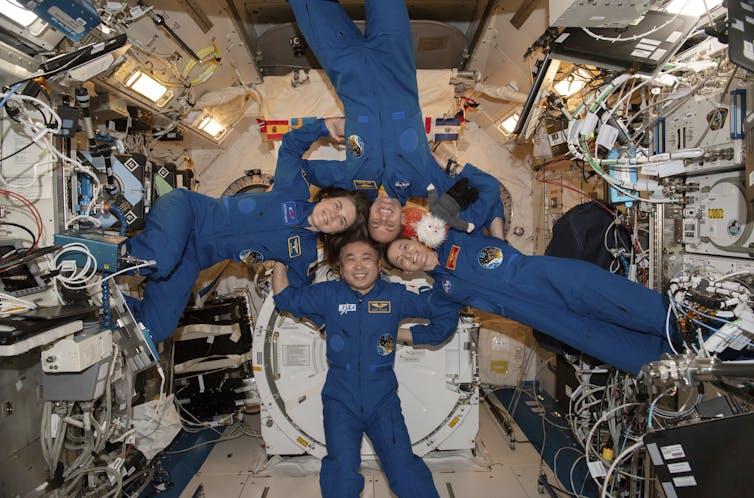
Within the next few decades, NASA aims to land humans on the Moon, set up a lunar colony and use the lessons learned to send people to Mars as part of its Artemis program.
While researchers know that space travel can stress space crew members both physically and mentally and test their ability to work together in close quarters, missions to Mars will amplify these challenges. Mars is far away – millions of miles from Earth – and a mission to the red planet will take two to two and a half years, between travel time and the Mars surface exploration itself.
As a psychiatrist who has studied space crew member interactions in orbit, I’m interested in the stressors that will occur during a Mars mission and how to mitigate them for the benefit of future space travelers.
Delayed communications
Given the great distance to Mars, two-way communication between crew members and Earth will take about 25 minutes round trip. This delayed contact with home won’t just hurt crew member morale. It will likely mean space crews won’t get as much real-time help from Mission Control during onboard emergencies.
Because these communications travel at the speed of light and can’t go any faster, experts are coming up with ways to improve communication efficiency under time-delayed conditions. These solutions might include texting, periodically summarizing topics and encouraging participants to ask questions at the end of each message, which the responder can answer during the next message.
Autonomous conditions
Space crew members won’t be able to communicate with Mission Control in real time to plan their schedules and activities, so they’ll need to conduct their work more autonomously than astronauts working on orbit on the International Space Station.
Although studies during space simulations on Earth have suggested that crew members can still accomplish mission goals under highly autonomous conditions, researchers need to learn more about how these conditions affect crew member interactions and their relationship with Mission Control.
For example, Mission Control personnel usually advise crew members on how to deal with problems or emergencies in real time. That won’t be an option during a Mars mission.
To study this challenge back on Earth, scientists could run a series of simulations where crew members have varying degrees of contact with Mission Control. They could then see what happens to the interactions between crew members and their ability to get along and conduct their duties productively.
Crew member tension
Being confined with a small group of people for a long period of time can lead to tension and interpersonal strife.
In my research team’s studies of on-orbit crews, we found that when experiencing interpersonal stress in space, crew members might displace this tension by blaming Mission Control for scheduling problems or not offering enough support. This can lead to crew-ground misunderstandings and hurt feelings.
One way to deal with interpersonal tension on board would be to schedule time each week for the crew members to discuss interpersonal conflicts during planned “bull sessions.” We have found that commanders who are supportive can improve crew cohesion. A supportive commander, or someone trained in anger management, could facilitate these sessions to help crew members understand their interpersonal conflicts before their feelings fester and harm the mission.
Time away from home
Spending long periods of time away from home can weigh on crew members’ morale in space. Astronauts miss their families and report being concerned about the well-being of their family members back on Earth, especially when someone is sick or in a crisis.
Mission duration can also affect astronauts. A Mars mission will have three phases: the outbound trip, the stay on the Martian surface and the return home. Each of these phases may affect crew members differently. For example, the excitement of being on Mars might boost morale, while boredom during the return may sink it.
The disappearing-Earth phenomenon
For astronauts in orbit, seeing the Earth from space serves as a reminder that their home, family and friends aren’t too far away. But for crew members traveling to Mars, watching as the Earth shrinks to an insignificant dot in the heavens could result in a profound sense of isolation and homesickness.

Having telescopes on board that will allow the crew members to see Earth as a beautiful ball in space, or giving them access to virtual reality images of trees, lakes and family members, could help mitigate any disappearing-Earth effects. But these countermeasures could just as easily lead to deeper depression as the crew members reflect on what they’re missing.
Planning for a Mars mission
Researchers studied some of these issues during the Mars500 program, a collaboration between the Russian and other space agencies. During Mars500, six men were isolated for 520 days in a space simulator in Moscow. They underwent periods of delayed communication and autonomy, and they simulated a landing on Mars.
Scientists learned a lot from that simulation. But many features of a real Mars mission, such as microgravity, and some dangers of space – meteoroid impacts, the disappearing-Earth phenomenon – aren’t easy to simulate.
Planned missions under the Artemis program will allow researchers to learn more about the pressures astronauts will face during the journey to Mars.
For example, NASA is planning a space station called Gateway, which will orbit the Moon and serve as a relay station for lunar landings and a mission to Mars. Researchers could simulate the outbound and return phases of a Mars mission by sending astronauts to Gateway for six-month periods, where they could introduce Mars-like delayed communication, autonomy and views of a receding Earth.
Researchers could simulate a Mars exploration on the Moon by having astronauts conduct tasks similar to those anticipated for Mars. This way, crew members could better prepare for the psychological and interpersonal pressures that come with a real Mars mission. These simulations could improve the chances of a successful mission and contribute to astronaut well-being as they venture into space.
Nick Kanas, Professor Emeritus of Psychiatry, University of California, San Francisco
This article is republished from The Conversation under a Creative Commons license. Read the original article.
- Details
- Written by: José Vadi
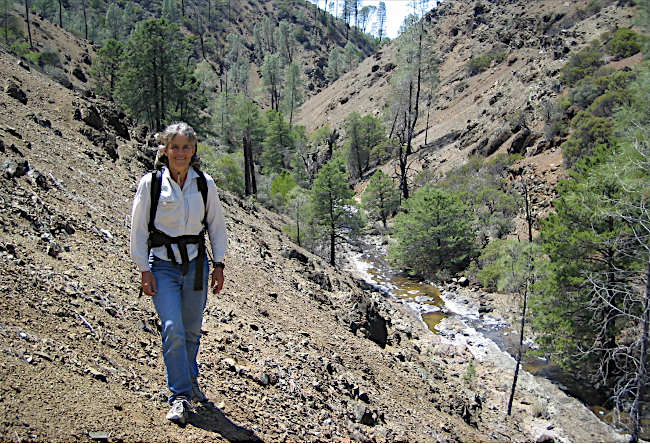
By definition, the middle of nowhere is hard to find, but Susan P. Harrison defines it as the “triple junction of Napa, Lake and Yolo counties” and the center of a wealth of research possibilities.
“If you drew a line from the northern tip of Lake Berryessa to the southern tip of Clear Lake, it’d be right in the center of that line,” Harrison said, describing UC Davis’ McLaughlin Natural Reserve, a research site “very rich in natural diversity.”
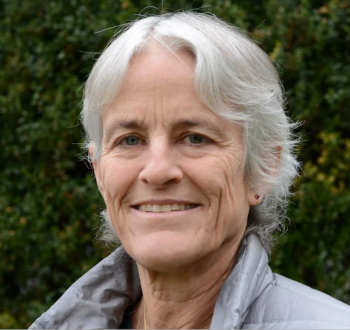
Harrison ’83, M.S. ’86, is a professor and chair of the Department of Environmental Science & Policy.
In a 15-year study at the reserve, Harrison analyzed how a loss of plant species richness, particularly of native wildflowers, is tied to drier winters such as those experienced during drought.
She reported on her work in a paper titled “Climate-Driven Diversity Loss in a Grassland Community,”published in the Proceedings of the National Academy of Sciences in 2015, before being inducted into the academy in 2018.
“There's interesting soil variation, which gives rise to lots of plant community variation,” Harrison explained, referring to McLaughlin as “this incredible place for all kinds of ecological research.”
Harrison grew up in Sonoma County with five siblings and a nature-enthusiast father. But it wasn’t until her undergraduate years at UC Davis that she became “aware” of science. She received a bachelor’s in zoology before earning a master’s in ecology. After earning her doctorate in biology at Stanford, Harrison returned to UC Davis as a faculty member in 1991.
For Harrison, it “never made all that much sense to go study someplace a thousand miles away when there's all this cool, incredible natural diversity right here in lovely Northern California.”
Pioneering work
Harrison is most proud of supporting the development of the UC Natural Reserve System, describing the network as the product of “a grassroots movement of environmental scientists.”
The need for the reserves began when researchers in Southern California encountered difficulties studying reptiles and plants, with many of their favorite research sites “getting developed and paved over,” according to Harrison. As a master’s student, she joined the campus advisory committee for the reserve system to help some reserves find better financial footing.
“I started doing my research on these reserves almost 40 years ago, and I still do,” Harrison explained, noting today the nearly 40 UC reserves across California. “There's nothing like it and it’s an amazing resource. Not only is there this beautiful piece of land that protects some special part of the natural heritage, but over time it develops this kind of knowledge base.”
Looking ahead
The future of Harrison’s work focuses on the effects of climate change and its impacts across the state, including “potentially a lot of change in forests” due to increased temperature, lack of water and fires.
From the research opportunities in the “middle of nowhere” at McLaughlin reserve to her roles on campus, Harrison has found her place and values at Davis.
“I heard somebody say once: ‘We don't hire stars, we make them,’” Harrison said. “Davis is a really wonderful place. Despite all the challenges we face, I hope that we can stay that way. I really want people to understand how important that is.”
José Vadi is a writer for Dateline UC Davis. Reprinted with permission.
- Details
- Written by: LAKE COUNTY NEWS REPORTS
“Eating disorders are serious conditions that are potentially life-threatening and have a great impact on our physical and emotional health,” Sen. Dodd said. “We must improve the public’s understanding of the causes, encourage early intervention and lay to rest the stigma of this pervasive affliction. As someone who’s had a loved one suffer from an eating disorder, I know how difficult it can be, but with support recovery is possible.”
Sen. Dodd’s resolution, Senate Concurrent Resolution 105, raises awareness of a range of significant disorders affecting people across all backgrounds. Conditions include anorexia, bulimia and binge-eating disorders, among others.
National Eating Disorders Awareness Week is a collaborative effort consisting primarily of volunteers, including eating disorder professionals, health care providers, students, educators, social workers, and individuals committed to raising awareness of the dangers surrounding eating disorders and the need for early intervention and treatment access.
California Treasurer Fiona Ma is a co-sponsor of SCR 105. Supporters have included the National Eating Disorders Association, American Nurses Association-California, Cielo House and the Eating Disorders Resource Center.
“Eating disorders affect nearly one in 10 Americans from all walks of life,” Treasurer Ma said. “While common, these serious conditions don’t have to become debilitating or deadly. Let’s break the stigma around anorexia, bulimia, and binge eating so everyone living with these conditions can find the help they need to be healthy. I’m proud to join Sen. Dodd as Eating Disorders Awareness Week will raise awareness and help those affected find hope, the first step in healing.”
“The National Eating Disorders Association is grateful to Sen. Dodd for this resolution recognizing Eating Disorders Awareness Week,” said Doreen S. Marshall, chief executive officer of the National Eating Disorders Association. “Let us all take steps this week to learn more about eating disorders as complex mental health illnesses that affect people of all races, genders, ages and body types. By elevating the national dialogue about eating disorders, we can help to ensure that those impacted by eating disorders are met with compassion, resources and support.”
Please visit www.nationaleatingdisorders.org.
- Details
- Written by: LAKE COUNTY NEWS REPORTS

California could become the first state in the U.S. to welcome a new pair of giant pandas in the latest round of a collaborative conservation effort with China.
The San Diego Zoo Wildlife Alliance announced that it has signed a cooperative agreement with the China Wildlife Conservation Association and filed a permit application with the U.S. Fish and Wildlife Service. According to reports, two pandas could arrive by the end of the summer.
“California and China share deep cultural and economic ties, and we look forward to the opportunity to again welcome these iconic bears to the Golden State,” said Governor Gavin Newsom, who led a weeklong visit to China last October. “From securing a safe future for this national treasure to fighting climate change, we’re proud to continue our long history of working together towards shared goals.”
In San Francisco last November during the Asia-Pacific Economic Cooperation, or APEC, Summit, Chinese President Xi Jinping signaled that China planned to send new pandas to the United States as "envoys of friendship” between the nations.
The APEC Summit followed Gov. Newsom’s October travel to China, during which he met with President Xi and other high-level Chinese officials to discuss climate action and cooperation, promote economic development and tourism, and strengthen cultural ties.
The state hopes that this week’s announcement will lead to further exchanges and cooperation between California and China, which have a strong foundation of partnership built by governors Schwarzenegger and Brown and the late Sen. Dianne Feinstein, as well as Gov. Newsom while serving as Mayor of San Francisco.




