How to resolve AdBlock issue?
Refresh this page
Lake County News,California
  • Home
    • Registration Form
  • News
    • Education
    • Veterans
    • Community
      • Obituaries
      • Letters
      • Commentary
    • Police Logs
    • Business
    • Recreation
    • Health
    • Religion
    • Legals
    • Arts & Life
    • Regional
  • Calendar
  • Contact us
    • FAQs
    • Phones, E-Mail
    • Subscribe
  • Advertise Here
  • Login
How to resolve AdBlock issue?
Refresh this page

News

Lakeport Economic Development Advisory Committee to hold first meeting of 2025

LAKEPORT, Calif. — The Lakeport Economic Development Advisory Committee will kick off the new year with discussions of goals and projects.

The committee, or LEDAC, will meet via Zoom from 7:30 to 9 a.m. Wednesday, Jan. 8, in the council chambers at Lakeport City Hall, 225 Park St.

The meeting also will be available via Zoom.

The meeting ID is 842 2886 1335, pass code is 594383 or join by phone, 1 669 900 6833.

The meeting is open to the public.

On the agenda is a review of the Business Walk 2024 and its survey. LEDAC Chair Wilda Shock said the survey, its results and recommendations will be presented at an upcoming Lakeport City Council meeting.

In other business, Shock said City Manager Kevin Ingram and city staff will lead a discussion about progress on the city goals for this current fiscal year and consideration for goals for the coming 2025-26 fiscal year.

LEDAC’s next meeting will be March 12.

LEDAC advocates for a strong and positive Lakeport business community and acts as a conduit between the city and the community for communicating the goals, activities and progress of Lakeport’s economic and business programs.

Members are Chair Wilda Shock, Bonnie Darling, Candy De Los Santos, Pam Harpster, Lissette Hayes, Amanda Martin, Euline Olinger, JoAnn Saccato, Laura McAndrews Sammel, Bob Santana, Marie Schrader and Tim Stephens. City staff who are members include City Manager Kevin Ingram and Community Development Department Director Joey Hejnowicz, Associate Planner Victor Fernandez and Chief Building Officer Bethany Moss Childers.

Email Elizabeth Larson at This email address is being protected from spambots. You need JavaScript enabled to view it.. Follow her on Twitter, @ERLarson, and on Bluesky, @erlarson.bsky.social. Find Lake County News on the following platforms: Facebook, @LakeCoNews; X, @LakeCoNews; Threads, @lakeconews, and on Bluesky, @lakeconews.bsky.social.

Purrfect Pals: Cats and kittens for the new year

LAKE COUNTY, Calif. — Lake County Animal Care and Control has many cats and kittens at its shelter waiting for homes in the new year.

The kittens and cats at the shelter that are shown on this page have been cleared for adoption.

Call Lake County Animal Care and Control at 707-263-0278 or visit the shelter online for information on visiting or adopting.

The shelter is located at 4949 Helbush in Lakeport.

Email Elizabeth Larson at This email address is being protected from spambots. You need JavaScript enabled to view it.. Follow her on Twitter, @ERLarson, and on Bluesky, @erlarson.bsky.social. Find Lake County News on the following platforms: Facebook, @LakeCoNews; X, @LakeCoNews; Threads, @lakeconews, and on Bluesky, @lakeconews.bsky.social.


A#8's preview photo
A#8


A#49a's preview photo
A#49a

A#49b's preview photo
A#49b

A#49c's preview photo
A#49c

A#49d's preview photo
A#49d


C#16's preview photo
C#16

C#96's preview photo
C#96


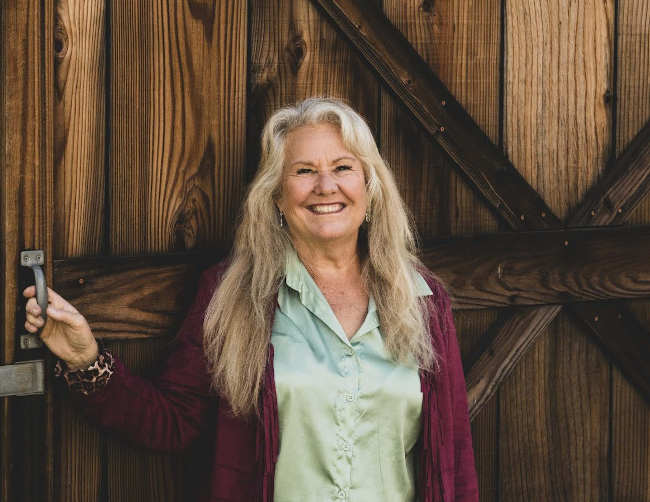
Owen prepares to step into new role as District 1 supervisor

District 1 Supervisor-elect Helen Owen. Courtesy photo.

LAKE COUNTY, Calif. — Helen Owen, a longtime Middletown resident and rancher, is getting ready to take office as the new District 1 supervisor.

She is set to take the oath of office this week as she and another new supervisor, Brad Rasmussen, representing District 4, take their seats on the board.

Owen won the District 1 supervisorial race against Planning Commissioner John Hess in the Nov. 5 election.

The Registrar of Voters Office’s finalized 2024 election results showed that Owen received 3,118 votes, or 57.63%, over Hess’ 2,292 votes, or 42.37%.

For both the March and November races, the two had a tight initial count with Hess leading slightly. But Owen caught up in the final counts for both races and won.

Owen quickly began preparing for her transition into the new role, attending her first meeting as supervisor-elect with the county’s Geothermal Advisory Committee last month.

She said the meeting was an opportunity to meet people and to “start getting into the swing.”

Owen said that this is one of the committees she will join as supervisor. The current District 1 supervisor, Moke Simon — Owen’s predecessor — also serves on the committee.

Over the past month, she kept busy, attending a supervisorial training, a Firewise meeting and the Middletown Area Town Hall.

She also gave a helping hand at a Dec. 14 toy distribution held by veterans organizations at the American Legion Post in Clearlake.

“So anything I can make, I’m going to,” Owen said.

When asked about Measure U, the controversial countywide advisory ballot on whether the name of Kelseyville should be changed to Konocti, “I know it failed miserably,” she said of the outcome, where over 70% of voters said “no” to the name change.

Owen knew the matter was coming up at the supervisors’ meeting on Dec. 10, and ahead of it was unsure if a decision would be made. The board voted 3-2 to recommend to the U.S. Board of Geographic Names that the name be changed.

Beside the Geothermal Advisory Committee, Owen said she’s interested in serving committees to do with agriculture, safety, water and transportation such as highways and Caltrans.

“Water is a big one for me,” she said. “I feel that throughout life that’s the most important asset we have and so I would really like to be on.”

Although Owen knows what committees she would like to serve, “I don’t know where I’ll be for sure,” she said, adding that it’s up to the board chair to appoint the different committees.

Before starting the new job, Owen also was working on a plan for her home and ranch, where she and her daughter give rodeo lessons. “I’ve got to hire somebody to take my spot. I found out that my daughter is going to have another baby.”

With hiring additional help at the ranch, “I can devote 100% of my time to the thing,” Owen said of the supervisor role.

“I’ve got the pressures off as far as, you know, the campaign. So it feels better that a little different kind of pressure,” Owen said. “I just don’t want to disappoint people and I want to be the very best supervisor I can be.”

Email staff reporter Lingzi Chen at This email address is being protected from spambots. You need JavaScript enabled to view it..

Helping Paws: Little puppies and big dogs

LAKE COUNTY, Calif. — Lake County Animal Care and Control has dogs from tiny puppies to seniors waiting to be adopted at its shelter.

The dogs available for adoption this week include mixes of Anatolian shepherd, Belgian malinois, boxer, cattle dog, Chihuahua, German shepherd, German shorthaired pointer, husky, Labrador Retriever, pit bull terrier and terrier.

Dogs that are adopted from Lake County Animal Care and Control are either neutered or spayed, microchipped and, if old enough, given a rabies shot and county license before being released to their new owner. License fees do not apply to residents of the cities of Lakeport or Clearlake.

Those dogs and the others shown on this page at the Lake County Animal Care and Control shelter have been cleared for adoption.

Call Lake County Animal Care and Control at 707-263-0278 or visit the shelter online for information on visiting or adopting.

The shelter is located at 4949 Helbush in Lakeport.

Email Elizabeth Larson at This email address is being protected from spambots. You need JavaScript enabled to view it.. Follow her on Twitter, @ERLarson, and on Bluesky, @erlarson.bsky.social. Find Lake County News on the following platforms: Facebook, @LakeCoNews; X, @LakeCoNews; Threads, @lakeconews, and on Bluesky, @lakeconews.bsky.social.

Kennel#4a(pink collar)'s preview photo
Kennel#4a(pink collar)

FostertoAdopt#8247's preview photo
FostertoAdopt#8247

Kennel#4d(Yellow Collar)'s preview photo
Kennel#4d(Yellow Collar)

Kennel#4e(Blue Collar)'s preview photo
Kennel#4e(Blue Collar)

FostertoAdopt#8250's preview photo
FostertoAdopt#8250

Kennel#28's preview photo
Kennel#28

Kennel#18's preview photo
Kennel#18

Kennel#13a's preview photo
Kennel#13a

 
Kennel#13b's preview photo
Kennel#13b

Cedar 's preview photo
Cedar

Fostertoadopt#9849's preview photo
Fostertoadopt#9849

Kennel#32b's preview photo
Kennel#32b

Kennel#32a's preview photo
Kennel#32a

Kennel#14b's preview photo
Kennel#14b

Kennel#23's preview photo
Kennel#23

FostertoAdopt#9883's preview photo
FostertoAdopt#9883

Kennel#24's preview photo
Kennel#24

Kennel#5's preview photo
Kennel#5

Kennel#30's preview photo
Kennel#30

Kennel#9's preview photo
Kennel#9

Kennel#15's preview photo
Kennel#15


Quarantine#6

Quarantine#3
Kennel#33's preview photo
Kennel#33

 
Kennel#10's preview photo
Kennel#10

Kennel#2a's preview photo
Kennel#2a

Kennel#6's preview photo
Kennel#6
Kennel#12a's preview photo
Kennel#12a

Kennel#12b's preview photo
Kennel#12b

C#111(RedCollar)'s preview photo
C#111(RedCollar)

Kennel#3's preview photo
Kennel#3

Kennel#8's preview photo
Kennel#8

Kennel#16's preview photo
Kennel#16

Kennel#29's preview photo
Kennel#29


C#32's preview photo
C#32
 
Kennel#11's preview photo
Kennel#11


Kennel#17's preview photo
Kennel#17

Kennel#34a's preview photo
Kennel#34a

Kennel#34b's preview photo
Kennel#34b

Kennel#7a's preview photo
Kennel#7a

Kennel#7b's preview photo
Kennel#7b

 
Kennel#25's preview photo
Kennel#25

Kennel#26's preview photo
Kennel#26

Kennel#27's preview photo
Kennel#27


Will AI revolutionize drug development? Researchers explain why it depends on how it’s used


A high drug failure rate is more than just a pattern recognition problem. Thom Leach/Science Photo Library via Getty Images

The potential of using artificial intelligence in drug discovery and development has sparked both excitement and skepticism among scientists, investors and the general public.

“Artificial intelligence is taking over drug development,” claim some companies and researchers. Over the past few years, interest in using AI to design drugs and optimize clinical trials has driven a surge in research and investment. AI-driven platforms like AlphaFold, which won the 2024 Nobel Prize for its ability to predict the structure of proteins and design new ones, showcase AI’s potential to accelerate drug development.

AI in drug discovery is “nonsense,” warn some industry veterans. They urge that “AI’s potential to accelerate drug discovery needs a reality check,” as AI-generated drugs have yet to demonstrate an ability to address the 90% failure rate of new drugs in clinical trials. Unlike the success of AI in image analysis, its effect on drug development remains unclear.

Pharmacist searching through drawer of drug packages
Behind every drug in your pharmacy are many, many more that failed. nortonrsx/iStock via Getty Images Plus

We have been following the use of AI in drug development in our work as a pharmaceutical scientist in both academia and the pharmaceutical industry and as a former program manager in the Defense Advanced Research Projects Agency, or DARPA. We argue that AI in drug development is not yet a game-changer, nor is it complete nonsense. AI is not a black box that can turn any idea into gold. Rather, we see it as a tool that, when used wisely and competently, could help address the root causes of drug failure and streamline the process.

Most work using AI in drug development intends to reduce the time and money it takes to bring one drug to market – currently 10 to 15 years and US$1 billion to $2 billion. But can AI truly revolutionize drug development and improve success rates?

AI in drug development

Researchers have applied AI and machine learning to every stage of the drug development process. This includes identifying targets in the body, screening potential candidates, designing drug molecules, predicting toxicity and selecting patients who might respond best to the drugs in clinical trials, among others.

Between 2010 and 2022, 20 AI-focused startups discovered 158 drug candidates, 15 of which advanced to clinical trials. Some of these drug candidates were able to complete preclinical testing in the lab and enter human trials in just 30 months, compared with the typical 3 to 6 years. This accomplishment demonstrates AI’s potential to accelerate drug development.

Drug development is a long and costly process.

On the other hand, while AI platforms may rapidly identify compounds that work on cells in a Petri dish or in animal models, the success of these candidates in clinical trials – where the majority of drug failures occur – remains highly uncertain.

Unlike other fields that have large, high-quality datasets available to train AI models, such as image analysis and language processing, the AI in drug development is constrained by small, low-quality datasets. It is difficult to generate drug-related datasets on cells, animals or humans for millions to billions of compounds. While AlphaFold is a breakthrough in predicting protein structures, how precise it can be for drug design remains uncertain. Minor changes to a drug’s structure can greatly affect its activity in the body and thus how effective it is in treating disease.

Survivorship bias

Like AI, past innovations in drug development like computer-aided drug design, the Human Genome Project and high-throughput screening have improved individual steps of the process in the past 40 years, yet drug failure rates haven’t improved.

Most AI researchers can tackle specific tasks in the drug development process when provided with high-quality data and particular questions to answer. But they are often unfamiliar with the full scope of drug development, reducing challenges into pattern recognition problems and refinement of individual steps of the process. Meanwhile, many scientists with expertise in drug development lack training in AI and machine learning. These communication barriers can hinder scientists from moving beyond the mechanics of current development processes and identifying the root causes of drug failures.

Current approaches to drug development, including those using AI, may have fallen into a survivorship bias trap, overly focusing on less critical aspects of the process while overlooking major problems that contribute most to failure. This is analogous to repairing damage to the wings of aircraft returning from the battle fields in World War II while neglecting the fatal vulnerabilities in engines or cockpits of the planes that never made it back. Researchers often overly focus on how to improve a drug’s individual properties rather than the root causes of failure.

Diagram of airplane with clusters of red dots on the wing tips, tail and cockpit areas
While returning planes might survive hits to the wings, those with damage to the engines or cockpits are less likely to make it back. Martin Grandjean, McGeddon, US Air Force/Wikimedia Commons, CC BY-SA

The current drug development process operates like an assembly line, relying on a checkbox approach with extensive testing at each step of the process. While AI may be able to reduce the time and cost of the lab-based preclinical stages of this assembly line, it is unlikely to boost success rates in the more costly clinical stages that involve testing in people. The persistent 90% failure rate of drugs in clinical trials, despite 40 years of process improvements, underscores this limitation.

Addressing root causes

Drug failures in clinical trials are not solely due to how these studies are designed; selecting the wrong drug candidates to test in clinical trials is also a major factor. New AI-guided strategies could help address both of these challenges.

Currently, three interdependent factors drive most drug failures: dosage, safety and efficacy. Some drugs fail because they’re too toxic, or unsafe. Other drugs fail because they’re deemed ineffective, often because the dose can’t be increased any further without causing harm.

We and our colleagues propose a machine learning system to help select drug candidates by predicting dosage, safety and efficacy based on five previously overlooked features of drugs. Specifically, researchers could use AI models to determine how specifically and potently the drug binds to known and unknown targets, the level of these targets in the body, how concentrated the drug becomes in healthy and diseased tissues, and the drug’s structural properties.

These features of AI-generated drugs could be tested in what we call phase 0+ trials, using ultra-low doses in patients with severe and mild disease. This could help researchers identify optimal drugs while reducing the costs of the current “test-and-see” approach to clinical trials.

While AI alone might not revolutionize drug development, it can help address the root causes of why drugs fail and streamline the lengthy process to approval.The Conversation

Duxin Sun, Associate Dean for Research, Charles Walgreen Jr. Professor of Pharmacy and Pharmaceutical Sciences, University of Michigan and Christian Macedonia, Adjunct Professor in Pharmaceutical Sciences, University of Michigan

This article is republished from The Conversation under a Creative Commons license. Read the original article.

Space News: What’s up for January 2025?


What’s up for January?

Cue the planet parade, Saturn and Venus cross paths, Mars expresses its opposition, and the outlook for the Quadrantid meteors.

In January, you’ll have the opportunity to take in four bright planets in a single, sweeping view.

All month after dark, you’ll find Venus and Saturn in the southwest for the first couple of hours, while Jupiter shines brightly high overhead, and Mars rises in the east. Uranus and Neptune are there too, technically, but they don't appear as "bright planets." These multi-planet viewing opportunities aren’t super rare, but they don’t happen every year, so it’s worth checking it out.

Now, these events are sometimes called “alignments” of the planets, and while it’s true that they will appear more or less along a line across the sky, that’s what planets always do. That line is called the ecliptic, and it represents the plane of the solar system in which the planets orbit around the Sun. This is, incidentally, why we sometimes observe planets appearing to approach closely to each other on the sky, as we view them along a line while they careen around the cosmic racetrack.

This is exactly what we'll be seeing from Venus and Saturn as they head for a super close approach in mid-January. After the beginning of the month, they quickly get closer and closer each evening, appearing at their most cozy on the 17th and 18th before going their separate ways. Remember, they’re really hundreds of millions of miles apart in space, so when you observe them, you’re staring clear across the solar system!

Mars reaches “opposition” this month, which is when the planet lies directly on the opposite side of Earth from the Sun, forming a straight line. This is around the time when the planet is at its closest to Earth, making it appear at its biggest and brightest. For Mars, oppositions happen about every two years. This one won’t be the most spectacular ever, but it’s still closer than average, and provides a great opportunity to observe the nearby planet where NASA has five missions currently operating.

And on the 13th, the full Moon cozies up to Mars, appearing super close to the Red Planet that evening. Across the U.S. and Eastern Canada, the Moon will appear to pass in front of Mars over a couple of hours, as the pair rise into the eastern sky. Mars also will be the lone planet in the sky on January mornings. You’ll find it hanging out in the west in morning twilight.

The Quadrantid meteors peak in the early morning hours on Jan. 3. Interference from moonlight won’t be a problem, as the Moon is a mere crescent and sets early in the night. The way to see the most meteors is to observe after midnight from clear, dark skies away from bright city lights, and let your eyes adapt to the dark. The meteor rate will be highest as dawn approaches, and you’ll see more meteors from rural locations than in the suburbs. Now, this is a shower best seen from the Northern Hemisphere, and observers in the Northwest and Pacific region will likely have the best viewing this year.

Stay up to date on all of NASA's missions exploring the solar system and beyond at science.nasa.gov.

Preston Dyches is with NASA's Jet Propulsion Laboratory.
  • 325
  • 326
  • 327
  • 328
  • 329
  • 330
  • 331
  • 332
  • 333
  • 334

Community

  • Sheriff’s Activities League and Clearlake Bassmasters offer youth fishing clinic

  • City Nature Challenge takes place April 24 to 27

Public Safety

  • Lakeport Police logs: Wednesday, Feb. 11

  • Lakeport Police logs: Tuesday, Feb. 10

Education

  • Ramos measure requiring school officer training in use of anti-opioid drug moves forward

  • Lake County Chapter of CWA announces annual scholarships 

Health

  • California ranks 24th in America’s Health Rankings Annual Report from United Health Foundation

  • Healthy blood donors especially vital during active flu season

Business

  • Employment law summit takes place March 9

  • Two Lake County Mediacom employees earn company’s top service awards

Obituaries

  • Terry Knight

  • Ellen Thomas

Opinion & Letters

  • Who should pay for AI’s power? Not California ratepayers

  • Crandell: Supporting nephew for reelection in supervisorial race

Veterans

  • State honors fallen chief warrant officer killed in conflict in Iran

  • CalVet and CSU Long Beach team up to improve data collection related to veteran suicides

Recreation

  • April Audubon program will show how volunteers can help monitor local osprey nests

  • First guided nature walk of spring at Anderson Marsh State Historic Park April 11

  • Second Saturday guided nature walks continue at Anderson Marsh State Historic Park

  • Wet weather trail closure in effect on Upper Lake Ranger District

Religion

  • Kelseyville Presbyterian Church plans Easter service

  • Easter ‘Sonrise’ Service returns to Xabatin Community Park

Arts & Life

  • ‘CIA’ delves into the shadowy world of an espionage thriller

  • ‘War Machine’ shifts the battlefield into uncharted territory

Government & Politics

  • Lake County Democratic Central Committee endorses Falkenberg

  • Crandell launches reelection campaign plans March 15 event

Legals

  • April 23 hearing on Lake Coco Farms Major Use Permit

  • NOTICE OF 30-DAY PUBLIC COMMENT PERIOD & NOTICE OF PUBLIC HEARING

How to resolve AdBlock issue?
Refresh this page