How to resolve AdBlock issue?
Refresh this page
Lake County News,California
  • Home
    • Registration Form
  • News
    • Education
    • Veterans
    • Community
      • Obituaries
      • Letters
      • Commentary
    • Police Logs
    • Business
    • Recreation
    • Health
    • Religion
    • Legals
    • Arts & Life
    • Regional
  • Calendar
  • Contact us
    • FAQs
    • Phones, E-Mail
    • Subscribe
  • Advertise Here
  • Login
How to resolve AdBlock issue?
Refresh this page

News

What if you could rank food by ‘healthiness’ as you shopped? Nutrient profiling systems use algorithms to simplify picking healthy groceries


Certain amounts and types of food processing can diminish the nutritional value of the original ingredients. Deanna Kelly/Moment via Getty Images

Imagine a world where food on grocery store shelves is ranked by its healthiness, with simple, research-backed scores. In some countries, that world already exists.

Nutrient profiling systems, or NPSs, support clear front-of-package labels that assess food quality based on nutrient content. Nutri-Score in France is a rainbow-colored system grading foods from A to E. Health Star Rating in Australia is a five-star system rating foods in half-star increments. And the Traffic Light System in the U.K. labels nutrient levels as green, yellow or red.

In contrast, the U.S. lacks a front-of-package ranking system for food. Food Compass was recently developed out of Tufts University to help address this gap and shortcomings in other systems. But it uses nutritional information not currently available for most foods and consumers.

As a gastroenterologist and physician-scientist, I focus on making the latest microbiome and nutrition data more accessible to the public. Drawing on this research, I developed Nutrient Consume Score, or NCS, which rates foods from 1 to 100 using nutritional information available for all foods and incorporates factors important for a healthy microbiome.

But how do nutrient profiling systems work? And how do they compare to other nutrition guides for consumers?

Nutrient cyphers

Each nutrient profiling system uses different scoring algorithms, but most assign positive points to nutrients and foods that are typically underconsumed, such as fiber, fruits and vegetables. Conversely, negative points are given to overconsumed nutrients like sugar, saturated fat and sodium, which are often added to processed foods. These points are combined into a single score: higher scores indicate healthier foods, while lower scores indicate less healthy options.

For example, kale – rich in fiber, potassium and unsaturated fats, while low in sugar, sodium and saturated fats – would earn a high score. In contrast, Twinkies, which are high in sugar, sodium and saturated fats, but low in fiber, potassium and unsaturated fats, would receive a low score. A food like black olives, high in fiber but also high in sodium, would fall somewhere in between.

Person looking at nutrition label of nut butter product in grocery store
Clear nutritional information can help inform healthy food choices. chabybucko/E+ via Getty Images

Nutrient profiling systems work similarly to the Nutrition Facts labels on the back or sides of food packages in helping consumers make informed choices. These labels provide information about a food’s nutrient content, including calories, macronutrients, and key vitamins and minerals. The values are determined through laboratory analysis and nutrient databases based on standardized serving sizes regulated by the Food and Drug Administration.

But NPSs differ in that they combine nutrition information into a single actionable score. This means you don’t have to spend time deciphering Nutrition Facts labels, which are often in small print and can be confusing to interpret.

Ultraprocessed profiling

Nutrient profiling system algorithms are all quite similar in their high ranking of unprocessed foods – beans, nuts, seeds, fruits, vegetables and whole grains – and low ranking of processed foods like hot dogs, soft drinks, cakes and cookies. They help people rebalance their diets that have been skewed by food processing, or the degree to which the ingredients have been altered.

They complement the NOVA classification system developed by researchers at the University of São Paulo, which categorizes foods based on their level of processing. This system introduced the term “ultra-processed foods,” which are foods that have undergone significant industrial processing and contain ingredients not typically found in home cooking.

While NOVA has linked ultra-processed foods to poor health outcomes like obesity, worse mental health, cancer and early death, it treats all such foods equally, overlooking differences like amount of sugar, sodium and other additives.

Sign hanging off shelf of grocery store with letters A to E assigned green to red, the sign reading '5 couleurs pour vous réperer sur les emballages'
France’s Nutri-Score rates the nutritional value of foods from A to E. Laurie Dieffembacq/Belga/AFP via Getty Images

Nutrient profile systems help provide nuance by identifying healthier options within the ultra-processed category. For example, plant-based milks, such as almond or soy milk, may be classified as ultra-processed under the NOVA system, but they can have relatively higher NPS scores if they contain minimal added sugars and salt.

Ratios and bioactives in balance

While nutrient profiling systems can be useful for choosing healthier options, current systems have limitations. They don’t always align perfectly with other research, often overlook the bioactive chemicals that regulate microbiome and body processes, and may rely on incomplete data. Current systems also don’t account for the caloric and health effects of alcohol.

The Nutrient Consume Score I designed aims to address these gaps by incorporating these neglected components of food. For example, it uses food categories as proxies for areas with limited data, including bioactive compounds like polyphenols, omega-3 fats and fermentable fibers. Proxies for bioactive compounds found in unprocessed foods – such as fruits, vegetables, grains, beans, nuts and seeds – are integrated into the score’s core algorithm, which uses nutrient ratios to measure the degree of food processing.

Nutrient ratios – including carbohydrate-to-fiber, saturated fat-to-unsaturated fat and sodium-to-potassium – reflect the natural balance of nutritional content of the cells in unprocessed foods, which research has shown correlate with cardiometabolic health.

Assorted vegetables stacked on top of each other
Whole foods often have their nutrients in balance. Halfdark/fStop via Getty Images

For example, the cell walls of plants provide structural strength and are rich in fiber, while their energy vesicles store carbohydrates. Fiber reduces sugar absorption and is fermented into the compound butyrate, which maintains blood sugar and regulates appetite.

The fat profiles of unprocessed foods are similar to the fat composition in cell membranes. Saturated fat-to-unsaturated fat ratios capture how different types of fat, affect inflammation and weight.

Finally, the potassium-to-sodium ratio reflects the natural function of cell membrane pumps, which concentrate potassium inside cells while transporting sodium out. This affects blood pressure as well as microbiome and metabolic health.

Research currently under peer review shows that the Nutrient Consume Score compares favorably with other systems. Derived from nutrition data from nearly 5,000 Americans, NCS sores are linked to blood pressure, waist circumference and weight. NCS has also been incorporated into a smartphone app intended for public use, currently in beta testing.

Empowering smart choices

While nutrient profiling systems are a promising tool for healthier food choices, they come with important caveats. Most studies testing how well they work focus on how two factors relate to each other rather than whether one directly causes the other. Correlation doesn’t prove causation.

Further studies are needed to assess whether these systems influence buying habits, consumption trends, and health outcomes like weight and blood pressure. Additionally, individual dietary needs can vary, and personalized algorithms could help refine these scores for tailored recommendations.

Despite these considerations, nutrient profiling systems are promising tools to combat rising rates of metabolic disease. Their use in Europe demonstrates their potential to shift consumer purchasing habits and inspire food companies to create healthier products.

Americans may one day see similar front-of-package labels in the U.S. Until then, smartphone technologies can offer a practical way to help consumers make smarter choices today.The Conversation

Christopher Damman, Associate Professor of Gastroenterology, School of Medicine, University of Washington

This article is republished from The Conversation under a Creative Commons license. Read the original article.
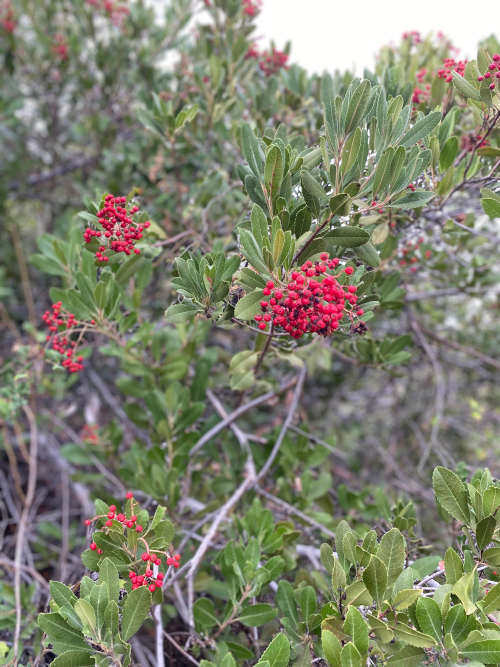
Tuleyome Tales: Merry, merry Christmas berry!

The shiny green leaves and clusters of red berries make Christmas berry (Hetermoleles arbutifolia) easy to spot this time of year. Photo by Kristie Ehrhardt.

NORTHERN CALIFORNIA — On a recent hike through Molok Luyuk, the newest addition to the Berryessa Snow Mountain National Monument, one couldn’t help but notice the dark green shrub with the shouty red berries from across the canyon.

You didn’t really have to search for it, all you needed to do was lift your eyes from the toes of your boots and glance across the landscape.

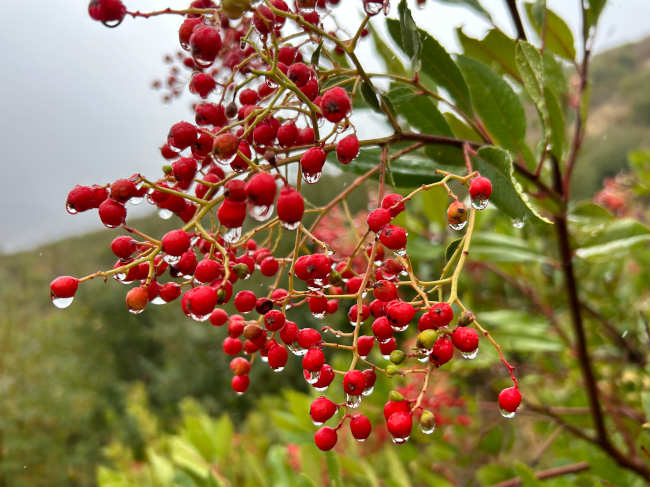
There, in a sea of gray-green foliage, “Christmas berry” conspicuously stood out like the one (delicious) black-licorice jellybean in a bowl of brightly colored fruity flavors. The entire shrub is quite showy with large, shiny leaves and chunky clusters of splashy red berries.

Christmas berry, also known as Christmas holly and toyon, are all common names for Hetermoleles arbutifolia.

Toyon belongs to the very diverse rose family (Roseaceae) but is the sole constituent of the genus Hetermoleles.

Other members of the rose family include cultivated crops such as apples, peaches, plums and strawberries as well as native species such as California rose (Rosa californica) and chamise (Adenostoma fasciculatum), and many, many others.

Christmas berry is a woody shrub that occurs along the foothills of Central California and in the Coastal Ranges from Humboldt County south to Baja California.

It is commonly, but not always, found on north-facing slopes usually below 4,000 feet in woodlands, forest and chaparral habitats alongside a variety of other species such as coyote bush, coffee berry and live oaks.

The name “toyon” is believed to have been used by the indigenous Ohlone people of historic Central California. It is also thought that the name toyon could have come from an old Spanish word meaning “canyon,” which is where it frequently occurs.

In fact, the striking presence of Christmas holly among the adjacent foothills is thought to have been the namesake for the famed Southern California neighborhood now called “Hollywood.”

Native to California, Christmas berry has adaptations that help it not only survive but thrive in our Mediterranean climate. The thick leaves are leathery and waxy which helps them retain moisture during our scorching summers. It also remains green all year long, which makes the plant less flammable than neighboring chaparral species that readily combust.

Underground, the roots are thoroughly branched and sprawling to help it acquire moisture from the surrounding soil.

The wood is very hard and was used to make tools and weapons while the leaves were used for wound care by Native Californians.

Although the leaves and unripe berries contain a cyanide compound which can cause sickness or even death, as the fruit matures it becomes concentrated only in the seed. This aids in plant dispersal as birds and small mammals eat berries and distribute seeds elsewhere without harming them.

The cyanide compounds remain in the leaves which may help deter browsing by deer and elk. The ripe berries are described as sweet to spicy and bitter.

Native Americans used them as a food source after roasting or drying to remove the bitterness and rarely ate them raw.

Pioneers used the berries in custards, jams, pies and fermented them as a type of cider beverage; the process of fermentation or cooking deactivates the cyanide compound - seems like kind of a tough trial and error lesson.

Sprigs of Christmas berry were often used commercially in place of English holly for Christmas decorations.

By the 1920s Christmas berry was harvested so severely that it was nearly extirpated from within Southern California prompting the state to pass a law making collection of the plant illegal.

In 2012, Christmas berry was adopted as the official native plant of Los Angeles by the Los Angeles City Council. It can be cultivated and grown in domestic gardens in well-drained soil and has even gotten popular as an ornamental in Southern England.

Butterflies love the flowers and the berries are an important winter food source for many resident bird species including California quail, northern mockingbirds, scrub jays as well as migrating species such as cedar waxwings.

Kristie Ehrhardt is Land Conservation and Stewardship Program director for Tuleyome, a 501(c)(3) nonprofit conservation organization based in Woodland, California. For more information go to www.tuleyome.org.

Christmas berry (Hetermoleles arbutifolia) is also called toyon and Christmas holly — the namesake of Hollywood! Photo by Nate Lillge.

Lake County officials report on tobacco program community education successes

LAKE COUNTY, Calif. — Officials working on the reduction of tobacco use in Lake County say they have had several years of successes in their effort.

Since 2020, the Communities Addressing Nicotine, or CAN, Project has made significant progress in Lake County to educate and inform residents, healthcare agencies, decision makers, community stakeholders, and educational representatives about the dangers of breathing Second-Hand Smoke and toxic aerosol from vaping, according to a report on the program.

This project educates and seeks input from the public about general tobacco regulations and supports and provides technical assistance to other tobacco and health education programs.

The Health and Social Policy Institute, or HASPI, which sponsors the CAN project, has been working in rural California communities for the past 20 years and has sponsored projects in Tehama, Humboldt, Amador and Plumas counties.

During the past five years, CAN has worked to engage the public in Lake County, most recently under the direction of Gina Lyle-Griffin, advocacy consultant and public health educator.

Lyle-Griffin has been with the program since 2022, is a longtime resident, and brings decades of local experience in early childhood education, public health practice and tobacco policy knowledge to this work.

Lake County was selected as one of the CAN project’s focus counties beginning in 2020.

The Health and Social Policy Institute and its CAN project in Lake County is dedicated to promoting public health and clean indoor and outdoor air.

Their goals are accomplished through community activities such as working towards encouraging jurisdictional policies for protecting local families from cancer-causing secondhand and thirdhand smoke and aerosol residue in multi-family housing.

HASPI aims to create positive change and promote awareness of health and social policy issues in our rural California communities.

Smoke-free multi-unit housing, apartments, and condominiums sharing common walls have become one of the centerpieces of the project in Lake County. Secondhand smoke and aerosol poses serious health threats to children, seniors, adults and pets.

For residents of multi-family housing, secondhand smoke, including secondhand tobacco smoke and secondhand vape aerosol can be a major concern. Polluted indoor air can flow from unit to unit and travel through doorways, cracks in walls, electrical lines, and ventilation systems.

This secondhand smoke and vape aerosol can cause or increase cases of asthma in children and COPD in adults.

Everyone deserves healthy indoor air at home that promotes their well-being and that will also make it easier to try to quit tobacco use if they wish.

Over the past five years, Lake County has provided educational programs and forums with opportunities for citizen interaction with policymakers and local public officials regarding tobacco and clean air issues.

Lake County residents needing additional information about the health benefits of smoke and aerosol-free air can contact Lyle-Griffin at This email address is being protected from spambots. You need JavaScript enabled to view it. or learn more at https://www.undo.org/secondhand-dangers.

Parents and caregivers: How to stop feeling like a Grinch and be more present with your kids this holiday season


Expectations of perfection on special occasions can add to the normal stress of parenting. skynesher/E+ via Getty Images

Holidays are often depicted as picture-perfect moments: families blissfully united around a table filled with seasonal food favorites against an immaculate backdrop. For many parents, attempting to meet such unrealistic expectations can undermine their self-worth – and their sanity.

In the real world, parents are juggling more activities than there are candles on the menorah after eight nights of Hanukkah. It’s all too easy to fall into survival parenting, an approach where the focus is on simply getting through the day. When those holiday cookies need baking, there’s no time to teach a child how to crack an egg.

As mothers ourselves, we understand that these occasions can feel like anything but a holiday. We are both child psychologists and mental health experts who work with kids, adolescents and their families to support realistic and healthy approaches to parenting. We know what’s on parents’ lists, and, fortunately, this wish list is easier to fulfill than many moms and dads realize.

The current state of parenting

U.S. Surgeon General Dr. Vivek Murthy released an advisory in August 2024 calling for a rapid resuscitation of parental well-being. Murthy – along with scientists and parents – sees that the current stress of parenting is seriously affecting the physical and mental health of caregivers.

Dr. Vivek Murthy states his concern over reports that most days, nearly half of all parents feel overwhelmed by stress.

Mothers and fathers today are busier and more isolated than ever. According to a report released in April 2024 by the Bureau of Labor Statistics, both parents are employed in nearly 2 in 3 U.S. households led by married couples. For single-parent households, the number of employed parents rises to just over 3 in 4 families led by mothers and over 4 in 5 families led by fathers.

Additionally, data from a 2022 Household Pulse Survey found that the majority of parents – including 35% with children under 5 and 54% with children between 5 and 11 – have no formal child care support. This is undoubtedly driven, at least in part, by the rising costs and increasing scarcity of day care options.

Our experience as both clinicians and moms is that kids are similarly busier than ever between school and extracurricular activities. It’s no wonder parents move into survival mode, simply trying to get through all that needs to be done and requiring their kids and others to do the same.

The science behind ‘survival parenting’

Our research shows that focusing only on getting through the day with your kids is linked to more stress and harsher parenting behaviors.

When a mom or dad is in survival mode, they tend to be more prone to yelling demands and criticizing their children’s behavior, as opposed to thinking through the impacts of these behaviors. Stressed-out parents are quicker to criticize little things that get in the way of accomplishing immediate goals, such as spilling flour on the floor. And they are slower to notice and acknowledge their child’s strengths, such as their interest in helping in the kitchen.

The result is more stress and less joy in their parenting.

You may be able to alleviate some parenting stress by simplifying plans around holidays and special occasions.

As good research ideas often do, this one came from our own experiences. During the COVID-19 pandemic, we noticed that even the most well-meaning fathers and mothers – ourselves included – struggled to stay out of the survival parenting trap amid the isolation, overscheduled time and life stresses. We found ourselves frantically trying to get everything done in our day without any support, so we pushed our children to hurry up, stop dawdling, not make mistakes. We were living moment to moment rather than thinking through the potential long-term impacts of our behavior.

Recent epidemiological studies show that we were not alone – parents with children at home were, and continue to be, depressed, anxious and burned out. These challenges negatively affect their relationships with their children and the children’s mental health.

In fact, research from one of our teams suggests that when parents have strong reactions to stress and experience symptoms of depression, their kids are more likely to struggle with managing their strong emotions and with depression.

Ironically, this is the very opposite outcome of what parents are working so hard for.

Young child spills milk all over the counter as mother holding an infant looks on in disappointment and distress.
It can be difficult to react to your children’s minor mistakes with compassion when you feel like you are just trying to keep your head above water. Ariel Skelley/The Image Bank via Getty Images

Strategies for enjoying the holidays with your children

Fortunately, bringing joy back to parenting this holiday season – and any time of the year – is more straightforward than most recipes on Pinterest.

In our research and in our clinical practices, we have found some strategies that can help parents slow down, rest more and tend to their own needs. If you find yourself moving into survival mode, it’s time to step back from the to-do list and try the following:

  • Shift your thinking from reacting to what is going on in the moment to focusing on the larger experiences and future you’re trying to create for yourself and your family. For example, if your goal is to enjoy time with your child, try including them in the holiday preparations. If you remind yourself of what you’re really trying to get out of each activity, then the fact that the cookies are burned doesn’t really matter as long as you burned them together.

  • Reconnect with your friends and relatives who are also in the parenting trenches to lighten each other’s loads, both physically and emotionally. This might mean batch cooking, carpooling or delivering coffee to a friend. Interacting with people you genuinely enjoy for the purpose of laughter, joy and connectedness goes a long way in supporting overall wellness. Build time into your day – not week or month – to connect with your social support system. Even better, allow it to replace an unnecessary to-do list task that drains you.

  • Notice if you’ve become beholden to the dreaded “shoulds” – “I should be able to get all of this cooking done myself,” or “I should be able to finish this task in an hour with two kids in tow.” Shoulds can motivate, but they give way to a sense of parenting failure if you don’t meet the standards you’ve set. Instead, replace “should” with “am trying” or “would like to,” as in, “I am trying to finish wrapping gifts today,” or “I would like to play with my child for 10 uninterrupted minutes.”

  • Envision what you want your holidays – and specifically your relationship with your child – to look like five, 10, even 20 years from now. What do you see and hear? Who’s there? How do people feel about each other and interact? Forthcoming research from our team suggests that broadening the time horizon and considering how current actions shape the future improves parenting behaviors.

In five years, it’s unlikely that your kids will remember the cleanliness of the floor, but they may remember the emotions of the moment.

Memories of cookies accidentally baked with salt instead of sugar age better when they are accompanied by laughter and love, rather than frenzied rebaking.

The secret is taking the pressure off surviving the moment and refocusing on the future you want to create.The Conversation

Julia Felton, Assistant Professor of Public Health, Michigan State University and Crystal Cederna, Clinical Psychologist & Associate Professor of Public Health, Michigan State University

This article is republished from The Conversation under a Creative Commons license. Read the original article.

Space News: NASA’s Parker Solar Probe makes history with closest pass to sun


Operations teams have confirmed NASA’s mission to “touch” the Sun survived its record-breaking closest approach to the solar surface on Dec. 24, 2024.

Breaking its previous record by flying just 3.8 million miles above the surface of the Sun, NASA’s Parker Solar Probe hurtled through the solar atmosphere at a blazing 430,000 miles per hour — faster than any human-made object has ever moved. A beacon tone received late on Dec. 26 confirmed the spacecraft had made it through the encounter safely and is operating normally.

This pass, the first of more to come at this distance, allows the spacecraft to conduct unrivaled scientific measurements with the potential to change our understanding of the Sun.

"Flying this close to the Sun is a historic moment in humanity’s first mission to a star,” said Nicky Fox, who leads the Science Mission Directorate at NASA Headquarters in Washington. “By studying the Sun up close, we can better understand its impacts throughout our solar system, including on the technology we use daily on Earth and in space, as well as learn about the workings of stars across the universe to aid in our search for habitable worlds beyond our home planet.”

Parker Solar Probe has spent the last six years setting up for this moment. Launched in 2018, the spacecraft used seven flybys of Venus to gravitationally direct it ever closer to the Sun. With its last Venus flyby on Nov. 6, 2024, the spacecraft reached its optimal orbit. This oval-shaped orbit brings the spacecraft an ideal distance from the Sun every three months — close enough to study our Sun’s mysterious processes but not too close to become overwhelmed by the Sun’s heat and damaging radiation. The spacecraft will remain in this orbit for the remainder of its primary mission.

“Parker Solar Probe is braving one of the most extreme environments in space and exceeding all expectations,” said Nour Rawafi, the project scientist for Parker Solar Probe at the Johns Hopkins Applied Physics Laboratory (APL), which designed, built, and operates the spacecraft from its campus in Laurel, Maryland. “This mission is ushering a new golden era of space exploration, bringing us closer than ever to unlocking the Sun’s deepest and most enduring mysteries.”

Close to the Sun, the spacecraft relies on a carbon foam shield to protect it from the extreme heat in the upper solar atmosphere called the corona, which can exceed 1 million degrees Fahrenheit. The shield was designed to reach temperatures of 2,600 degrees Fahrenheit — hot enough to melt steel — while keeping the instruments behind it shaded at a comfortable room temperature. In the hot but low-density corona, the spacecraft’s shield is expected to warm to 1,800 degrees Fahrenheit.

“It’s monumental to be able to get a spacecraft this close to the Sun,” said John Wirzburger, the Parker Solar Probe mission systems engineer at APL. “This is a challenge the space science community has wanted to tackle since 1958 and had spent decades advancing the technology to make it possible.”

By flying through the solar corona, Parker Solar Probe can take measurements that help scientists better understand how the region gets so hot, trace the origin of the solar wind (a constant flow of material escaping the Sun), and discover how energetic particles are accelerated to half the speed of light.

“The data is so important for the science community because it gives us another vantage point,” said Kelly Korreck, a program scientist at NASA Headquarters and heliophysicist who worked on one of the mission’s instruments. “By getting firsthand accounts of what’s happening in the solar atmosphere, Parker Solar Probe has revolutionized our understanding of the Sun.”

Previous passes have already aided scientists’ understanding of the Sun. When the spacecraft first passed into the solar atmosphere in 2021, it found the outer boundary of the corona is wrinkled with spikes and valleys, contrary to what was expected. Parker Solar Probe also pinpointed the origin of important zig-zag-shaped structures in the solar wind, called switchbacks, at the visible surface of the Sun — the photosphere.

Since that initial pass into the Sun, the spacecraft has been spending more time in the corona, where most of the critical physical processes occur.

“We now understand the solar wind and its acceleration away from the Sun,” said Adam Szabo, the Parker Solar Probe mission scientist at NASA’s Goddard Space Flight Center in Greenbelt, Maryland. “This close approach will give us more data to understand how it’s accelerated closer in.”

Parker Solar Probe has also made discoveries across the inner solar system. Observations showed how giant solar explosions called coronal mass ejections vacuum up dust as they sweep across the solar system, and other observations revealed unexpected findings about solar energetic particles. Flybys of Venus have documented the planet’s natural radio emissions from its atmosphere, as well as the first complete image of its orbital dust ring.

So far, the spacecraft has only transmitted that it’s safe, but soon it will be in a location that will allow it to downlink the data it collected on this latest solar pass.

“The data that will come down from the spacecraft will be fresh information about a place that we, as humanity, have never been,” said Joe Westlake, the director of the Heliophysics Division at NASA Headquarters. “It’s an amazing accomplishment.”

The spacecraft’s next planned close solar passes come on March 22, 2025, and June 19, 2025.

Mara Johnson-Groh works for NASA’s Goddard Space Flight Center in Greenbelt, Maryland.

District Attorney’s Office investigating deputy-involved shooting

LAKE COUNTY, Calif. — Authorities are investigating the circumstances that led to a deputy shooting an individual during an early morning confrontation on Friday.

In a brief report, the Lake County Sheriff’s Office said that one of its deputies was involved in the shooting at 3 a.m.

The incident occurred in the 3600 block of Highway 20 in Nice, the sheriff’s office said.

“As a result, one subject was transported to a local hospital and is currently being treated for their injuries,” the sheriff’s office said.

Radio traffic regarding the incident indicated that Northshore Fire Protection District firefighters responded to the incident just after 3 a.m. and were seeking an air ambulance to transport the individual with the gunshot wound.

Dispatch told firefighters that no air ambulances were available due to weather.

The Lake County Critical Incident Protocol was activated, and a parallel investigation is being conducted by the Lake County District Attorney’s Office.

The District Attorney’s Office confirmed to Lake County News that its work on the matter is underway.

On Friday, the agency said its investigators were actively working on the investigation.

The sheriff’s office followed up on Friday evening by reporting that, per the Lake County Critical Incident Protocol, the deputy involved has been placed on administrative leave.

The subject who was shot was treated at a local hospital and transferred out of county for continued treatment, the sheriff’s office said in its followup report.

The sheriff’s office and DA’s Office both said more information will be released as it becomes available.

In the meantime, anyone with information regarding the incident is asked to contact Sgt. Jeff Mora at This email address is being protected from spambots. You need JavaScript enabled to view it. or call the Major Crimes Unit tip line at 707-262-4088.

The last shooting involving a deputy that triggered the Lake County Critical Incident Protocol occurred in November 2023. In that case, a Lakeport man was fatally shot.

Email Elizabeth Larson at This email address is being protected from spambots. You need JavaScript enabled to view it.. Follow her on Twitter, @ERLarson, and on Bluesky, @erlarson.bsky.social. Find Lake County News on the following platforms: Facebook, @LakeCoNews; X, @LakeCoNews; Threads, @lakeconews, and on Bluesky, @lakeconews.bsky.social.
  • 330
  • 331
  • 332
  • 333
  • 334
  • 335
  • 336
  • 337
  • 338
  • 339

Community

  • Sheriff’s Activities League and Clearlake Bassmasters offer youth fishing clinic

  • City Nature Challenge takes place April 24 to 27

Public Safety

  • Lakeport Police logs: Wednesday, Feb. 11

  • Lakeport Police logs: Tuesday, Feb. 10

Education

  • Ramos measure requiring school officer training in use of anti-opioid drug moves forward

  • Lake County Chapter of CWA announces annual scholarships 

Health

  • California ranks 24th in America’s Health Rankings Annual Report from United Health Foundation

  • Healthy blood donors especially vital during active flu season

Business

  • Employment law summit takes place March 9

  • Two Lake County Mediacom employees earn company’s top service awards

Obituaries

  • Terry Knight

  • Ellen Thomas

Opinion & Letters

  • Who should pay for AI’s power? Not California ratepayers

  • Crandell: Supporting nephew for reelection in supervisorial race

Veterans

  • State honors fallen chief warrant officer killed in conflict in Iran

  • CalVet and CSU Long Beach team up to improve data collection related to veteran suicides

Recreation

  • April Audubon program will show how volunteers can help monitor local osprey nests

  • First guided nature walk of spring at Anderson Marsh State Historic Park April 11

  • Second Saturday guided nature walks continue at Anderson Marsh State Historic Park

  • Wet weather trail closure in effect on Upper Lake Ranger District

Religion

  • Kelseyville Presbyterian Church plans Easter service

  • Easter ‘Sonrise’ Service returns to Xabatin Community Park

Arts & Life

  • ‘CIA’ delves into the shadowy world of an espionage thriller

  • ‘War Machine’ shifts the battlefield into uncharted territory

Government & Politics

  • Lake County Democratic Central Committee endorses Falkenberg

  • Crandell launches reelection campaign plans March 15 event

Legals

  • April 23 hearing on Lake Coco Farms Major Use Permit

  • NOTICE OF 30-DAY PUBLIC COMMENT PERIOD & NOTICE OF PUBLIC HEARING

How to resolve AdBlock issue?
Refresh this page