How to resolve AdBlock issue?
Recreation
- Details
- Written by: Editor
Enjoy reading a storybook as you stroll along the Kelsey Creek Trail.
Begin the story at the boardwalk by campsite No. 48 in the Kelsey Creek Campground
The featured story is “Fletcher and the Falling Leaves” by Julia Rawlinson.
There will be a craft for younger visitors at the end of the walk. Trail is an easy walk less than ¼ mile in length.
Clear Lake State Park is located at 5300 Soda Bay Road, Kelseyville.
- Details
- Written by: Editor
See exhibits about the natural habitats found around Clear Lake, Indigenous people and see our animal collection of wildlife native to Lake County.
Clear Lake State Park is located at 5300 Soda Bay Road, Kelseyville.
- Details
- Written by: California Department of Fish and Wildlife
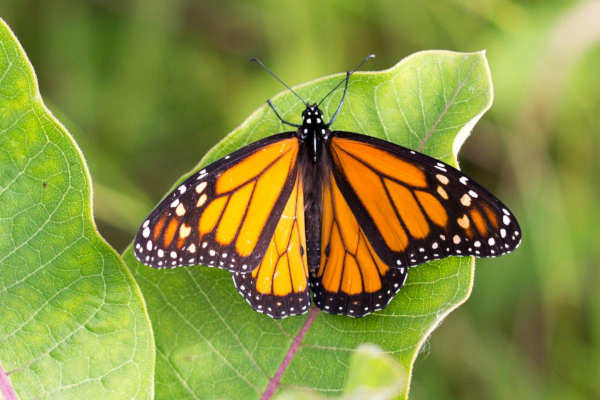
Are there two populations of monarch butterflies in California?
Q: Are there two populations of monarch butterflies in California?
A: The bottom line is that it’s unclear, but we continue to track the research, as we are responsible for their conservation and successful migration.
In addition to the declining population of migratory western monarch butterflies, scientists are seeing an increase in resident monarchs that breed year-round. Resident monarchs have been reported in higher numbers in coastal areas from San Diego to the San Francisco Bay Area.
Historically, the migratory monarch population overwintered in coastal groves from October to March. During the rest of the year, monarchs migrated and bred throughout states west of the Rocky Mountains. In the past, winter breeding may have occurred at a low level.
However, over the past few years it has expanded concurrent with the decline of the migratory population. A 2021 scientific study estimated that there were approximately 12,000 resident monarchs — more than six times the remaining migratory population.
Scientists are currently looking into which factors are influencing the transition to year-round breeding. One hypothesis is that the expansion of nonnative tropical milkweed (Asclepias curassavica) in home gardens may induce winter breeding. Climate change could also play a role as warmer winter weather exposes monarchs to temperatures that can cause them to break reproductive diapause early.
It is unclear whether resident monarchs represent a separate population from the migratory population or if there is intermixing. If they are distinct populations, questions remain over whether the resident and migratory populations can persist side by side. Finally, scientists are still trying to determine if the transition to year-round breeding represents a persistent trend or is a short-term adaptation to local conditions.
As a trustee agency, the California Department of Fish and Wildlife is tasked with protecting California’s flora and fauna, including terrestrial invertebrates like monarch butterflies for their ecological value and enjoyment by the public. California Fish and Game Code (FGC) section 1021 directs CDFW to “take feasible actions to conserve monarch butterflies and the unique habitats they depend upon for successful migration.”
Turkey hunting guides
Q: I’m a fairly inexperienced turkey hunter but I’m interested in learning more this fall. Other than word-of-mouth, do you have any suggestions on how (and where) I might find a good guide?
A: Yes! CDFW maintains a list of licensed guides for both hunting and fishing. You can find the list on our website, and sort by services offered, species targeted and/or county, as well as by name or permit number if you’re looking for a particular guide. Guided hunts are often worth the investment for new hunters – you’re paying for their shared knowledge and experience, and it greatly increases your chances of a successful outing! Good luck!
Lake and streambed alteration
Q: My neighbor is dumping dirt in the creek by our home. Is this legal?
A: It might be. California Fish and Game Code (FGC) section 1602(a) requires notification to CDFW of any activity that would substantially alter the bed, bank or channel of a river, stream or lake, or dispose of material where it could enter into a river, stream or lake. Therefore, it would be illegal for your neighbors to alter the creek bed by your home without notifying CDFW. CDFW requires a Lake and Streambed Alteration (LSA) Agreement when a project activity may substantially adversely affect fish and wildlife resources. For more information, please visit CDFW’s LSA Program online.
FGC section 5650 outlines prohibitions on water pollution including discharge of any of the following into California waterways:
(1) Any petroleum, acid, coal or oil tar, lampblack, aniline, asphalt, bitumen, or residuary product of petroleum, or carbonaceous material or substance.
(2) Any refuse, liquid or solid, from any refinery, gas house, tannery, distillery, chemical works, mill, or factory of any kind.
(3) Any sawdust, shavings, slabs, or edgings.
(4) Any factory refuse, lime, or slag.
(5) Any cocculus indicus.
(6) Any substance or material deleterious to fish, plant life, mammals, or bird life.
If you believe you have witnessed an environmental crime, you should document the incident(s) via CalTip. Other agencies, including local government entities, the Regional Water Quality Control Board and Army Corps of Engineers, to name a few, may also have legal authority over these activities.
Bag vs. possession limit
Q: What’s the difference between a bag limit and possession limit? Is the possession limit always double the bag limit?
A: “Bag limit” is defined in California Fish and Game Code (FGC), section 18 as the maximum limit, in number or amount, of birds, mammals, fish, reptiles or amphibians that may lawfully be taken by any one person during a specified period of time. “Possession limit” is defined in FGC, section 19 as the maximum, in number or amount, of birds, mammals, fish, reptiles, or amphibians that may be lawfully possessed by one person.
The answer to your second question is no, the possession limit is not always double the bag limit. Possession limit and bag limit are frequently different, so it’s crucial to consult the appropriate regulations for the fish, game or other species you are attempting to take. As an example, during waterfowl season the daily bag limit is seven ducks. The possession limit for ducks is triple the daily bag limit so a hunter can legally possess 21 ducks.
- Details
- Written by: Nadine Strauss
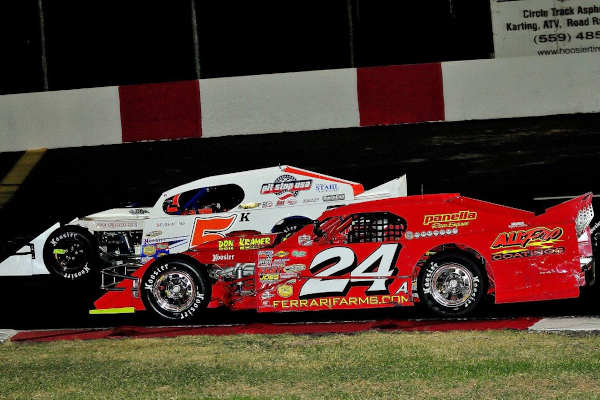
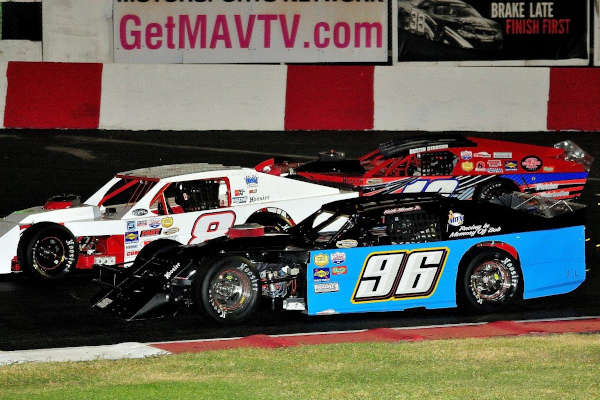
EUREKA, Calif. — The North State Modified Series, presented by Protect the Harvest, has partnered up with McMurray and Sons Roofing and Mark and Sharon Baldwin to offer the richest purse ever rendered to the NSMS drivers.
The event will be held at the Redwood Acres Raceway in Eureka on Sept. 25.
The first running of the “Dale Baldwin Challenge” will award $5,000 to the winner of the 60-lap main event, with $2,500 going to second, $,1500 for third, $1,200 for fourth and $1,000 to the fifth place finisher.
The event is honoring long-time race enthusiast Dale Baldwin who passed away suddenly on July 3, 2020, at the age of 94.
Baldwin loved auto racing and attended the races all over the Western United States for over 50 years with his family.
He sponsored his son Mark Baldwin’s race car for many years, and was extremely proud of the success they had racing at many venues around the West Coast.
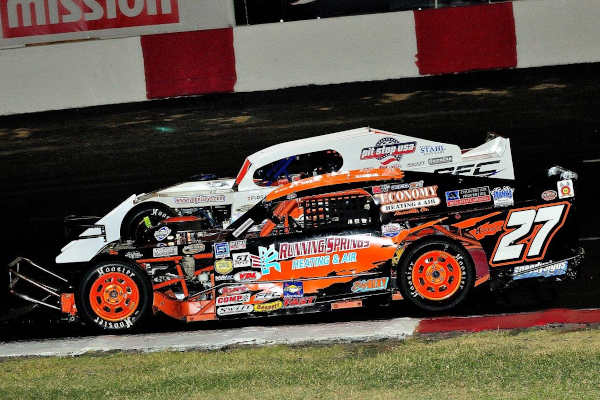
The event will also remember North State Modified driver Steve Taylor of Cloverdale, who the day before he died raced with the North State Modified Series at Eureka one year ago.
During the main event, Taylor got a tiny tear in his aorta, was unable to finish the race and died the next day. According to his wife, Sage, he was surrounded by close friends and family and had perhaps the best weekend of his life.
A parade lap, with all the modified drivers carrying American flags during the national anthem, will honor both of these good men who very much loved their country.
The NSMS drivers will also be competing in the Hoosier Tire Qualifying laps and the Lucas Oil Dash for Cash. Plus the top contenders in the 2021 points battle will be sharing a portion of Lucas Oil Tow Money.
The North State Modified Series would not be possible without the support of Protect the Harvest, Lucas Oil, McMurray & Sons Roofing, Mark and Sharon Baldwin, Economy Heating & Air, Sullivan Construction and Masonry, Hoosier Tire West, Sunoco Race Fuels, Naake Suspension, Five Star Bodies, Racer Bling, Scribner Plastics, Frank’s Radios, Supercuts, Vogel’s RVs and Authority Heating & Air.