 How to resolve AdBlock issue?
Recreation
- Details
- Written by: California Department of Fish and Wildlife
“It looks like it’s going to be a good opener in the San Joaquin Valley,” said Ben Lewis, Upland Game Coordinator for CDFW’s Central Region, which includes the Los Banos Wildlife Area, the Mendota Wildlife Area, the North Grasslands Wildlife Area and other popular dove hunting hotspots. “We’ve seen really strong numbers from our dove banding efforts. The weather is holding right now. We haven’t had any cold snaps that would move the birds out. The birds that are here should stay here for the opener.”
All of CDFW’s most popular wildlife areas for dove hunting will be open to the public during the first half of the dove season, which extends from Sept. 1 through 15, 2021.
The season will be closed from Sept. 16 through Nov. 12, and then open again from Nov. 13 through Dec. 27.
Food plots planted for dove typically consist of wheat, safflower or sunflower. The food and habitat benefit a variety of different bird and wildlife species throughout the year beyond dove.
Drought conditions may have impacted crop production in fields that weren’t irrigated. Preseason scouting is strongly encouraged where allowed.
CDFW areas planted with crops and open to public dove hunting Sept. 1 include Upper Butte Basin, Gray Lodge, Oroville, Yolo Bypass, Spenceville, North Grasslands, Mendota, Los Banos and Imperial Valley wildlife areas, and the Palo Verde Ecological Reserve.
Several CDFW wildlife areas have dove hunting maps available at their individual webpages. Printed maps are available at some check station locations.
Entry procedures vary from area to area, so hunters are advised to call ahead in preparing for their hunt.
Portions of the Los Banos and North Grasslands wildlife areas in Merced County, including the Salt Slough and China Island units, are restricted to special permit holders until noon on Sept. 1, after which they open to public hunting the remainder of the first dove season.
Southern California’s Imperial Valley offers some of the best dove hunting found anywhere in the nation. Imperial County provides additional public hunting opportunities on various fields planted with agricultural crops to attract doves. A map of the Upland Game Fields of Imperial County is available on CDFW’s website.
CDFW also offers a number of special dove hunts throughout the first and second dove seasons on public and private land through a lottery on its Online License Sales and Services website. Descriptions of these hunts are available at CDFW’s Upland Game Wild Bird Hunts and SHARE Program webpages.
Due to safeguards and limitations necessitated by COVID-19, CDFW asks all hunters to please respect physical distancing from other hunters and adhere to all site-specific rules and regulations.
In ongoing monitoring efforts, preliminary results show a strong statewide dove banding effort in 2021. More than 2,500 doves have been banded compared to the 1,861 birds banded in 2020. Hunters who encounter a banded bird are asked to report it to the U.S. Geological Survey Bird Banding Lab. Banded birds are part of important biological monitoring and reporting of bands completes the process. After reporting, hunters will receive a certificate of appreciation identifying the general capture location, estimated age of the bird and other information.
Mourning doves are among the most numerous of any upland game bird species. California hunters harvested almost 700,00 mourning doves during the 2020-21 hunting season. The U.S. Fish and Wildlife Service estimates the total mourning dove population among seven western states, including California, at more than 33 million birds.
The Sept. 1 dove opener marks the traditional start of California’s hunting season and typically brings together multiple generations of family and friends to participate in one of California’s most anticipated hunting seasons of the year.
The dove opener often is the first hunting season for new hunters who have recently completed Hunter Education. Doves concentrate in and around agricultural areas and can provide fast, challenging action. Minimal equipment is required beyond a valid California hunting license, an upland game bird validation (for hunters 18 and older), a shotgun of almost any gauge, nonlead ammunition, sun protection and plenty of water to stay hydrated in typically hot weather. Doves, delicious on the table, are many hunters’ favorite wild game species to eat.
California is home to several species of dove. Mourning dove and white-winged dove have a daily bag limit of 15, up to 10 of which may be white-winged dove. The possession limit is triple the daily bag limit. There are no limits on spotted dove and ringed turtle doves. Hunting for Eurasian collard-dove is legal year-round with no limit. A dove identification guide is available at CDFW’s website.
Shooting hours for dove begin one-half hour before sunrise and end at sunset.
- Details
- Written by: California Department of Fish and Wildlife
Based on CDFW projections of the recreational fall Chinook salmon harvest, anglers will have met the “spit area” adult fall Chinook salmon quota of 15% of the total Klamath River Basin allotment by that time.
Meeting the quota triggers the closure of the spit fishery at the mouth of the Klamath River, within 100 yards of the channel through the sand spit formed at the Klamath River mouth.
The spit area is downstream of the Highway 101 bridge located near the town of Klamath. All recreational fishing will remain closed there for the remainder of the 2021 season.
Anglers may keep track of the quota status of open and closed sections of the Klamath and Trinity rivers by calling the information hotline at 800-564-6479.
For more information regarding Klamath River fishing regulations, please consult the 2021-2022 California Freshwater Sport Fishing Regulations at www.wildlife.ca.gov/regulations.
- Details
- Written by: California Department of Fish and Wildlife
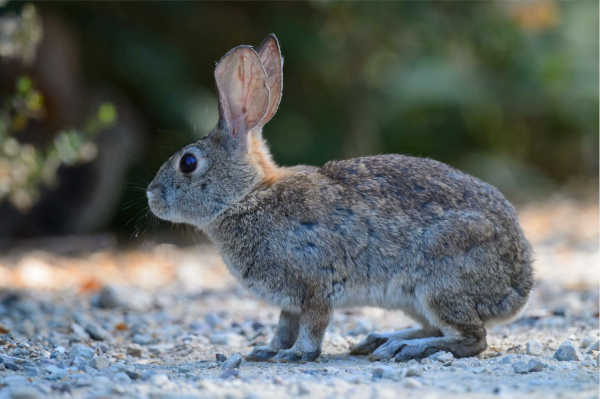
Rabbit Hemorrhagic Disease
Q: Is a vaccine available for Rabbit Hemorrhagic Disease virus type 2 (RHDV2), which was confirmed in 2020 in wild rabbit populations in California?
A: Yes, although there are no commercially available RHDV2 vaccines in the United States. Under authorization of the state veterinarian at the California Department of Food and Agriculture, or CDFA, vaccines produced in Europe may be imported into California for use in domestic rabbits by licensed veterinarians.
The California Department of Fish and Wildlife, or CDFW, and the U.S. Fish and Wildlife Service are using imported vaccines to protect California’s most endangered rabbit, the riparian brush rabbit, against RHDV2. Information on RHDV2 in domestic rabbits can be found on CDFA’s website. To learn more about vaccinating domestic rabbits against RHDV2 contact your veterinarian.
Riparian brush rabbits are found in small patches of remaining riparian forest habitat in the northern portion of the Central Valley and the Sacramento-San Joaquin Delta. Because vaccinations require trapping and administering injections to each individual rabbit, it is not feasible to deploy vaccinations for wild rabbit populations except in cases where populations are small and endangered.
CDFW has received reports that live rabbits are still observed in areas where we have confirmed the virus is present, giving us hope that some rabbits are surviving infection.
RHDV2 was first observed in wild rabbits in the southwestern U.S. in March 2020 and has rapidly spread to many states. In California, cases of the virus in wild rabbits have been detected in Alameda, Kern, Los Angeles, Orange, Riverside, San Bernardino and San Diego counties.
Cases in domestic rabbits have also been confirmed in Ventura and San Luis Obispo counties. RHDV2 is not related to the novel coronavirus and does not affect humans or domestic animals other than rabbits.
You and others can help by keeping your eyes open and reporting any sick or dead wild rabbits as our wildlife veterinarians monitor the situation. We're asking anyone who lives, works or recreates in wild rabbit habitat to report sightings of sick or dead rabbits to CDFW’s Wildlife Health Laboratory at 916-358-2790, or file an online mortality report through CDFW’s website.
CDFW’s RHDV2 webpage includes fact sheets and information about the virus, how to report sightings of dead rabbits, ways to prevent human-caused spread of the disease, and a link to the U.S. Department of Agriculture interactive map showing counties where the disease has been confirmed in domestic, feral and/or wild rabbits.
Avian illness
Q: I’ve been reading articles about the mystery illness affecting birds in the Eastern U.S. We have been seeing birds with the same symptoms around our home in Southern California for months. Crusty eyes, twitchy head movements, disorientation or they do not fly off when approached. Have there been any reported bird deaths in California that could be attributed to the mystery illness?
A: While the cause of the illness affecting birds in the eastern U.S. is still being investigated, CDFW’s Wildlife Health Laboratory is closely monitoring two diseases that are known to cause eye disease in wild birds in California. These include avian mycoplasmosis, a bacterial infection, and avian pox, which is a viral infection.
Both are transmitted through contact with an infected bird or contaminated surfaces like bird feeders. Avian pox may also be transmitted through a mosquito bite.
Avian mycoplasmosis primarily affects house finches and goldfinches and causes swollen, crusty eyes, labored breathing and generalized weakness. A related infection has also been identified in crows.
Avian pox causes wart-like growths on the skin often around the eyes and bill. Both infections spread readily at bird feeders and bird baths. If sick birds are seen at feeders, it is recommended the feeders be removed until the outbreak subsides. Thorough, weekly cleaning of bird feeders and bird baths may help reduce transmission.
An even better option would be to plant a bird and pollinator friendly garden. Residents can help CDFW monitor for wildlife illness and deaths by submitting a report using CDFW’s online mortality reporting form. Disposable gloves should be worn, and hands should be thoroughly washed after handling of bird feeders and bird baths and when disposing of dead birds.
Endangered species
Q: I think I saw a threatened or endangered animal! What should I do?
A: Congratulations! Witnessing California’s rare and protected species is a special treat. As you observe wildlife, especially sensitive wildlife, please be sure to maintain an appropriate distance from the animal so as not to disturb its normal behavior and keep noise to a minimum.
Do not attempt to capture or lure the animal to you. Not only is this illegal for most protected species, but it can also harm individuals by interrupting normal behaviors and activities, such as breeding or foraging. Observations of protected species may be submitted to the California Natural Diversity Database, or CNDDB, which tracks all of California’s sensitive plants and animals.
One option is to use the Online Field Survey Form to enter your observation, including details such as location and date of observation, descriptions of habitat and behaviors seen, and to upload any photos you took. First time users will need to set up an account, but this is free of charge.
Once you have an account you can continue to input additional observations, access past observations and generate reports of your submissions.
- Details
- Written by: California Department of Fish and Wildlife
Testing of razor clams at Clam Beach, Humboldt County in June and July 2021, indicated all clams were below the federal action level for domoic acid of 20 parts per million.
This announcement arrives several months after the fishery opened in Del Norte County. With the opening of Humboldt County, no domoic acid closures remain in effect for razor clams.
Domoic acid is produced by a naturally occurring marine alga, Pseudo-nitzschia, that was responsible for a massive bloom that occurred off the California coast in late 2015.
The recreational razor clam fishery closed in April 2016 after a recommendation from health agencies. Domoic acid poisoning in humans may occur within minutes to hours after consumption of affected seafood and can result in signs and symptoms ranging from vomiting and diarrhea to permanent loss of short-term memory (Amnesic Shellfish Poisoning), coma or death.
There is no way to prepare clams that will remove the toxin — cooking and freezing have no effect.
CDFW reminds clammers that the daily bag limit for razor clams is 20 and the first 20 clams dug must be retained regardless of size or condition. During odd-numbered years, Clam Beach (also known as Little River Beach) in Humboldt County, is only open between Moonstone Beach and north of the boundary line due west from the Clam Beach south parking lot trailhead (40° 59.67’ N. lat.).
Effective March 8, 2021, each person is required to keep a separate container for their clams and is not allowed to commingle their take with another person when digging and transporting clams to shore.
For more information, please refer to the California Recreational Ocean Fishing Regulations Section 29.20 Clams General and Section 29.45 for specific razor clam regulations.
For more information on any fishery closure information or health advisories, please visit: https://www.wildlife.ca.gov/Fishing/Ocean/Health-Advisories.
To get the latest information on current fishing season closures related to domoic acid, please call CDFW’s Domoic Acid Fishery Closure Information Line at 831-649-2883.
For the latest consumption warnings, please call CDPH’s Biotoxin information Line at 510-412-4643 or toll-free at 800-553-4133.