 How to resolve AdBlock issue?
Recreation
- Details
- Written by: Anderson Marsh State Historic Park
The next guided walk will be held on Saturday, June 10, beginning at 8:30 a.m.
The June nature walk will be led by Nicola Selph, a volunteer State Parks Docent.
The route taken on the walk will depend on the condition of the trails. The hike should last between 1½ and 2 hours.
Bring binoculars and meet in the parking lot at 8:15 a.m. for time to experience the early morning wildlife that can be found in the Ranch House and Barn complex yard. The walk will begin at 8:30 a.m.
There is no charge for the guided nature walk and parking is free for those attending.
Anderson Marsh State Historic Park is located on Highway 53, between Lower Lake and Clearlake.
For more information about the guided walk, email
- Details
- Written by: Lake County Public Services Department
The pool is located at 20962 Big Canyon Road.
The hours of operation will be noon to 5 p.m. Wednesday through Sunday.
The pool fees are as follows:
• Children under 12 years old: $1.25.
• 13 years and older: $2.
• Individual season passes: $42.
• Family season passes (up to 5 individuals): $84.
If you have any questions please call the Lake County Public Services office at 707-262-1618.
The Public Services Office is open Monday through Friday from 8 a.m. to 5 p.m.
- Details
- Written by: Bureau of Land Management
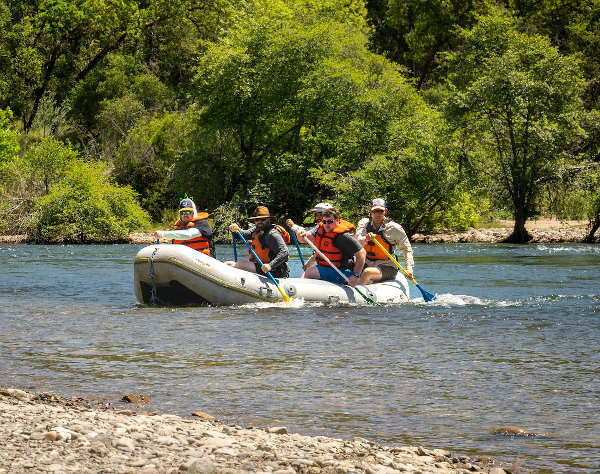
The Bureau of Land Management reminds the public to recreate responsibly as summer approaches and visitors start recreating on California rivers, in day-use areas, and when fishing, boating, swimming or performing other forms of water recreation.
Water-related accidents are among the most common cause of death in some of our nation’s most visited parks, forests and waterways, reports recreation.gov.
“Visitor safety is always BLM’s priority,” said BLM California State Director Karen Mouritsen. “We welcome all visitors to recreate responsibly on your public lands."
Streams, especially on the east-side and west-side of the Sierra Nevada, may be above flood stage as temperatures rise and are running colder, higher and faster than they have in recent years — due to the melting of heavy-mountain snowpack.
The frigid waters can cause a rapid loss of body heat known as hypothermia, which can be deadly. It can also cause a person’s muscles to cramp quickly, affecting their ability to swim and get out of the water.
There are also other hidden dangers to consider before entering the water. For example, the Trinity River and Clear Creek are controlled by dams.
“Releases can quickly raise water levels and flow rates, catching swimmers off guard,” said Redding Field Manager Jennifer Mata, also reminding the public that planned releases are often posted on kiosks.
Information on streamflow rates, shown in cubic feet per second, or CFS, can be found online at https://waterwatch.usgs.gov/.
“The Kern River has many hidden obstacles beneath the water surface, which creates very powerful currents that can easily sweep you off your feet,” advises Bakersfield Field Manager Gabriel Garcia. “Among BLM’s goals are to provide a safe and secure environment for the public, employees and public land users, so we encourage visitors to stay out of the Kern River.”
Garcia says Keysville Special Recreation Management Area remains open; however, swimming is strongly discouraged and entering the water is at your own risk.
The BLM is posting warning signs in day-use areas and other recreation sites along rivers, including the Kern River, due to the risks involved with swift-moving waterways, treacherous rocks hidden beneath the surface of the water, and undertows and currents, which create very dangerous conditions downstream. Life jackets are essential.
Other considerations include:
• Stay away from river edges and check for closures or warnings before venturing outdoors. Also, watch out for floating debris such as tree limbs that might have been washed into the river or stream.
• Rattlesnakes are found throughout the river area and hikers and campers should be careful where they put their hands and feet.
• If rafting or kayaking, use all appropriate safety gear. Watch children closely; keep them away from fast moving water, be sure they have flotation devices and stay close to them while they are playing in or near the water.
• Stay hydrated with extreme temperature changes; it is not uncommon to see more injuries and fatalities in the summer due to heat stroke or dehydration, since temperatures often soar above 100 degrees Fahrenheit.
• And finally, be sure to bring extra water and remember to sip often.
The BLM manages more than 245 million acres of public land located primarily in 12 western states, including Alaska, on behalf of the American people. The BLM also administers 700 million acres of subsurface mineral estate throughout the nation.
- Details
- Written by: Elizabeth Larson
The next guided walk will be held on Saturday, May 13, beginning at 8:30 a.m.
The May nature walk will be led by Henry Bornstein, a certified California Naturalist and volunteer State Parks Docent.
The route taken on the walk will depend on the condition of the trails after the recent rains.
The hike should last between one and a half to two hours.
Bring binoculars and meet in the parking lot at 8:15am for time to experience the early morning wildlife that can be found in the Ranch House and Barn complex yard – the walk will begin at 8:30 a.m.
There is no charge for the guided nature walk and parking is free for those attending.
Anderson Marsh State Historic Park is located on Hwy 53, between Lower Lake and Clearlake.
For more information about the guided walk, email