How to resolve AdBlock issue?
Refresh this page
Lake County News,California
  • Home
    • Registration Form
  • News
    • Education
    • Veterans
    • Community
      • Obituaries
      • Letters
      • Commentary
    • Police Logs
    • Business
    • Recreation
    • Health
    • Religion
    • Legals
    • Arts & Life
    • Regional
  • Calendar
  • Contact us
    • FAQs
    • Phones, E-Mail
    • Subscribe
  • Advertise Here
  • Login
How to resolve AdBlock issue?
Refresh this page

News

Clearlake Police Association to host National Night Out event Aug. 12

CLEARLAKE, Calif. — The Clearlake Police Association is inviting city residents to join them for an evening of community fun and entertainment.

The association is hosting National Night Out 2025 at 5 p.m. Tuesday, Aug. 12, at Austin Park.

The event is free.

Families are encouraged to meet at the splash pad for an evening of fun, food and entertainment. 

The event will feature outdoor activities, a prize giveaway for children, a K9 demonstration, “Dunk the Chief” booth, and food and refreshments.

The association urges residents to bring the whole family and connect with your local community.

National Night Out is a community-building campaign that promotes police-community partnerships and neighborhood camaraderie to make neighborhoods safer, more caring places to live.

Follow the Clearlake Police Department on Facebook for updates.

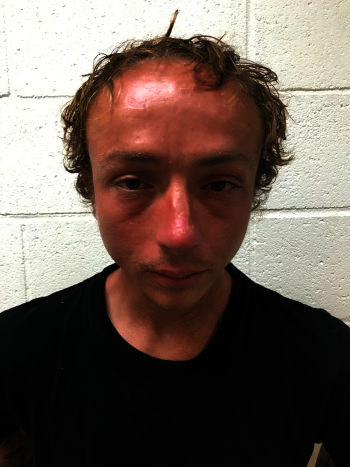
Clearlake Police seek missing man

Tye Hamilton. Photo courtesy of the Clearlake Police Department.


CLEARLAKE, Calif. — The Clearlake Police Department is asking for the community’s assistance in locating a missing man.

Tye Hamilton, 31, was last seen in the Clearlake area, police said.

Hamilton is a white male, with hazel eyes and brown hair, standing 5 feet, 6 inches tall and weighing 150 pounds. 

If you have any information regarding his whereabouts please contact the Clearlake Police Department at 707-994-8251, Extension 1 for dispatch, or text a tip to CLEARLAKEPD followed by your message, to 888777.

CHP welcomes 130 new officers dedicated to serving California

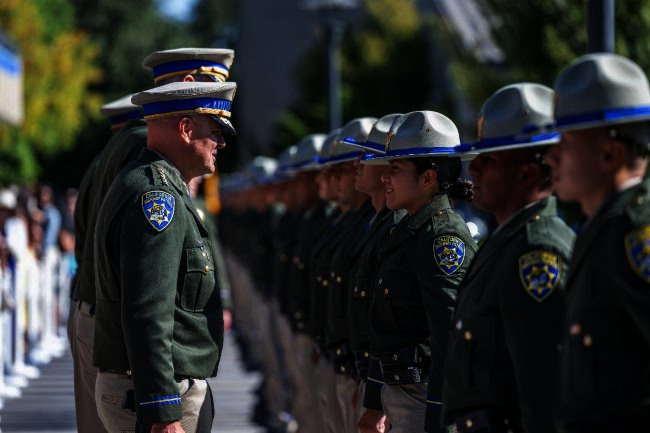
California Highway Patrol Commissioner Sean Duryee greets newly graduated cadets at the CHP Academy graduation in West Sacramento on Friday, Aug. 1, 2025. Photo courtesy of the CHP.

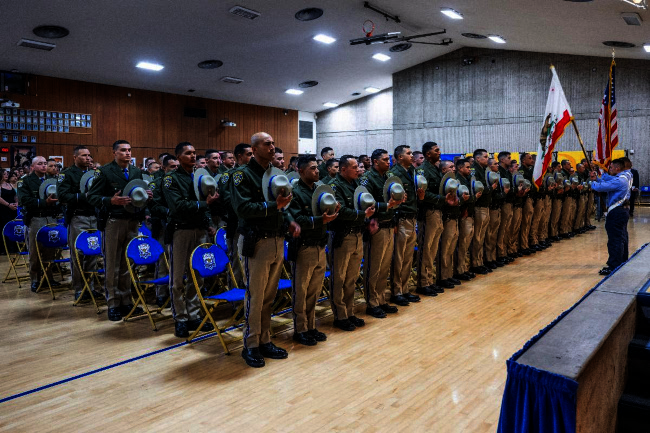
The California Highway Patrol proudly welcomed 130 newly sworn officers on Friday, celebrating their successful completion of 26 weeks of intensive training at the CHP Academy in West Sacramento. 

This milestone marks another step in the department’s ongoing mission to increase public safety across California.

“This graduation represents more than a ceremony; it signifies a solemn pledge to protect and serve. These officers have demonstrated their dedication to keeping California’s communities safe and upholding the CHP’s core values,” said CHP Commissioner Sean Duryee.

These new officers will now report to one of the CHP’s 102 Area offices across California to start their law enforcement careers, protecting and serving communities throughout the state's 58 counties.

This group of graduates brings a rich blend of backgrounds and experience, including several with public safety and military service, former college athletes and even one with a unique background as a public address announcer.

During academy training, cadets receive instruction in traffic enforcement, crash investigation, defensive tactics, firearms, emergency vehicle operations and community policing. 

The curriculum also focuses on legal responsibilities, communication, ethics and cultural awareness to prepare cadets to serve California’s diverse population.

Following Friday’s graduation ceremony, nearly 300 cadets remain at the CHP’s live-in training facility and an additional 160 cadets are set to start instruction on Aug. 11 as part of the Department’s ongoing efforts to enhance public safety across the state.

The CHP continues to actively recruit dedicated individuals who are ready to make a difference in communities throughout California. “A career with the CHP offers comprehensive training, competitive benefits and opportunities for professional growth and advancement,” the agency said.

To learn more about joining the CHP, visit its website.

The newest CHP Academy graduating class in West Sacramento on Friday, Aug. 1, 2025. Photo courtesy of the CHP.

The 3 worst things you can say after a pet dies, and what to say instead

Loss of a pet falls into what researchers call disenfranchised grief in which the pain is often minimized or discounted. Claudia Luna/iStock via Getty Images Plus

I saw it firsthand after my cat Murphy died earlier this year. She’d been diagnosed with cancer just weeks before.

She was a small gray tabby with delicate paws who, even during chemotherapy, climbed her favorite dresser perch – Mount Murphy – with steady determination.

The day after she died, a colleague said with a shrug: “It’s just part of life.”

That phrase stayed with me – not because it was wrong, but because of how quickly it dismissed something real.

Murphy wasn’t just a cat. She was my eldest daughter – by bond, if not by blood. My shadow.

Why pet grief doesn’t count

More than two-thirds of U.S. households include pets. Americans tend to treat them like family with birthday cakes, shared beds and names on holiday cards.

But when someone grieves them like family, the cultural script flips. Grief gets minimized. Support gets awkward. And when no one acknowledges your loss, it starts to feel like you weren’t even supposed to love them that much in the first place.

I’ve seen this kind of grief up close – in my research and in my own life. I am a psychologist who studies attachment, loss and the human-animal bond.

And I’ve seen firsthand how often grief following pet loss gets brushed aside – treated as less valid, less serious or less worthy of support than human loss. After a pet dies, people often say the wrong thing – usually trying to help, but often doing the opposite.

A boy holding up a cat, both wearing birthday hats.
Many Americans consider pets family members. vesi_127/Moment via Getty Images

When loss is minimized or discounted

Psychologists describe this kind of unacknowledged loss as disenfranchised grief: a form of mourning that isn’t fully recognized by social norms or institutions. It happens after miscarriages, breakups, job loss – and especially after the death of a beloved animal companion.

The pain is real for the person grieving, but what’s missing is the social support to mourn that loss.

Even well-meaning people struggle to respond in ways that feel supportive. And when grief gets dismissed, it doesn’t just hurt – it makes us question whether we’re even allowed to feel it.

Here are three of the most common responses – and what to do instead:

‘Just a pet’

This is one of the most reflexive responses after a loss like this. It sounds harmless. But under the surface is a cultural belief that grieving an animal is excessive – even unprofessional.

That belief shows up in everything from workplace leave policies to everyday conversations. Even from people trying to be kind.

But pet grief isn’t about the species, it’s about the bond. And for many, that bond is irreplaceable.

Pets often become attachment figures; they’re woven into our routines, our emotional lives and our identities. Recent research shows that the quality of the human-pet bond matters deeply – not just for well-being, but for how we grieve when that connection ends.

What’s lost isn’t “just an animal.” It’s the steady presence who greeted you every morning. The one who sat beside you through deadlines, small triumphs and quiet nights. A companion who made the world feel a little less lonely.

But when the world treats that love like it doesn’t count, the loss can cut even deeper.

It may not come with formal recognition or time off, but it still matters. And love isn’t less real just because it came with fur.

If someone you care about loses a pet, acknowledge the bond. Even a simple “I’m so sorry” can offer real comfort.

‘I know how you feel’

“I know how you feel” sounds empathetic, but it quietly shifts the focus from the griever to the speaker. It rushes in with your story before theirs has even had a chance to land.

That instinct comes from a good place. We want to relate, to reassure, to let someone know they’re not alone. But when it comes to grief, that impulse often backfires. Grief doesn’t need to be matched. It needs to be honored and given time, care and space to unfold, whether the loss is of a person or a pet.

Instead of responding with your own story, try simpler, grounding words:

  • “That sounds really hard.”

  • “I’m so sorry.”

  • “I’m here if you want to talk.”

You don’t need to understand someone’s grief to make space for it. What helps isn’t comparison – it’s presence.

Let them name the loss. Let them remember. Let them say what hurts.

Sometimes, simply staying present – without rushing, problem-solving or shifting the focus away – is the most meaningful thing you can do.

Family of four sitting together on a sofa with three dogs surrounding them.
Pets frequently make a showing in family photos and holiday cards. Klaus Vedfelt/DigitalVision via Getty Images

‘You can always get another one’

“You can always get another one” is the kind of thing people offer reflexively when they don’t know what else to say – a clumsy attempt at reassurance.

Underneath is a desire to soothe, to fix, to make the sadness go away. But that instinct can miss the point: The loss isn’t practical – it’s personal. And grief isn’t a problem to be solved.

This type of comment often lands more like customer service than comfort. It treats the relationship as replaceable, as if love were something you can swap out like a broken phone.

But every pet is one of a kind – not just in how they look or sound, but in how they move through your life. The way they wait for you at the door and watch you as you leave. The small rituals that you didn’t know were rituals until they stopped. You build a life around them without realizing it, until they’re no longer in it.

You wouldn’t tell someone to “just have another child” or “just find a new partner.” And yet, people say the equivalent all the time after pet loss.

Rushing to replace the relationship instead of honoring what was lost overlooks what made that bond irreplaceable. Love isn’t interchangeable – and neither are the ones we lose.

So offer care that endures. Grief doesn’t follow a timeline. A check-in weeks or months later, whether it’s a heart emoji, a shared memory or a gentle reminder that they’re not alone, can remind someone that their grief is seen and their love still matters.

When people say nothing

People often don’t know what to say after a pet dies, so they say nothing. But silence doesn’t just bury grief, it isolates it. It tells the griever that their love was excessive, their sadness inconvenient, their loss unworthy of acknowledgment.

And grief that feels invisible can be the hardest kind to carry.

So if someone you love loses a pet, don’t change the subject. Don’t rush them out of their sadness. Don’t offer solutions.

Instead, here are a few other ways to offer support gently and meaningfully:

  • Say their pet’s name.

  • Ask what they miss most.

  • Tell them you’re sorry.

  • Let them cry.

  • Let them not cry.

  • Let them remember.

Because when someone loses a pet, they’re not “just” mourning an animal. They’re grieving for a relationship, a rhythm and a presence that made the world feel kinder. What they need most is someone willing to treat that loss like it matters.The Conversation

Brian N. Chin, Assistant Professor of Psychology, Trinity College

This article is republished from The Conversation under a Creative Commons license. Read the original article.

Space News: Light pollution is encroaching on observatories around the globe – making it harder for astronomers to study the cosmos

Light pollution from human activity can threaten radio astronomy – and people’s view of the night sky. Estellez/iStock via Getty Images

Outdoor lighting for buildings, roads and advertising can help people see in the dark of night, but many astronomers are growing increasingly concerned that these lights could be blinding us to the rest of the universe.

An estimate from 2023 showed that the rate of human-produced light is increasing in the night sky by as much as 10% per year.

I’m an astronomer who has chaired a standing commission on astronomical site protection for the International Astronomical Union-sponsored working groups studying ground-based light pollution.

My work with these groups has centered around the idea that lights from human activities are now affecting astronomical observatories on what used to be distant mountaintops.

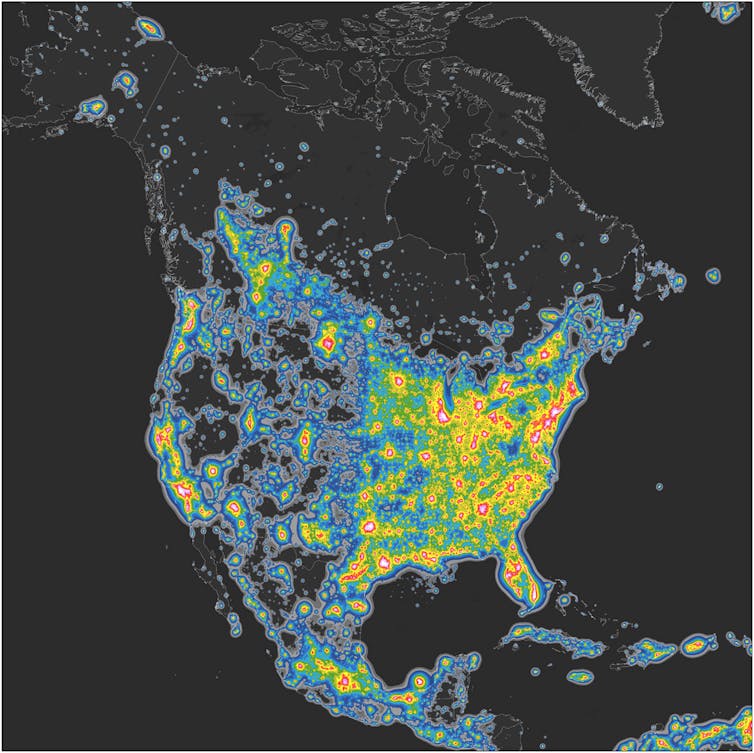
A map of North America showing light pollution, with almost all the eastern part of the U.S. covered from Maine to North Dakota, and hot spots on the West Coast.
Map of North America’s artificial sky brightness, as a ratio to the natural sky brightness. Falchi et al., Science Advances (2016), CC BY-NC

Hot science in the cold, dark night

While orbiting telescopes like the Hubble Space Telescope or the James Webb Space Telescope give researchers a unique view of the cosmos – particularly because they can see light blocked by the Earth’s atmosphere – ground-based telescopes also continue to drive cutting-edge discovery.

Telescopes on the ground capture light with gigantic and precise focusing mirrors that can be 20 to 35 feet (6 to 10 meters) wide. Moving all astronomical observations to space to escape light pollution would not be possible, because space missions have a much greater cost and so many large ground-based telescopes are already in operation or under construction.

Around the world, there are 17 ground-based telescopes with primary mirrors as big or bigger than Webb’s 20-foot (6-meter) mirror, and three more under construction with mirrors planned to span 80 to 130 feet (24 to 40 meters).

The newest telescope starting its scientific mission right now, the Vera Rubin Observatory in Chile, has a mirror with a 28-foot diameter and a 3-gigapixel camera. One of its missions is to map the distribution of dark matter in the universe.

To do that, it will collect a sample of 2.6 billion galaxies. The typical galaxy in that sample is 100 times fainter than the natural glow in the nighttime air in the Earth’s atmosphere, so this Rubin Observatory program depends on near-total natural darkness.

Two pictures of the constellation Orion, with one showing many times more stars.
The more light pollution there is, the fewer stars a person can see when looking at the same part of the night sky. The image on the left depicts the constellation Orion in a dark sky, while the image on the right is taken near the city of Orem, Utah, a city of about 100,000 people. jpstanley/Flickr, CC BY

Any light scattered at night – road lighting, building illumination, billboards – would add glare and noise to the scene, greatly reducing the number of galaxies Rubin can reliably measure in the same time, or greatly increasing the total exposure time required to get the same result.

The LED revolution

Astronomers care specifically about artificial light in the blue-green range of the electromagnetic spectrum, as that used to be the darkest part of the night sky. A decade ago, the most common outdoor lighting was from sodium vapor discharge lamps. They produced an orange-pink glow, which meant that they put out very little blue and green light.

Even observatories relatively close to growing urban areas had skies that were naturally dark in the blue and green part of the spectrum, enabling all kinds of new observations.

Then came the solid-state LED lighting revolution. Those lights put out a broad rainbow of color with very high efficiency – meaning they produce lots of light per watt of electricity. The earliest versions of LEDs put out a large fraction of their energy in the blue and green, but advancing technology now gets the same efficiency with “warmer” lights that have much less blue and green.

Nevertheless, the formerly pristine darkness of the night sky now has much more light, particularly in the blue and green, from LEDs in cities and towns, lighting roads, public spaces and advertising.

The broad output of color from LEDs affects the whole spectrum, from ultraviolet through deep red.

The U.S. Department of Energy commissioned a study in 2019 which predicted that the higher energy efficiency of LEDs would mean that the amount of power used for lights at night would go down, with the amount of light emitted staying roughly the same.

But satellites looking down at the Earth reveal that just isn’t the case. The amount of light is going steadily up, meaning that cities and businesses were willing to keep their electricity bills about the same as energy efficiency improved, and just get more light.

Natural darkness in retreat

As human activity spreads out over time, many of the remote areas that host observatories are becoming less remote. Light domes from large urban areas slightly brighten the dark sky at mountaintop observatories up to 200 miles (320 kilometers) away. When these urban areas are adjacent to an observatory, the addition to the skyglow is much stronger, making detection of the faintest galaxies and stars that much harder.

A white-domed building on a hilltop among trees.
The Mt. Wilson Observatory in the Angeles National Forest may look remote, but urban sprawl from Los Angeles means that it is much closer to dense human activity today than it was when it was established in 1904. USDA/USFS, CC BY

When the Mt. Wilson Observatory was constructed in the Angeles National Forest near Pasadena, California, in the early 1900s, it was a very dark site, considerably far from the 500,000 people living in Greater Los Angeles. Today, 18.6 million people live in the LA area, and urban sprawl has brought civilization much closer to Mt. Wilson.

When Kitt Peak National Observatory was first under construction in the late 1950s, it was far from metro Tucson, Arizona, with its population of 230,000. Today, that area houses 1 million people, and Kitt Peak faces much more light pollution.

Even telescopes in darker, more secluded regions – like northern Chile or western Texas – experience light pollution from industrial activities like open-pit mining or oil and gas facilities.

A set of buildings atop a mountain in the desert.
European Southern Observatory’s Very Large Telescope at the Paranal site in the sparsely populated Atacama Desert in northern Chile. J.L. Dauvergne & G. Hüdepohl/ESO, CC BY-ND

The case of the European Southern Observatory

An interesting modern challenge is facing the European Southern Observatory, which operates four of the world’s largest optical telescopes. Their site in northern Chile is very remote, and it is nominally covered by strict national regulations protecting the dark sky.

AES Chile, an energy provider with strong U.S. investor backing, announced a plan in December 2024 for the development of a large industrial plant and transport hub close to the observatory. The plant would produce liquid hydrogen and ammonia for green energy.

Even though formally compliant with the national lighting norm, the fully built operation could scatter enough artificial light into the night sky to turn the current observatory’s pristine darkness into a state similar to some of the legacy observatories now near large urban areas.

A map showing two industrial sites, one large, marked on a map of Chile. Just a few miles to the north are three telescope sites.
The location of AES Chile’s planned project in relation to the European Southern Observatory’s telescope sites. European Southern Observatory, CC BY-ND

This light pollution could mean the facility won’t have the same ability to detect and measure the faintest galaxies and stars.

Light pollution doesn’t only affect observatories. Today, around 80% of the world’s population cannot see the Milky Way at night. Some Asian cities are so bright that the eyes of people walking outdoors cannot become visually dark-adapted.

In 2009, the International Astronomical Union declared that there is a universal right to starlight. The dark night sky belongs to all people – its awe-inspiring beauty is something that you don’t have to be an astronomer to appreciate.The Conversation

Richard Green, Astronomer Emeritus, Steward Observatory, University of Arizona

This article is republished from The Conversation under a Creative Commons license. Read the original article.

County adds $700K to upgrade Cobb road project after pause over quality concerns

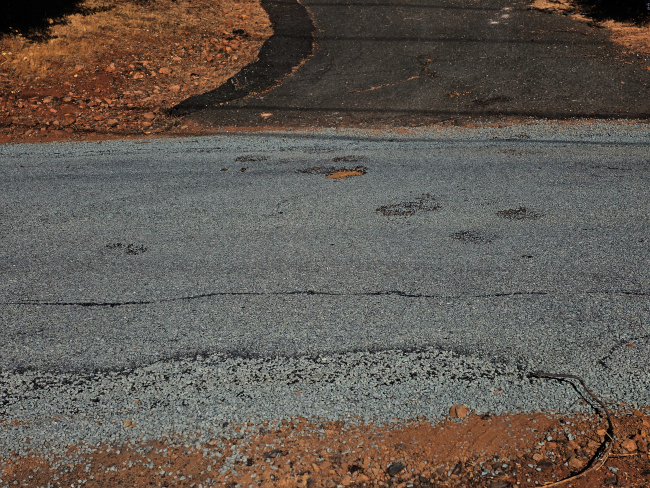
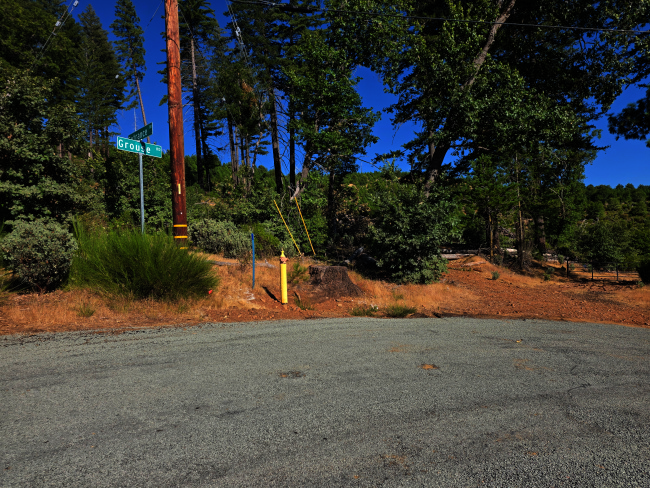
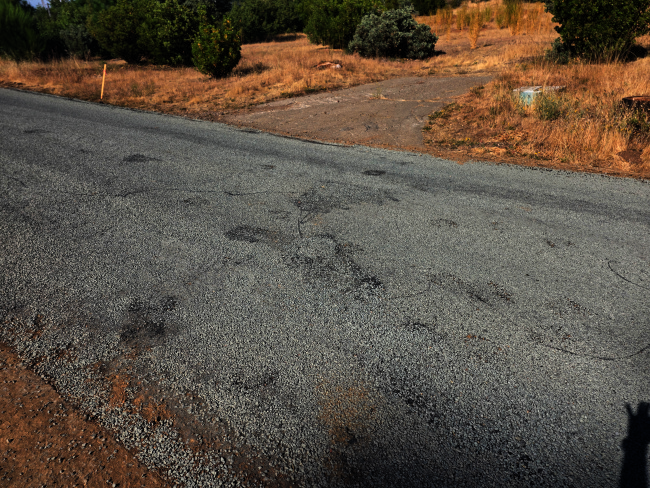
Potholes and patchwork visible in the first layer of chip seal on Grouse Road, one of 26 roads in the Cobb road rehabilitation project currently under reevaluation of paving method, photographed on July 30, 2025. Photo by Lingzi Chen/Lake County News.


LAKE COUNTY, Calif. — After pausing a $5 million road project in Cobb due to quality and durability concerns, the Board of Supervisors on Tuesday directed staff to add $700,000 to upgrade the surface on certain roads from double chip seal to asphalt. 

In 2024, the board approved the plan to use a double chip seal — a less expensive paving material for part of the project — for budgetary reasons. But as construction progressed in the summer, resident complaints and signs of early deterioration led to a mid-project pause and review.

Ultimately, the board agreed to allocate additional funds to upgrade the paving material to meet quality standards that can better withstand traffic, weather, winter snow plows — and last longer. 

While Public Works staff said the issue stemmed from paving material rather than construction, the pause and reevaluation of the project have raised questions about the county’s decision-making process.

“We failed,” said Supervisor Bruno Sabatier. “We had plans made available to us. We approved these plans. Two directors have gone through these plans and continued to push forward with these plans, and now we're saying something went wrong.”

During public comment, residents expressed frustration over newly paved roads deteriorating quickly. They said the road issues have raised both emotional and practical concerns, urging the board to approve better paving materials.

As the board agreed at the meeting, a construction change order will go before the board in mid-August, according to Interim Public Works Director Lars Ewing in his email to Lake County News. The change order will reflect the additional funding allocation to the project. 

Dates for project resumption and completion are to be determined as county staff work with the contractor, Argonaut Constructors, on the change order, Ewing added. 

Construction paused after road issues surface

On April 8, the county awarded a $5.1 million construction contract to Argonaut to rehabilitate 16 miles of road in Cobb.

Under the project plans approved, all local roads were to receive either hot-mixed asphalt or a more affordable double chip seal — a gravel and oil mix. Asphalt, though more expensive, is more durable and typically lasts twice as long, according to Ewing.

Construction began on June 9. As it progressed, residents reported quality issues — including potholes quickly forming on some newly pulverized roads that had received a single layer of chip seal. Their feedback prompted county staff to investigate.

District 5 Supervisor Jessica Pyska, whose district includes the project area, attended a Cobb Area Council meeting to discuss the matter with the residents, Ewing told Lake County News. On July 17, after inspecting the roads onsite, county staff paused the project pending a design review.

The county then requested the final design report from Nichols Consulting Engineers, or NCE, the firm hired to design for the project. 

In a July 23 report, NCE noted that “former county staff” had recommended many roads be surfaced with a double chip seal, according to the staff memo.

“Where the issue came about is the concern of the double chip seal,” said Ewing at the Tuesday board meeting. “At that point, I paused the contract after the first layer of chips was placed so that we could reevaluate.”

For now, 26 roads totaling five miles — or roughly 31% of the project — remain with a single chip seal layer, awaiting next steps.

Potholes and patchwork visible in the first layer of chip seal on Grouse Road, one of 26 roads in the Cobb road rehabilitation project currently under reevaluation of paving method, photographed on July 30, 2025. Photo by Lingzi Chen/Lake County News.


‘We need to understand what we’re approving’

While decision making was mentioned at the meeting, a deeper discussion did not follow. 

In a phone call with Lake County News on Monday, Supervisor Sabatier said he was picking up “new information” from NCE’s July report.

To meet the county’s overall budget, the report said “we recommend a group of streets be surfaced with a double chip seal, composed of a larger lower chip and a finer upper chip for smoothness and placed on the pulverized layer.”

Sabatier read this section to Lake County News and said it’s new to him. 

“We didn't approve the specifics of the project; we only approved the contract that does not divulge the very detailed specifics of the project,” he said during the call. “And so that can be something that we can change.” 

At the Tuesday meeting, Sabatier brought up the fact that the project design had been recommended by two consecutive department directors and approved by the board — and still went wrong. 

“We need to do a better job of either understanding what we're approving or making sure that we review what we're approving,” Sabatier said.

Ewing responded, refusing to say there were mistakes in previous decision making. 

“I'm not here to say that those decisions were wrong. Chip seal is a viable product.” said Ewing. “I do not want to be up here as the interim director saying that any former directors or anyone involved with the project made an incorrect decision. It's a judgment call.”

The board did not further discuss whether a mistake had been made or how to improve the decision-making process.

On June 17, the supervisors voted to terminate Glen March, director of Public Works, just a year after he took the job. 

March’s termination occurred about a week after construction began for the Cobb road project. 

With Ewing now serving as the interim, the county is seeking a new permanent hire — the fourth person to oversee the project, following Ewing, March and his predecessor, longtime director Scott De Leon, who retired in June 2024

“There's been a lot of lessons learned in this project. We're on our third director with this project. We have another one coming up,” Supervisor Jessica Pyska said. “And I think, as a board, when we look at these projects, we need to make sure that we're doing these projects to a standard that's going to give us a long term return on our investment.”

As the Cobb area lies in her district, Pyska offered to contribute $225,000 from her cannabis discretionary funding: “I'm pushing in most of my discretionary funding to make this happen, because it's that important.”

The remaining amount — $475,000 — will be covered by the approved county budget for roads or unanticipated occurrences. Ewing said at the meeting that it would not affect the county’s other projects. 

Residents: ‘That’s not gonna hold’

NCE Principal/Pavement Engineer Jame Signore said at the meeting that double chip seal is a “very common treatment used in rural agencies around the western United States.” 

He recalled that for the Cobb project, double chip seal was only planned for roads with lesser traffic and lower speeds. 

But it does not seem to perform as expected in some of the roads treated with this material. 

Kelsey and Jeritt Skelton, who live on Grouse Road — one of the roads being considered for an upgrade to asphalt — said they were initially excited to see the road work begin.

But days after the first layer of chip seal was applied, the crew came back and did a “patch job,” Jeritt Skelton told Lake County News, standing on the road in front of his home, pointing to the “patches” in various sizes. Some parts of the chip layer already were gone and dirt was exposed.

“That’s not gonna hold,” said Kelsey Skelton, speaking of the road durability during winter, looking away to the road.

She said she did not know what’s going on with the road work. Seeing the constructors putting the first layer down and not coming back, she thought, “that’s how it’s gonna be forever.”

Still, the Skeltons expressed gratitude for this first chip seal layer with patches. “I am grateful to have this at least; the roads before were really bad,” Jeritt Skelton said. 

The Skeltons are not alone. 

Ewing told Lake County News that residents’ concerns have centered on “frustration regarding previously-paved roads being double chip sealed, and questions regarding whether the double chip seal would hold up in that area given frequent use of snowplows in the wintertime, among other factors.”

Cobb resident Grace Ernst said during public comment that the first coat applied to the roads have already developed potholes, areas of exposed dirt and erosion. 

“And that’s with good weather and just a few cars driving by,” Ernst said. “It is troubling to think about how the deterioration will progress and accelerate once we begin to get rain and snow.”

Operations Chief Paul Duncan of South Lake County Fire Protection District and Cal Fire also spoke over Zoom to support asphalt paving for safe operation of fire fighting.

“We need to maintain that state minimum of 75,000 pounds and an aggregate base of those roads to support that equipment,” Duncan said. 

Located just two minutes away from the Summit Drive, on one of the roads under concern, is the Cal Fire Helitack Base. 

“Putting a chip seal down, to me, is not a long term solution,” Duncan said. “And it is a hazard for that community.”

Potholes and patchwork visible in the first layer of chip seal on Grouse Road, one of 26 roads in the Cobb road rehabilitation project currently under reevaluation of paving method, photographed on July 30, 2025. Photo by Lingzi Chen/Lake County News.


Ongoing challenges

Toward the end of the discussion, District 3 Supervisor EJ Crandell, who said his district has the lowest Pavement Condition Index, or PCI, reminded the board that road challenges extend beyond Cobb. 

Road conditions have limited access by garbage truck and emergency vehicles in parts of his district, Crandell said, among other problems the district’s residents have been facing owing to road conditions.

“I'm not trying to go against this project; I support it. I just want to emphasize that I just want these to get done, so my district can get a higher PCI code,” he said. “I only say that just to kind of stand on a soapbox, not trying to go against this.”

A 2023 report by NCE recommended a 10-year pavement management program of $165 million over 10 years — a minimum scenario — that aims to raise the overall pavement condition in Lake County and reduce the need for deferred maintenance. However, even this plan was well beyond the county’s funding capacity.

As the board addresses Cobb’s immediate needs, how to allocate stringent road funding countywide remains an ongoing challenge.

Cobb roads under evaluation

In his email, Ewing provided a list of the roads being “evaluated for pavement.” It includes the following 26 roads:
 
• Adams Springs Court
• Adams Spring Drive
• Brookside Drive
• Carolyn Drive
• Castlewood Road
• Costello Way
• Creek View Drive
• Dove Drive
• Elliott Drive
• Entrance Road
• Forest Lake Drive
• Grouse Road
• Hogan Hill Lane
• Jones Court
• Lassen Drive
• Palmer Court
• Palmer Drive
• Pamela Drive
• Parnassus Drive
• Prather Court
• Prather Way
• Quail Drive
• Regina Way
• St Helena Drive
• Sugar Pine Drive
• Summit Drive

For a full list of roads under construction for the Cobb road project, click here. 

Email staff reporter Lingzi Chen atThis email address is being protected from spambots. You need JavaScript enabled to view it.. 

  • 179
  • 180
  • 181
  • 182
  • 183
  • 184
  • 185
  • 186
  • 187
  • 188

Community

  • Sheriff’s Activities League and Clearlake Bassmasters offer youth fishing clinic

  • City Nature Challenge takes place April 24 to 27

Public Safety

  • Lakeport Police logs: Wednesday, Feb. 11

  • Lakeport Police logs: Tuesday, Feb. 10

Education

  • Ramos measure requiring school officer training in use of anti-opioid drug moves forward

  • Lake County Chapter of CWA announces annual scholarships 

Health

  • California ranks 24th in America’s Health Rankings Annual Report from United Health Foundation

  • Healthy blood donors especially vital during active flu season

Business

  • Employment law summit takes place March 9

  • Two Lake County Mediacom employees earn company’s top service awards

Obituaries

  • Terry Knight

  • Ellen Thomas

Opinion & Letters

  • Who should pay for AI’s power? Not California ratepayers

  • Crandell: Supporting nephew for reelection in supervisorial race

Veterans

  • State honors fallen chief warrant officer killed in conflict in Iran

  • CalVet and CSU Long Beach team up to improve data collection related to veteran suicides

Recreation

  • April Audubon program will show how volunteers can help monitor local osprey nests

  • First guided nature walk of spring at Anderson Marsh State Historic Park April 11

  • Second Saturday guided nature walks continue at Anderson Marsh State Historic Park

  • Wet weather trail closure in effect on Upper Lake Ranger District

Religion

  • Kelseyville Presbyterian Church plans Easter service

  • Easter ‘Sonrise’ Service returns to Xabatin Community Park

Arts & Life

  • ‘CIA’ delves into the shadowy world of an espionage thriller

  • ‘War Machine’ shifts the battlefield into uncharted territory

Government & Politics

  • Lake County Democratic Central Committee endorses Falkenberg

  • Crandell launches reelection campaign plans March 15 event

Legals

  • April 23 hearing on Lake Coco Farms Major Use Permit

  • NOTICE OF 30-DAY PUBLIC COMMENT PERIOD & NOTICE OF PUBLIC HEARING

How to resolve AdBlock issue?
Refresh this page