How to resolve AdBlock issue?
News

Officials said this development strengthens California’s ability to protect communities from catastrophic wildfire, adding to the largest aerial firefighting fleet in the world.
Last year, California became the first state in the nation to own, operate, and deploy a C-130H airtanker for wildfire suppression. The first C-130H was a critical part of the state’s firefight in Los Angeles earlier this year.
Since it went into operation, the tanker has flown 90 missions responding to 36 fires and dropping 253,702 gallons of retardant.
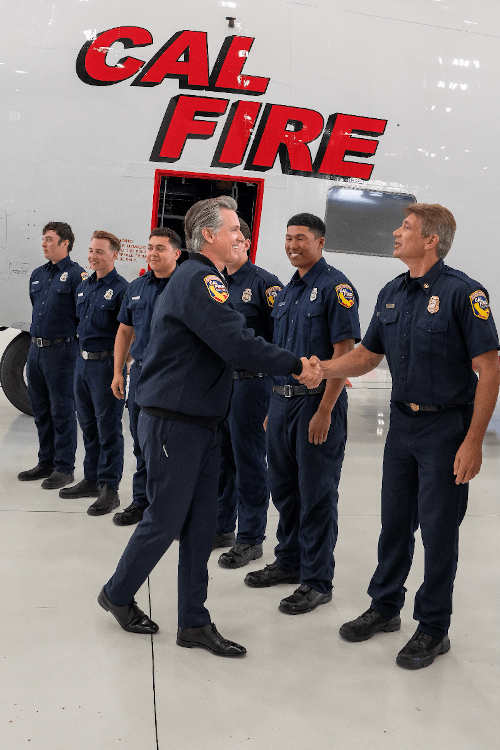
Tanker 121, a former United States Coast Guard aircraft, was officially placed into Cal Fire service on Thursday after undergoing precise and critical modifications.
This is the second of seven planned C-130H airtankers, and is a mission-critical asset in an era of increased year-round wildfire frequency and intensity.
These large-capacity, highly specialized aircraft deliver significant volumes of fire retardant in a single mission, enhancing Cal Fire’s ability to protect communities and natural resources.
Gov. Gavin Newsom — in partnership with U.S. Senator Alex Padilla, the late U.S. Senator Dianne Feinstein, and Representative Ken Calvert — spearheaded this initiative for California to take on ownership of these aircraft, speed up the time to have them flying firefighting operations in California, and expand Cal Fire’s firefighting capabilities.
At a hangar in Sacramento, the governor joined Cal Fire Chief Joe Tyler, firefighting personnel, and those who helped make the C-130H possible to celebrate the milestone.
“The largest aerial firefighting force in the world is getting even bigger. Thanks to our champions in Congress – Sen. Padilla, Representative Calvert, and the late, great Sen. Feinstein – California’s second C-130 airtanker is ready to take flight, just in time ahead of peak fire season,” Gov. Newsom said.
On Thursday, the governor also received a demonstration of Cal Fire’s new C-130H simulator — the only one of its kind in the nation owned by a fire department. The simulator helps train pilots and engineers specifically for C-130 firefighting missions.
The journey to integrate the C-130H aircraft into Cal Fire’s fleet began in 2018 when California secured approval to acquire seven of these aircraft from the Coast Guard.
President Joe Biden signed legislation in late 2023, officially transferring ownership of the seven C-130H aircraft to the state, where Cal Fire would complete the work of retrofitting the aircraft for wildfire suppression operations.
“The completed transfer of federal C-130 airtankers to Cal Fire is equipping California’s firefighters with significantly expanded capabilities to protect vulnerable communities from wildfires and save lives,” said Sen. Padilla. “Pushing the Air Force to complete this transfer has been a top priority of mine since I joined the Senate, which is why I worked to pass legislation to get it done as quickly as possible. As we saw with the first retrofitted aircraft fighting the Los Angeles fires, these powerful planes will enable California to respond to wildfires more quickly and effectively as we face more extreme conditions and increasingly devastating disasters.”
“The C-130 Hercules aircraft that have been transferred from the federal government to Cal Fire are game changing additions to our wildfire response aviation arsenal,” said Rep. Calvert. “Our bipartisan efforts to secure the C-130s are an important step in better protecting Californians from dangerous wildfires. I look forward to all seven of the C-130s being operational and deployed across California in the near future.”
Cal Fire’s C-130 program involved substantial contributions from multiple partners. The United States Air Force and the United States Coast Guard provided support in maintaining these aircraft, including the replacement of inner and outer wing boxes and essential spare parts.
Following their arrival at Cal Fire Aviation Headquarters, the aircraft underwent extensive modifications, including the installation of a 4,000-gallon tank and a sophisticated retardant delivery system, or RDS.
“Placing the second C-130H airtanker into service is another milestone in ensuring Californians are protected from the growing threat of wildfire,” said Cal Fire Director and Fire Chief Joe Tyler. “This addition strengthens our aerial firefighting capabilities and demonstrates our continued commitment to safeguarding lives, property, and natural resources across the state.”
Building on unprecedented progress
Even before this, California had built up the largest aerial firefighting fleet in the world, including the recently added — and night-time capable — firefighting Fire Hawk helicopters.
These new C-130Hs will be strategically located throughout the state at Cal Fire bases to mobilize when needed, adding to the helicopters, other aircraft, and firefighters ready to protect Californians.
This follows California’s leadership in utilizing innovation and technology to fight fires smarter, leveraging artificial intelligence, satellites, and more for wildfire detection, projection, and suppression.
In addition to nearly doubling the state’s budget for Cal Fire in recent years, the state has also dramatically increased work to prevent wildfire.
While 57% of California’s forests are federally managed, the state government manages only 3% of the forestland.
On state land, more than 2,200 projects are complete or underway, and in recent years, California has treated nearly 2 million acres — made possible by scaling up investments to 10 times the amount from when the governor took office in 2019.
Gas prices have seen a slight improvement in recent days.
The average for a gallon of regular gasoline is slightly lower this week in California, at $4.80, down five cents since last week.
A substantial 61-cent drop from the $5.41 per gallon average Californians were seeing this time last year.
Although the national average of $3.17 is slightly up from last week and 5 cents higher than last month, it’s still well below what drivers were paying this year over year.
“An increase in demand — as the weather gets nicer and more people get out and about — is pushing prices up slightly,” said Doug Johnson with AAA Northern California. “The price of crude oil is also on the lower side at $62 a barrel, compared to $82 a barrel, which is what it cost one year ago.”
According to new data from the Energy Information Administration, or EIA, gasoline demand increased from 8.46 million b/d last week to 9.41.
Total domestic gasoline supply decreased from 234.0 million barrels to 229.5. Gasoline production increased last week, averaging 10.1 million barrels per day.
Fuel prices around the state:
• Lake County: $4.78 (average).
• San Francisco: $4.98.
• Oakland: $4.91.
• San Jose: $4.89.
• Sacramento: $4.83.
• Fresno: $4.77.
• Stockton: $4.70.
Oil market dynamics
At the close of Wednesday’s formal trading session, WTI fell $1.40 to settle at $62.27 a barrel.
The EIA reports that crude oil inventories increased by 0.2 million barrels from the previous week.
At 443.1 million barrels, U.S. crude oil inventories are about 5% below the five-year average for this time of year.
EV charging
The national average per kilowatt hour of electricity at a public EV charging station stayed the same this past week at 34 cents. In California it's 35 cents.
State stats
Gas
The nation’s top 10 most expensive gasoline markets are California ($4.80), Hawaii ($4.51), Washington ($4.28), Oregon ($3.92), Nevada ($3.87), Alaska ($3.64), Illinois ($3.42), Arizona ($3.37), Pennsylvania ($3.35), and Idaho ($3.32).
The nation's top 10 least expensive gasoline markets are Mississippi ($2.68), Oklahoma ($2.71), Texas ($2.74), Louisiana ($2.75), Alabama ($2.78), Tennessee ($2.79), South Carolina ($2.80), Arkansas ($2.80), Kentucky ($2.83), and Kansas ($2.83).
Electric
The nation’s top 10 most expensive states for public charging per kilowatt hour are Hawaii (55 cents), Alaska (47 cents), West Virginia (47 cents), Montana (45 cents), South Carolina (44 cents), Tennessee (43 cents), Kentucky (42 cents), Idaho (42 cents), Louisiana (41 cents), and Georgia (40 cents).
The nation’s top 10 least expensive states for public charging per kilowatt hour are Kansas (22 cents), Missouri (25 cents), Iowa (27 cents), Delaware (28 cents), Nebraska (28 cents), Utah (29 cents), Texas (30 cents), Maryland (30 cents), Vermont (31 cents), and North Carolina (31 cents).
Find current fuel prices at https://gasprices.aaa.com/.
The average for a gallon of regular gasoline is slightly lower this week in California, at $4.80, down five cents since last week.
A substantial 61-cent drop from the $5.41 per gallon average Californians were seeing this time last year.
Although the national average of $3.17 is slightly up from last week and 5 cents higher than last month, it’s still well below what drivers were paying this year over year.
“An increase in demand — as the weather gets nicer and more people get out and about — is pushing prices up slightly,” said Doug Johnson with AAA Northern California. “The price of crude oil is also on the lower side at $62 a barrel, compared to $82 a barrel, which is what it cost one year ago.”
According to new data from the Energy Information Administration, or EIA, gasoline demand increased from 8.46 million b/d last week to 9.41.
Total domestic gasoline supply decreased from 234.0 million barrels to 229.5. Gasoline production increased last week, averaging 10.1 million barrels per day.
Fuel prices around the state:
• Lake County: $4.78 (average).
• San Francisco: $4.98.
• Oakland: $4.91.
• San Jose: $4.89.
• Sacramento: $4.83.
• Fresno: $4.77.
• Stockton: $4.70.
Oil market dynamics
At the close of Wednesday’s formal trading session, WTI fell $1.40 to settle at $62.27 a barrel.
The EIA reports that crude oil inventories increased by 0.2 million barrels from the previous week.
At 443.1 million barrels, U.S. crude oil inventories are about 5% below the five-year average for this time of year.
EV charging
The national average per kilowatt hour of electricity at a public EV charging station stayed the same this past week at 34 cents. In California it's 35 cents.
State stats
Gas
The nation’s top 10 most expensive gasoline markets are California ($4.80), Hawaii ($4.51), Washington ($4.28), Oregon ($3.92), Nevada ($3.87), Alaska ($3.64), Illinois ($3.42), Arizona ($3.37), Pennsylvania ($3.35), and Idaho ($3.32).
The nation's top 10 least expensive gasoline markets are Mississippi ($2.68), Oklahoma ($2.71), Texas ($2.74), Louisiana ($2.75), Alabama ($2.78), Tennessee ($2.79), South Carolina ($2.80), Arkansas ($2.80), Kentucky ($2.83), and Kansas ($2.83).
Electric
The nation’s top 10 most expensive states for public charging per kilowatt hour are Hawaii (55 cents), Alaska (47 cents), West Virginia (47 cents), Montana (45 cents), South Carolina (44 cents), Tennessee (43 cents), Kentucky (42 cents), Idaho (42 cents), Louisiana (41 cents), and Georgia (40 cents).
The nation’s top 10 least expensive states for public charging per kilowatt hour are Kansas (22 cents), Missouri (25 cents), Iowa (27 cents), Delaware (28 cents), Nebraska (28 cents), Utah (29 cents), Texas (30 cents), Maryland (30 cents), Vermont (31 cents), and North Carolina (31 cents).
Find current fuel prices at https://gasprices.aaa.com/.
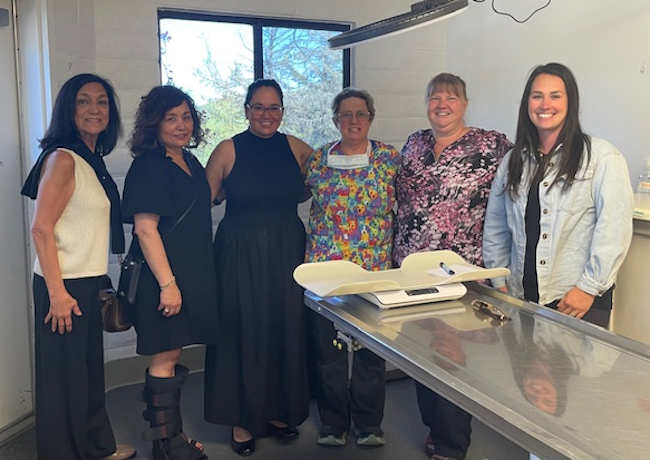
UPPER LAKE, Calif. – The Habematolel Pomo of Upper Lake has made a significant donation to assist with funding for an upcoming spay and neuter clinic.
The tribe said it has donated Pet Fix - Lake County, a partnership between The SPCA of Lake County, Dogwood Animal Rescue Project and Clearlake Animal Association.
Habematolel’s donation includes $4,000 to fund a feral cat clinic and $18,500 to support half the cost of the upcoming three-day "Pet Fix - Lake County" spay and neuter clinic scheduled for June 13 to 15.
The tribe’s support will allow the SPCA to spay and neuter approximately 200 owned cats and dogs over the three-day weekend, while also supporting a dedicated clinic for unowned, feral cats in the community.
In addition to spay and neuter services, pets will receive vaccinations to prevent the spread of communicable diseases.
“This donation reflects our tribe’s deep commitment to supporting the health and well-being of all members of our community,” said Chairperson Danielle Cirelli of the Habematolel Pomo of Upper Lake. “We’re especially grateful to Tara Downey for bringing this need to our attention. Her advocacy and support for tribes and for Lake County is inspiring, and this collaboration is a strong example of how intergovernmental relationships can make a positive impact.”
Tara Downey, a Clearlake city councilmember and member of the Mechoopda Indian Tribe, has been instrumental in building cooperative bridges between the city of Clearlake and the tribe. Her outreach on this issue exemplifies the kind of partnership HPUL seeks to foster throughout the region.
“There is an ongoing overpopulation crisis of cats and dogs in Lake County,” said Fawn Williams, treasurer of the SPCA and a veterinary assistant for the clinic. “Many residents simply cannot afford to spay or neuter their pets, and this incredible gift from the Tribe will provide so many benefits to our Lake County neighbors. Beyond controlling the pet population, this donation is going to decrease the spread of disease, prevent suffering, and improve the lives of animals and humans alike.”
The SPCA of Lake County is a nonprofit dedicated to providing high-volume, low-cost spay and neuter services. Their work is essential in addressing the growing number of stray and unowned animals in the area.
By spaying and neutering feral cat colonies, the SPCA helps stabilize and eventually reduce colony populations, curbing the spread of disease and preventing injuries among animals.

LAKE COUNTY, Calif. — The annual burn ban in Lake County starts on Thursday, May 1, to address concerns over both fire hazard and air quality.
The burn restriction applies to all areas in Lake County.
All burn permits expire on April 30.
The burn ban includes all open green waste burning, though exemptions are possible for agricultural operations, essential control burns for fire hazard reduction projects and public safety burns.
The annual burn ban was first implemented in 1986 in response to weather conditions that often create extreme fire danger and poor air quality.
A managed approach incorporating fire and air agency concerns has been implemented and improved upon for many years.
The ban allows a quick fire agency response to all fires observed from May 1 on, as all fires are assumed to be uncontrolled unless specifically authorized by an exemption permit and have been cleared for fire safety.
This successful program is one of the primary reasons Lake County has superior and healthful air quality.
The requirements to obtain an exemption permit to burn after May 1 can be found at www.lcaqmd.net. Please email a complete exemption request form toThis email address is being protected from spambots. You need JavaScript enabled to view it. for consideration.
Burning during the ban without an exemption permit is a violation and may be subject to citation, fines, and suppression costs to extinguish the fire.
“Please help us reduce the danger and losses caused by uncontrolled fires, and protect our clean air,” the Lake County Air Quality Management District said in a Wednesday statement. “Public cooperation is greatly appreciated and results in a safer and more healthful environment for us all.”
The burn restriction applies to all areas in Lake County.
All burn permits expire on April 30.
The burn ban includes all open green waste burning, though exemptions are possible for agricultural operations, essential control burns for fire hazard reduction projects and public safety burns.
The annual burn ban was first implemented in 1986 in response to weather conditions that often create extreme fire danger and poor air quality.
A managed approach incorporating fire and air agency concerns has been implemented and improved upon for many years.
The ban allows a quick fire agency response to all fires observed from May 1 on, as all fires are assumed to be uncontrolled unless specifically authorized by an exemption permit and have been cleared for fire safety.
This successful program is one of the primary reasons Lake County has superior and healthful air quality.
The requirements to obtain an exemption permit to burn after May 1 can be found at www.lcaqmd.net. Please email a complete exemption request form to
Burning during the ban without an exemption permit is a violation and may be subject to citation, fines, and suppression costs to extinguish the fire.
“Please help us reduce the danger and losses caused by uncontrolled fires, and protect our clean air,” the Lake County Air Quality Management District said in a Wednesday statement. “Public cooperation is greatly appreciated and results in a safer and more healthful environment for us all.”
Gov. Gavin Newsom on Wednesday announced that California has officially overtaken Japan to become the world’s fourth-largest economy, according to newly released data from the International Monetary Fund and the U.S. Bureau of Economic Analysis.
“California isn’t just keeping pace with the world — we’re setting the pace,” said Newsom. “Our economy is thriving because we invest in people, prioritize sustainability, and believe in the power of innovation. And, while we celebrate this success, we recognize that our progress is threatened by the reckless tariff policies of the current federal administration. California’s economy powers the nation, and it must be protected.”
According to the International Monetary Fund’s 2024 World Economic Outlook data released Tuesday and U.S. Bureau of Economic Analysis data, California’s nominal GDP reached $4.1 trillion, surpassing Japan’s $4.02 trillion, and placing California behind only the United States, China, and Germany in global rankings.
California’s GDP figure is based on the latest state-level GDP data from the Bureau of Economic Analysis.
Outperforming the nation
California’s economy is growing at a faster rate than the world’s top three economies. In 2024, California's growth rate of 6% outpaced the top three economies: U.S. (5.3%), China (2.6%) and Germany (2.9%).
California's success is long-term — the state’s economy grew strongly over the last four years, with an average nominal GDP growth of 7.5% from 2021 to 2024. Preliminary data indicates India is projected to surpass California by 2026.
California is the backbone of the nation’s economy
With an increasing state population and recent record-high tourism spending, California is the nation’s top state for new business starts, access to venture capital funding, and manufacturing, high-tech, and agriculture.
The state drives national economic growth and also sends over $83 billion more to the federal government than it receives in federal funding.
California is the leading agricultural producer in the country and is also the center for manufacturing output in the United States, with over 36,000 manufacturing firms employing over 1.1 million Californians.
The Golden State’s manufacturing firms have created new industries and supplied the world with manufactured goods spanning aerospace, computers and electronics, and, most recently, zero-emission vehicles.
Protecting California’s economy
Governor Gavin Newsom is protecting California’s economy, and last week filed a lawsuit in federal court challenging the president’s use of emergency powers to enact broad-sweeping tariffs that hurt states, consumers, and businesses.
The lawsuit seeks to end President Trump’s tariff chaos, which has wreaked havoc on the economy, destabilized the stock and bond markets, caused hundreds of billions of dollars in losses, and inflicted higher costs for consumers and businesses.
These harms will only continue to grow, as President Trump’s tariffs are projected to shrink the U.S. economy by $100 billion annually.
“California isn’t just keeping pace with the world — we’re setting the pace,” said Newsom. “Our economy is thriving because we invest in people, prioritize sustainability, and believe in the power of innovation. And, while we celebrate this success, we recognize that our progress is threatened by the reckless tariff policies of the current federal administration. California’s economy powers the nation, and it must be protected.”
According to the International Monetary Fund’s 2024 World Economic Outlook data released Tuesday and U.S. Bureau of Economic Analysis data, California’s nominal GDP reached $4.1 trillion, surpassing Japan’s $4.02 trillion, and placing California behind only the United States, China, and Germany in global rankings.
California’s GDP figure is based on the latest state-level GDP data from the Bureau of Economic Analysis.
Outperforming the nation
California’s economy is growing at a faster rate than the world’s top three economies. In 2024, California's growth rate of 6% outpaced the top three economies: U.S. (5.3%), China (2.6%) and Germany (2.9%).
California's success is long-term — the state’s economy grew strongly over the last four years, with an average nominal GDP growth of 7.5% from 2021 to 2024. Preliminary data indicates India is projected to surpass California by 2026.
California is the backbone of the nation’s economy
With an increasing state population and recent record-high tourism spending, California is the nation’s top state for new business starts, access to venture capital funding, and manufacturing, high-tech, and agriculture.
The state drives national economic growth and also sends over $83 billion more to the federal government than it receives in federal funding.
California is the leading agricultural producer in the country and is also the center for manufacturing output in the United States, with over 36,000 manufacturing firms employing over 1.1 million Californians.
The Golden State’s manufacturing firms have created new industries and supplied the world with manufactured goods spanning aerospace, computers and electronics, and, most recently, zero-emission vehicles.
Protecting California’s economy
Governor Gavin Newsom is protecting California’s economy, and last week filed a lawsuit in federal court challenging the president’s use of emergency powers to enact broad-sweeping tariffs that hurt states, consumers, and businesses.
The lawsuit seeks to end President Trump’s tariff chaos, which has wreaked havoc on the economy, destabilized the stock and bond markets, caused hundreds of billions of dollars in losses, and inflicted higher costs for consumers and businesses.
These harms will only continue to grow, as President Trump’s tariffs are projected to shrink the U.S. economy by $100 billion annually.
A bill to make California Native American Day — celebrated annually on the fourth Friday of September — a paid holiday for state employees was approved unanimously on Wednesday in the Assembly Committee on Public Employment and Retirement.
Assemblymember James C. Ramos (D-San Bernardino) introduced the bill, AB 989, approved previously by the Governmental Organization Committee.
Ramos, a member of the Serrano/Cahuilla tribe, is the first California Native American lawmaker elected in the state’s almost 175-year history. He has been working to enact a California Native American Day since 1998.
“I was a San Manuel council member when I started working toward this goal with Senator Joe Baca Sr.,” Ramos said. “This is one more step forward in recognizing and building knowledge about the history, culture and contributions of California’s Native Americans.”
In 2021, he successfully authored AB 855 that created a paid judicial holiday. The legislation did not include other state personnel because they are governed by a different statutory code section.
“California Native American history is California history, and the current unpaid holiday designation is an inadequate acknowledgment of the state’s First People and their millennia-long presence, saga and stewardship of the lands now known as California,” Ramos said.
California Native Vote Project is the bill sponsor. Director of organizing for the sponsor Calvin Hedrick (Mountain Maidu) stated, “The California Native Vote Project is proud to sponsor and strongly support Assembly Bill 989. Making California Native American Day a paid state holiday is more than symbolic; it’s a long-overdue act of recognition for the sovereignty, resilience, and enduring contributions of our Native people in California. AB 989 ensures that our voices, cultures, and histories are honored with the same respect as other communities, and sends a clear message that California is committed to truth, inclusion, and equity. We thank Assemblymember Ramos for his continued leadership in advancing justice for Native communities.”
Supporters include Blue Lake Rancheria Tribe of California, Cahuilla Band of Indians, California Consortium for Urban Indian Health, Chalon Indian Nation of California, Chalon Indian Nation of Bakersfield, Elk Valley Rancheria, California as well as Iipay Nation of Santa Ysabel, Indigenous Justice, Mongo Band of Mission Indians, Riverside-San Bernardino County Indian Health, Inc., Native Development Network and Society for California Archeology.
Assemblymember James C. Ramos (D-San Bernardino) introduced the bill, AB 989, approved previously by the Governmental Organization Committee.
Ramos, a member of the Serrano/Cahuilla tribe, is the first California Native American lawmaker elected in the state’s almost 175-year history. He has been working to enact a California Native American Day since 1998.
“I was a San Manuel council member when I started working toward this goal with Senator Joe Baca Sr.,” Ramos said. “This is one more step forward in recognizing and building knowledge about the history, culture and contributions of California’s Native Americans.”
In 2021, he successfully authored AB 855 that created a paid judicial holiday. The legislation did not include other state personnel because they are governed by a different statutory code section.
“California Native American history is California history, and the current unpaid holiday designation is an inadequate acknowledgment of the state’s First People and their millennia-long presence, saga and stewardship of the lands now known as California,” Ramos said.
California Native Vote Project is the bill sponsor. Director of organizing for the sponsor Calvin Hedrick (Mountain Maidu) stated, “The California Native Vote Project is proud to sponsor and strongly support Assembly Bill 989. Making California Native American Day a paid state holiday is more than symbolic; it’s a long-overdue act of recognition for the sovereignty, resilience, and enduring contributions of our Native people in California. AB 989 ensures that our voices, cultures, and histories are honored with the same respect as other communities, and sends a clear message that California is committed to truth, inclusion, and equity. We thank Assemblymember Ramos for his continued leadership in advancing justice for Native communities.”
Supporters include Blue Lake Rancheria Tribe of California, Cahuilla Band of Indians, California Consortium for Urban Indian Health, Chalon Indian Nation of California, Chalon Indian Nation of Bakersfield, Elk Valley Rancheria, California as well as Iipay Nation of Santa Ysabel, Indigenous Justice, Mongo Band of Mission Indians, Riverside-San Bernardino County Indian Health, Inc., Native Development Network and Society for California Archeology.