How to resolve AdBlock issue?
Refresh this page
Lake County News,California
  • Home
    • Registration Form
  • News
    • Education
    • Veterans
    • Community
      • Obituaries
      • Letters
      • Commentary
    • Police Logs
    • Business
    • Recreation
    • Health
    • Religion
    • Legals
    • Arts & Life
    • Regional
  • Calendar
  • Contact us
    • FAQs
    • Phones, E-Mail
    • Subscribe
  • Advertise Here
  • Login
How to resolve AdBlock issue?
Refresh this page

News

Supervisors appoint Lakeport Fire Board member; altered public records restored after inquiry

LAKE COUNTY, Calif. — The Board of Supervisors on Tuesday unanimously approved appointing a new member to the Lakeport Fire Protection District Board of Directors to fill a vacant seat.

At the same time, key public records from a past meeting on the item were found to have been altered or removed from the county’s website — and were restored Tuesday afternoon following an inquiry from Lake County News.

The County Administrative Office provided a written explanation for the altered records and attributed the disappearance of certain documents to an “administrative error.”

During the meeting, District 4 Supervisor Brad Rasmussen explained that the item had originally been scheduled for April 1 but was postponed after the recommended candidate, Joseph Iaccino, withdrew his application.

The Lakeport Fire Protection District Board of Directors, or LFPD, later submitted an updated letter dated April 9 recommending “either Terry Cherney or Gary Deas” from remaining applicants.

“I was involved in this process from the beginning and monitored the interviews, and with my knowledge of the candidates, I'm recommending to this board that we appoint Terry Cherney for the open director’s position for the Lakeport fire board,” said Rasmussen at the Tuesday meeting.

There was no further discussion from board members or the public. Rasmussen made the motion to appoint Cherney, which was seconded by Supervisor Helen Owen and passed unanimously.

Cherney’s appointment will fill the vacant seat left by former board member Melissa Bedford’s resignation. Bedford was appointed in December 2023.

According to Cherney’s application document, he works as a dispatcher, equipment operator and driver. He was also “a volunteer firefighter/captain for 20 years” and worked for “California forestry department for three seasons.”

“I will bring experience from being a volunteer firefighter/ captain to understanding what is best for the community and fire department,” Cherney wrote in his application.

Lake County News asked Rasmussen why he chose Cherney over Deas, the two candidates recommended by the fire district.

“All of the applicants, even those not recommended by the fire board, had appropriate qualifications and a strong desire to serve,” he said in an email response. “At this time I felt Mr. Cherney was the most appropriate fit.”

Deas previously had served on the fire board but resigned in 2022 to take a job out of the county.

The other fire board members include Andrew Britton, David Brown, Bill Gabe and Jeff Warrenburg. Together, they help oversee the 49-square-mile district. The district’s website said it currently has 15 paid staff and 19 volunteers.

Altered public records restored; removal called 'administrative error'

The item — Consideration of appointment to Lakeport Fire Protection District Board of Directors — was originally scheduled for the Board of Supervisors’ April 1 meeting.

During that meeting, District 4 Supervisor Brad Rasmussen explained the need to reschedule the item.

“Last week the fire board did an extensive interview process and recommended a candidate which I agreed with,” he said of the interview conducted on March 25 by the LFPD which decided to recommend Iaccino. “However that candidate withdrew from the process after 10 p.m. last night.”

Ahead of the April 22 meeting, Lake County News discovered that multiple documents associated with the April 1 agenda item appeared to have been altered or removed from the county’s online record.

First, the staff memo attached for the April 1 item was identical to the memo posted for April 22 — and was dated April 22 — three weeks after the actual meeting.

Second, the application from Joseph Iaccino, the original LFPD-recommended candidate who later withdrew, was marked as “unavailable.”

Third, the original recommendation letter from the LFPD Board of Directors was also shown as “unavailable.”

At 11:48 a.m. on Tuesday, Lake County News contacted Assistant Clerk to the Board of Supervisors Johanna DeLong seeking clarification.

Questions included: Why were these three records changed or removed? When were the changes made? Who authorized them? Is it common practice to alter posted records from a prior meeting? And could the original versions of the documents be provided?

At 3:35 p.m., Lake County News found that the county had restored all three documents in question attached to the April 1 meeting agenda on its website, including swapping the forward-dated memo back to the original one.

At 4:52 p.m., in a written response, the County Administrative Office explained why the item was rescheduled and that Iaccino’s document is no longer relevant to the April 22 meeting agenda.

Regarding the alterations to the April 1 meeting agenda, the office attributed it to an “administrative error.”

“Our office updated the file to move the item ahead in our agenda management system and revised the applicants accordingly,” DeLong and Administrative Analyst Carolyn Purdy wrote in an email. “Due to administrative error, part of the April 1st file was not visible online and has now been restored to its original form.”

However, the county’s response did not address when the records were altered, how the error occurred, or whether such changes to past meeting documents are a common or accepted practice — questions that remain central to transparency and reliability of public records.

Withdrawn candidates

Iaccino was not the only candidate who withdrew.

The open position at the LFPD board received six applications. The interviews with all six candidates were conducted at a LFPD special meeting on March 25.

One of the original six applicants was Gregory Scott, a retired Cal Fire assistant chief, who at one time ran the largest fire unit in the state — consisting of 100 fire stations — in Southern California.

He also has extensive background in disaster management and, after retiring to Lakeport, has been a volunteer with the Lakeport Police Department.

Scott said he wanted to look to find ways to stabilize the district and help it get the new firehouse and updated equipment it needs. “I think I could offer ideas,” Scott said, noting his past experience.

He’s previously applied for a seat on the fire protection district but has not been selected.

“This is the third interview I’ve gone for and I’ve been rejected,” he said of his effort to receive an appointment to the board.

At the end of the special March 25 meeting, Scott decided to withdraw his candidacy.

After going through 20-plus interview questions, Scott said he was told he would have to travel as part of the board.

Due to health requirements, he decided to forego pursuing the appointment, and said he didn’t want them to have to make exceptions for him.

Although he’s been disappointed about not having been chosen in the past to serve on the board, Scott said, “I’m not taking it to heart.”

Email staff reporter Lingzi Chen at This email address is being protected from spambots. You need JavaScript enabled to view it.. 

How single-stream recycling works − your choices can make it better


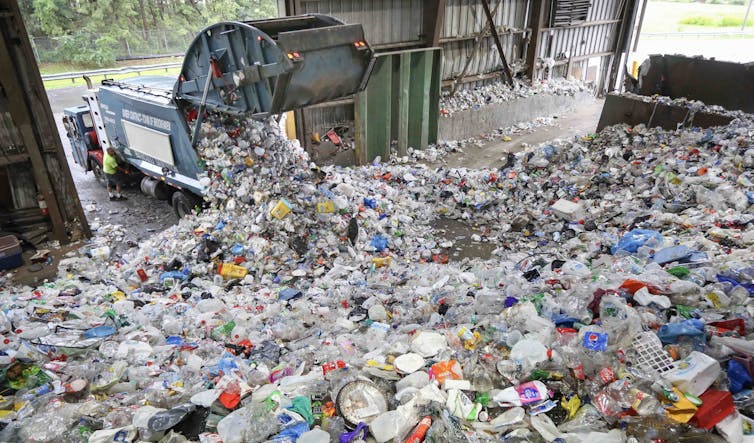
Successful recycling requires some care. Alejandra Villa Loarca/Newsday RM via Getty Images

Every week, millions of Americans toss their recyclables into a single bin, trusting that their plastic bottles, aluminum cans and cardboard boxes will be given a new life.

But what really happens after the truck picks them up?

Single-stream recycling makes participating in recycling easy, but behind the scenes, complex sorting systems and contamination mean a large percentage of that material never gets a second life. Reports in recent years have found 15% to 25% of all the materials picked up from recycle bins ends up in landfills instead.

Plastics are among the biggest challenges. Only about 9% of the plastic generated in the U.S. actually gets recycled, according to the Environmental Protection Agency. Some plastic is incinerated to produce energy, but most of the rest ends up in landfills instead.
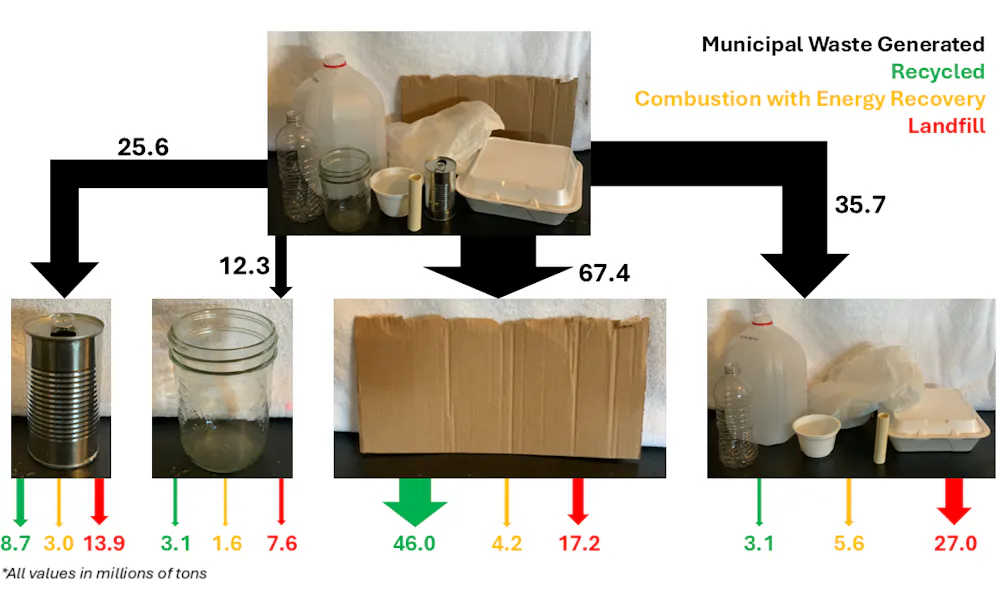
Photos and arrows show how much of each type of product is recycled.
A breakdown of U.S. recycling by millions of tons shows about two-thirds of all paper and cardboard gets a second life, but only about a third of metal, a quarter of glass and less than 10% of plastics do. Alex Jordan/University of Wisconsin-Stout

So, what makes plastic recycling so difficult? As an engineer whose work focuses on reprocessing plastics, I have been exploring potential solutions.

How does single-stream recycling work?

In cities that use single-stream recycling, consumers put all of their recyclable materials − paper, cardboard, plastic, glass and metal − into a single bin. Once collected, the mixed recyclables are taken to a materials recovery facility, where they are sorted.

First, the mixed recyclables are shredded and crushed into smaller fragments, enabling more effective separation. The mixed fragments pass over rotating screens that remove cardboard and paper, allowing heavier materials, including plastics, metals and glass, to continue along the sorting line.

The basics of a single-stream recycling system in Pennsylvania. Source: Van Dyk Recycling Solutions.

Magnets are used to pick out ferrous metals, such as steel. A magnetic field that produces an electrical current with eddies sends nonferrous metals, such as aluminum, into a separate stream, leaving behind plastics and glass.

The glass fragments are removed from the remaining mix using gravity or vibrating screens.

That leaves plastics as the primary remaining material.

While single-stream recycling is convenient, it has downsides. Contamination, such as food residue, plastic bags and items that can’t be recycled, can degrade the quality of the remaining material, making it more difficult to reuse. That lowers its value.

Having to remove that contamination raises processing costs and can force recovery centers to reject entire batches.

A mound of items send for recycling includes a lot of plastic bags.
Plastic bags, food residue and items that can’t be recycled can contaminate a recycling stream. City of Greenville, N.C./Flickr

Which plastics typically can’t be recycled?

Each recycling program has rules for which items it will and won’t take. You can check which items can and cannot be recycled for your specific program on your municipal page. Often, that means checking the recycling code stamped on the plastic next to the recycling icon.

These are the toughest plastics to recycle and most likely to be excluded in your local recycling program:

  • Symbol 3 – Polyvinyl chloride, or PVC, found in pipes, shower curtains and some food packaging. It may contain harmful additives such as phthalates and heavy metals. PVC also degrades easily, and melting can release toxic fumes during recycling, contaminating other materials and making it unsafe to process in standard recycling facilities.

  • Symbol 4 – Low-density polyethylene, or LDPE, is often used in plastic bags and shrink-wrap. Because it’s flexible and lightweight, it’s prone to getting tangled in sorting machinery at recycling plants.

  • Symbol 6 – Polystyrene, often used in foam cups, takeout containers and packing peanuts. Because it’s lightweight and brittle, it’s difficult to collect and process and easily contaminates recycling streams.

Which plastics to include

That leaves three plastics that can be recycled in many facilities:

  • Symbol 1 – Polyethylene terephthalate, or PET, widely used in soda bottles.

  • Symbol 2 – High-density polyethylene, or HDPE, commonly used in milk jugs and laundry detergent bottles.

  • Symbol 5 – Polypropylene, PP, used in products such as pill bottles, yogurt cups and plastic utensils.

However, these aren’t accepted in some facilities for reasons I’ll explain.

Taking apart plastics, bead by bead

Some plastics can be chemically recycled or ground up for reprocessing, but not all plastics play well together.

Simple separation methods, such as placing ground-up plastics in water, can easily remove your soda bottle plastic (PET) from the mixture. The ground-up PET sinks in water due to the plastic’s density. However, HDPE, used in milk jugs, and PP, found in yogurt cups, both float, and they can’t be recycled together. So, more advanced and expensive technology, such as infrared spectroscopy, is often required to separate those two materials.

Once separated, the plastic from your soda bottle can be chemically recycled through a process called solvolysis.

It works like this: Plastic materials are formed from polymers. A polymer is a molecule with many repeating units, called monomers. Picture a pearl necklace. The individual pearls are the repeating monomer units. The string that runs through the pearls is the chemical bond that joins the monomer units together. The entire necklace can then be thought of as a single molecule.

During solvolysis, chemists break down that necklace by cutting the string holding the pearls together until they are individual pearls. Then, they string those pearls together again to create new necklaces.

Other chemical recycling methods, such as pyrolysis and gasification, have drawn environmental and health concerns because the plastic is heated, which can release toxic fumes. But chemical recycling also holds the potential to reduce both plastic waste and the need for new plastics, while generating energy.

The problem of yogurt cups and milk jugs

The other two common types of recycled plastics − items such as yogurt cups (PP) and milk jugs (HDPE) − are like oil and water: Each can be recycled through reprocessing, but they don’t mix.

If polyethylene and polypropylene aren’t completely separated during recycling, the resulting mix can be brittle and generally unusable for creating new products.

Chemists are working on solutions that could increase the quality of recycled plastics through mechanical reprocessing, typically done at separate facilities.

One promising mechanical method for recycling mixed plastics is to incorporate a chemical called a compatibilizer. Compatibilizers contain the chemical structure of multiple different polymers in the same molecule. It’s like how lecithin, commonly found in egg yolks, can help mix oil and water to make mayonnaise − part of the lecithin molecule is in the oil phase and part is in the water phase.

In the case of yogurt cups and milk jugs, recently developed block copolymers are able to produce recycled plastic materials with the flexibility of polyethylene and the strength of polypropylene.

Improving recycling

Research like this can make recycled materials more versatile and valuable and move products closer to a goal of a circular economy without waste.

However, improving recycling also requires better recycling habits.

You can help the recycling process by taking a few minutes to wash off food waste, avoiding putting plastic bags in your recycling bin and, importantly, paying attention to what can and cannot be recycled in your area.The Conversation

Alex Jordan, Associate Professor of Plastics Engineering, University of Wisconsin-Stout

This article is republished from The Conversation under a Creative Commons license. Read the original article.
Lakeport Community Cleanup Day set to take place April 26

LAKEPORT, Calif. — The Lakeport Spring Community Cleanup Day is set to take place on Saturday, April 26.

It will be held from 8 a.m. to 2 p.m. at the Shoreline Shopping Center parking lot, 347 Lakeport Blvd., behind Bruno’s ShopRite and near Dollar Tree.

The event is a good time to spring clean that garage, attic or spare room.

Lakeport residents and business owners can bring accepted items for disposal and help keep the city looking its best.

Participants must stay in their vehicles while staffers unload materials.

There is a two-visit maximum per city of Lakeport address.

Bring a photo identification and a current city of Lakeport utility bill to participate.

Accepted materials are household trash, televisions and appliances (stoves, washers, dryers), electronic waste, mattresses and furniture, and unusable clothes, blankets and towels.

They will not accept refrigerators, hot tubs, air conditioners, construction debris, used tires and household hazardous waste.

For more details, visit the city website or contact Lakeport Disposal at 707-263-6080.

State Senate forms Special Committee on International Sporting Events for 2028 Olympics and World Cup Soccer

Senate President pro Tempore Mike McGuire (D-North Coast) on Tuesday announced the creation of a special committee on International Sporting Events.

The bipartisan committee of 11 senators is tasked with ensuring the state’s preparedness to host both the 2026 World Cup and 2028 Olympics.

The FIFA World Cup is estimated to bring in more than half a billion dollars to both the Bay Area and Los Angeles.

Meanwhile, the 2028 Olympics are projected to create nearly 80,000 new full-time jobs with an $11 billion economic impact. Millions of spectators are expected to flock to the state for both events.

California will be in the global spotlight for both major events and the committee will help ensure the infrastructure, transportation, public safety, tourism, and hospitality industries are fully equipped to meet demand.

“The opportunities for this state with these two massive worldwide events are endless,” Sen. McGuire said. “It’s such an honor for the Golden State to be hosting the World Cup and the 2028 Olympics. That said, stakes are high and we must be prepared. The committee is poised to help meet the demands and expectations advanced by these events and to ensure their success. This new Senate committee will help ensure the Golden State will be ready to go, the welcome mat is rolled out, and the experience is world class.”

“The Senate is kicking into high gear to prepare for the Olympics and World Cup,” said Special Committee Chair Sen. Ben Allen (D-Santa Monica). “After the devastation my community experienced during the Los Angeles fires, it’s critical that we have the tools we need to rebuild and showcase California’s best to the world. We’ve got a ton of work ahead of us and I’m deeply grateful to Pro Tem McGuire for appointing me to this role.”

“With two major sporting events headed to California in just a few short years, we must be prepared and ready to go,” said Special Committee Vice-Chair Sen. Maria Elena Durazo (D-Los Angeles). “From the World Cup to the Olympics, the investments we make now will uplift both the greater LA region and the entire Bay Area. I am honored to be appointed as vice-chair by Pro Tem McGuire and I look forward to helping bring these world-class events to life.”

The Senate Special Committee will be holding a series of hearings in the coming months.

The Special Committee will be chaired by Sen. Ben Allen (D-Santa Monica), vice-chaired by Sen. Maria Elena Durazo (D-Los Angeles), and will include the following Senators: Sen. Bob Archuleta (D-Pico Rivera), Sen. Dave Cortese (D-San Jose), Sen. Lena Gonzalez (D-Long Beach), Sen. Laura Richardson (D-South Bay), Sen. Susan Rubio (D-Baldwin Park), Sen. Lola Smallwood-Cuevas (D-Los Angeles), Sen. Tom Umberg (D-Santa Ana), Sen. Suzette Martinez Valladares (R-Santa Clarita), and Sen. Aisha Wahab (D-Silicon Valley).

Middletown teachers vote to authorize potential strike; bargaining session scheduled

MIDDLETOWN, Calif. — Middletown Unified’s teachers union said its members are ready to strike as negotiations with the district leadership continue.

On Monday afternoon, the Middletown Teachers Association, or MTA, announced that its membership had overwhelmingly voted to authorize a potential strike.

Altogether, 96% of the union’s teachers decided they are ready to strike if necessary, union officials reported.

Union representative Diego Santelices told Lake County News that the strike authorization vote took place on Wednesday, April 16.

That vote allows the union leadership to call for a strike if teachers don’t see significant movement towards an agreement with their district in negotiations, the union reported.

“We are hopeful it doesn’t have to get to that point,” MTA negotiator and a 34-year MUSD veteran, Jennifer Pyzer said of the strike. “But we will do whatever it takes to show our commitment to fighting for our students and the community.”

The union said its teachers have cited “a lack of transparency and communication that hinders their ability to serve their most vulnerable students, as well as issues with compensation for their multilingual staff. Teachers are also seeking raises as the cost of living skyrockets.”

“Our teachers are sending a message to our new superintendent: respect our work and respect our students,” Middletown Teachers Association Co-President Adam Stevens said in the statement. “Teachers know it is crucial for us to be actively involved in supporting our special education students, and we want to be there for meetings that discuss their progress and challenges. Why this administration does not respect this part of the process is beyond me.”

On the district side, Jeff Crane, who became Middletown Unified’s superintendent last spring, said the union and district have a bargaining session planned for May 2 and the district is “optimistic that we can make progress on these issues.”

Crane added, “The work that MUSD educators do every day for our students is valuable. MUSD administration looks forward to continuing to work with MTA leadership toward a solution that benefits our staff and students and balances the realities of our financial situation. We have a structural deficit that has required us to implement a deficit elimination plan that will hopefully enable us to avoid the massive reductions that are being made in other districts throughout the state.”

Santelices said that the union — affiliated with both the California Teachers Association and the National Education Association — was formed more than 30 years ago, and that veteran educators like Pyzer haven’t held a strike vote before.

Middletown Teachers Association and Middletown Unified are currently awaiting the start of the fact-finding process of the impasse procedure.

California Public Employment Relations Board, or PERB, records show that the teachers union filed its impasse request on Feb. 14.

That request, along with mediation, was approved on Feb. 20, according to PERB records.

Once a hearing is held and a report is delivered, the teachers will be legally eligible to go on strike, the union reported.

Email Elizabeth Larson at This email address is being protected from spambots. You need JavaScript enabled to view it.. Follow her on Twitter, @ERLarson, and on Bluesky, @erlarson.bsky.social. Find Lake County News on the following platforms: Facebook, @LakeCoNews; X, @LakeCoNews; Threads, @lakeconews, and on Bluesky, @lakeconews.bsky.social.

Annual Lake County invasive weeds tours to be held May 8 and 9

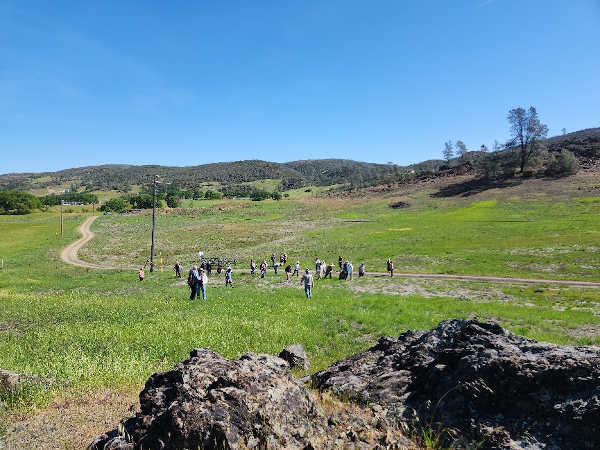
Wildflower and native grass restoration area at the McLaughlin Reserve, during the 2023 Lake County Invasive Weed Management Area Weed Tour. Photo Credit: A. De Palma-Dow.

LAKE COUNTY, Calif. — The Lake County Weed Management Area has announced its annual “Invasive Weeds Tour for 2025.”

This year they are offering two tours on consecutive days; one showcasing aquatic and wetland plants that grow in and around Clear Lake (and efforts to remove invasive species from around the Clear Lake shoreline), and the second highlighting weeds of grasslands and oak woodlands and restoration of native wildflowers at the McLaughlin Reserve.

As always, this event is freeopen to the public.

The tours are as follows.

Thursday May 8, 9 a.m. to noon: Aquatic Weed Tour at Clear Lake State Park.

Join staff from Lake County’s Land Trust and Resource Conservation District as they dive into the world of aquatic plants and wetland weeds of Clear Lake and the broader county.

Aquatic and wetland plant specimens and examples will be presented to facilitate hands-on learning and education.

With partnership from Tribal EcoRestoration Alliance and Big Valley Rancheria, attendees will learn about recent invasive plant management efforts around the lake, including at the State Park.

Outreach materials and display tables will provide an opportunity to dig deeper. Parking is free (by the Marina Pavilion, across from the Visitor Center); just inform the front entrance kiosk staff that you are attending the 2025 Weed Tour.

Friday May 9, 9 a.m. to noon. Weeds and Wildflowers at the McLaughlin Natural Reserve

Join staff from the University of California’s McLaughlin Natural Reserve to learn how invasive plants, especially annual grasses, have reduced native wildflower displays in Lake County.

On this tour, they will view areas of the reserve where wildflowers have been restored by removing invasive species. Prescribed fire, cattle grazing, herbicides, mowing and hand pulling are all tools to control weeds and restore wildflowers.

They are expecting robust wildflower displays in May this year, so bring your camera. Guests are invited to meet at the McLaughlin Reserve Headquarters (26775 Morgan Valley Road) to carpool for our field tour, which will involve walking about a quarter mile on gentle terrain.

For both tours, please bring hats, sunscreen, lunch or a snack, drinking water, and your questions about plants and the lake. Please wear sturdy shoes that are free of seeds and mud and bring gloves if you want some hands-on weed removal experience.

The annual invasive weed tours are sponsored by the Lake County Department of Agriculture and the Lake County Resource Conservation District.

No reservations are required. Please contact the Office of the County Agricultural Commissioner at 707-263-0217 if you have any questions.

What is a Weed Management Area?

County agricultural commissioners frequently bring together parties with mutual interest in working on Invasive Weed Management projects, and these collectives are referred to as, “Weed Management Areas,” or WMAs.
  • 249
  • 250
  • 251
  • 252
  • 253
  • 254
  • 255
  • 256
  • 257
  • 258

Community

  • Sheriff’s Activities League and Clearlake Bassmasters offer youth fishing clinic

  • City Nature Challenge takes place April 24 to 27

Public Safety

  • Lakeport Police logs: Wednesday, Feb. 11

  • Lakeport Police logs: Tuesday, Feb. 10

Education

  • Ramos measure requiring school officer training in use of anti-opioid drug moves forward

  • Lake County Chapter of CWA announces annual scholarships 

Health

  • California ranks 24th in America’s Health Rankings Annual Report from United Health Foundation

  • Healthy blood donors especially vital during active flu season

Business

  • Employment law summit takes place March 9

  • Two Lake County Mediacom employees earn company’s top service awards

Obituaries

  • Terry Knight

  • Ellen Thomas

Opinion & Letters

  • Who should pay for AI’s power? Not California ratepayers

  • Crandell: Supporting nephew for reelection in supervisorial race

Veterans

  • State honors fallen chief warrant officer killed in conflict in Iran

  • CalVet and CSU Long Beach team up to improve data collection related to veteran suicides

Recreation

  • April Audubon program will show how volunteers can help monitor local osprey nests

  • First guided nature walk of spring at Anderson Marsh State Historic Park April 11

  • Second Saturday guided nature walks continue at Anderson Marsh State Historic Park

  • Wet weather trail closure in effect on Upper Lake Ranger District

Religion

  • Kelseyville Presbyterian Church plans Easter service

  • Easter ‘Sonrise’ Service returns to Xabatin Community Park

Arts & Life

  • ‘CIA’ delves into the shadowy world of an espionage thriller

  • ‘War Machine’ shifts the battlefield into uncharted territory

Government & Politics

  • Lake County Democratic Central Committee endorses Falkenberg

  • Crandell launches reelection campaign plans March 15 event

Legals

  • April 23 hearing on Lake Coco Farms Major Use Permit

  • NOTICE OF 30-DAY PUBLIC COMMENT PERIOD & NOTICE OF PUBLIC HEARING

How to resolve AdBlock issue?
Refresh this page