How to resolve AdBlock issue?
Refresh this page
How to resolve AdBlock issue?
Refresh this page
Lake County News,California
  • Home
    • Registration Form
  • News
    • Community
      • Obituaries
      • Letters
      • Commentary
    • Education
    • Veterans
    • Police Logs
    • Business
    • Recreation
    • Health
    • Religion
    • Legals
    • Arts & Life
    • Regional
  • Calendar
  • Contact us
    • FAQs
    • Phones, E-Mail
    • Subscribe
  • Advertise Here
  • Login
How to resolve AdBlock issue?
Refresh this page
How to resolve AdBlock issue?
Refresh this page

News

Work crew finds body along road in Clearlake

CLEARLAKE, Calif. — Police said the body of a man was found along the road by city workers in Clearlake on Wednesday afternoon.

The Clearlake Police Department did not release the name of the man, said to be in his 40s, pending the notification of next of kin.

Lt. Ryan Peterson said that at 1:30 p.m. Wednesday, Clearlake Public Works employees were conducting vegetation removal in the area of Old Highway 53 and Cache Creek Way when they discovered the body.

They contacted the police department and officers responded to the scene, Peterson said.

The investigation is ongoing, and Peterson said the cause of the person’s death will be pending the completion of an autopsy.

However, there was no evidence to indicate any signs of foul play, Peterson said.
Details
Written by: Lake County News reports
Published: 25 April 2024

CDPH urges Californians to dispose of unneeded medications on Prescription Drug Take Back Day

The California Department of Public Health is encouraging Californians to take part in National Prescription Drug Take Back Day on Saturday, April 27.

Hundreds of free take-back events will take place in communities across the state, where unused or expired prescription drugs or vaping devices — which are used to deliver a number of non-medical substances — can be disposed of safely.

"Keeping unused or expired prescriptions at home is dangerous because of their potential to be accidentally ingested, stolen, or misused," said CDPH Director and State Public Health Officer Dr. Tomás Aragón. “National Prescription Drug Take Back Day offers a simple solution for Californians to get rid of unneeded prescription drugs and vaping devices responsibly, which could save lives and helps protect the environment."

The Lakeport Police Department is participating in the United States Drug Enforcement Administration National Prescription Drug Take Back Day on Saturday, April 27, from 10 a.m. to 2 p.m.

The event will be held at the front lobby entrance of the police station at 2025 S. Main St.

Prescription medications in the form of pills, patches, and sealed liquids can be dropped off with no questions asked.

Similarly, vaping devices (minus batteries) and cartridges – which can be used to deliver nicotine, cannabis (THC, CBD), may also be discarded. Sharp objects (sharps) like needles or syringes will not be accepted.

For information on how to safely dispose of sharps waste, please visit the Safe Needle Disposal website.

During the National Prescription Drug Take-Back event in April 2023, federal, state and local law enforcement partners across the country collected 332 tons of unwanted prescription drugs. Of that, Californians disposed of more than 40,000 pounds of unwanted drugs.

In Lakeport alone, the police department has collected over 1,257 pounds of prescription drugs since it began participating in this program in January 2019.

According to the 2022 National Survey on Drug Use and Health, 8.5 million individuals misused prescription pain relievers, 4.3 million misused prescription stimulants, and 4.8 million misused prescription tranquilizers or sedatives in 2022.

The survey revealed that the majority of misused prescription drugs were obtained from family and friends, often sourced from home medicine cabinets. Removing unwanted and unneeded drugs from the house is an important way to keep loved ones safe.

National Prescription Drug Take Back Day is part of the state’s larger efforts to connect Californians with resources and information to prevent and reduce drug overdoses and deaths.

Last year, Gov. Gavin Newsom announced California's Master Plan for tackling opioids and launched a comprehensive opioid website that gives Californians a single source of prevention, data, treatment, and support information.
Details
Written by: Lake County News reports
Published: 25 April 2024

Cannabis legalization has led to a boom in potent forms of the drug that present new hazards for adolescents


Many of today’s cannabis products barely resemble the ‘weed’ that most middle-aged adults grew up with. VladK213/iStock via Getty Images

Perhaps it is a pop culture reference that sparks the realization. For me, this moment happened when I was in my late 20s and working with adolescents in school settings to help them quit smoking. When other drugs would occasionally come up, I didn’t understand some of the slang terms they used for these drugs. Many people may have that feeling now when the topic of cannabis comes up – especially in its different and newer forms.

As a professor of psychology, I focus my research on substance use in adolescents and young adults. A major change during my time in research is the legalization and explosion of cannabis availability across the U.S.

There are arguments for and against increasing legalization of cannabis for adult use in the U.S., but expanded access to legal cannabis also may have unintended consequences for adolescents. These consequences are compounded by the increasing potency of some cannabis products.

A shifting landscape

I use the word “cannabis” since it refers to the plant from which the drugs are derived. It also serves as a catch-all term for any substance with chemical compounds from cannabis plants and addresses concerns that the word marijuana has some long-standing racist overtones.

Cannabis now comes in a larger variety of forms than it used to. When most people over 40 think of cannabis, they imagine its dried form for smoking. This cannabis was not particularly strong: The average THC concentration of cannabis seized by the Drug Enforcement Agency in 1995 was 4%, while it was roughly 15% in 2021.

In addition to the smoked form, some might remember an edible form, often baked into a dessert like a brownie, or hashish, which is derived from more potent parts of the cannabis plant.

Today there are many different cannabis concentrates that have high levels of THC, typically ranging from 40% to 70%, and more than 80% in some cases, depending on the method of extraction.

These include oils that can be vaporized by vape or dab pens, waxier substances and even powders.

Regulations like those in Colorado trail far behind the fast-moving market of cannabis concentrates.

How cannabis derivatives interact with the brain

THC and cannabidiol, or CBD, are the most common chemicals in cannabis. Each one interacts with the brain in different ways, producing different perceived effects.

CBD does not produce the same “high” that THC does, and cannabidiol may have benefits as a medication for severe epilepsy, as well as other potential but as yet unproven medical uses. The differences between THC and CBD come from how they interact with cannabinoid receptors – the proteins onto which these drugs attach – in the brain and body.

However, CBD can also make people sleepy, alter mood in unintended ways and cause stomach upset. Never use a CBD product without consulting a physician.

The changing nature of cannabis products

THC is the chemical most strongly associated with the high from cannabis. By increasing the amount of THC, concentrated products can increase blood levels of THC rapidly and more strongly than nonconcentrates such as traditional smoked cannabis.

Cannabis concentrates also come in many different forms that range from waxy or creamy to hard and brittle. They are made in a variety of ways that may require dry ice, water or flammable solvents such as butane.

The myriad names for cannabis concentrates can be confusing. Concentrate names include “budder,” which refers to a yellowish paste like frosting; “shatter” is made similarly to budder but comes in a thin, brittle and translucent form; there’s also “wax” or “crumble,” which confusingly is not waxy but is more like a powdery or grainy substance; and “keef” or “kief,” which is powdery in nature and derived from the most potent parts of the cannabis plant. It is similar to hashish.

Adolescents’ use of high-potency cannabis products leads to a higher risk for psychotic breaks, schizophrenia, paranoia, anxiety and other conditions, as well as cannabis dependence.

The names change regularly and can vary by guide or from person to person. It is best to ask what a term means from an open and curious place than to act as if you know all the terminology.

Many concentrates are vaporized and inhaled. Vaporizing is different than smoking, as vaporizing heats the concentrate until it becomes a gas, which is inhaled. Smoking involves burning the compound to produce an inhaled gas.

Many who vaporize concentrates call it “dabbing.” This refers to the dab of concentrate to heat, vaporize and inhale.

Another way to vaporize cannabis concentrates is to use a vape pen. Vape pens are sometimes also called dab pens, depending on the local terms.

Marijuana buds and THC oil with various smoking accessories lying on a table.
A selection of cannabis accessories, including a dab pen in the foreground. HighGradeRoots/iStock via Getty Images

Cannabis use and adolescents

One of the reasons why young people are drawn to these sorts of products is that vaping or dabbing the concentrated form makes it easier to hide cannabis use. Vaping cannabis does not create the typical smell associated with weed.

A 2021 systematic review found that past-year cannabis vaping nearly doubled from 2017 to 2020 in adolescents - jumping from 7.2% to 13.2%. A more recent study in five northeastern U.S. states found that 12.8% of adolescents vaped cannabis in the past 30 days, a more narrow time frame that suggests potential increases in use. In addition, a 2020 study found that one-third of adolescents who vape do so with cannabis concentrates.

Cannabis use by adolescents is scary because it can alter the way their brains develop. Research shows that the brains of adolescents who use cannabis are less primed to change in response to new experiences, which is a key part of adolescent development. Adolescents who use cannabis are also more likely to experience symptoms of schizophrenia, struggle more in school and engage in other risky behaviors.

The risks of cannabis use are even greater with concentrates because of the high levels of THC. This is true for both adolescents and adults, with greater risk for symptoms of schizophrenia such as hallucinations and delusions, mental health symptoms and more severe cannabis use.

The best analogy is with another drug – alcohol. Most people know that a 12-ounce beer is much less potent than 12 ounces of vodka. Cannabis in smoked form is closer to the beer, while a concentrate is more like the vodka. Neither is safe for an adolescent, but one is even more dangerous.

These dangers make early conversations with kids about cannabis and cannabis concentrates critically important. Research consistently shows that expressing disapproval of drug use makes adolescents less likely to start drug use.

Start these conversations early – ideally before middle school. You can find some helpful online resources to guide the conversation.

While these conversations can be uncomfortable, and you can look like the out-of-touch adult, they can be a major step toward preventing adolescents from using cannabis and other drugs.


This article is part of Legal cannabis turns 10, a series examining the impact of a decade of recreational cannabis use.

You may be interested in:

Mounting research points to health harms from cannabis, THC and CBD use during pregnancy, adolescence and other periods of rapid development

Cannabis holds promise for pain management, reducing the need for opioid painkillers – a neuropharmacology expert explains how

Cannabis-derived products like delta-8 THC and delta-10 THC have flooded the US market – two immunologists explain the medicinal benefits and potential risksThe Conversation


Ty Schepis, Professor of Psychology, Texas State University

This article is republished from The Conversation under a Creative Commons license. Read the original article.

Eventually, most adults reach a point where we realize we are out of touch with those much younger than us.
Details
Written by: Ty Schepis, Texas State University
Published: 25 April 2024

Kelseyville Unified Board postpones discussion on Indigenous peoples proclamation

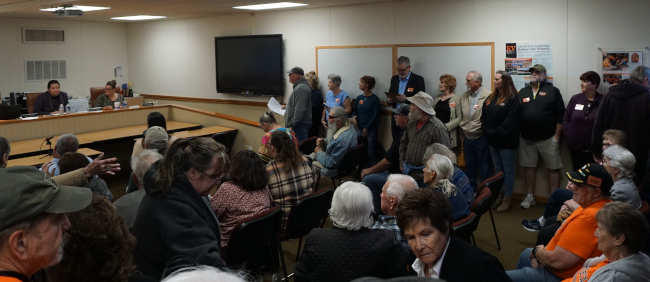
Community members were packed into the Kelseyville Unified School Board’s meeting room on the evening of Tuesday, April 23, 2024. Photo by Elizabeth Larson/Lake County News.

KELSEYVILLE, Calif. — A planned discussion about a proclamation about Indigenous peoples at Tuesday evening’s Kelseyville Unified School District meeting was postponed after an overflow crowd showed up for the item.

The board was set to consider approving the proclamation, written by Clerk Gilbert Rangel, that has a stated purpose of honoring Indigenous peoples and pledging to begin the practice of land acknowledgements at major events.

However, an earlier version of the proclamation appeared to suggest support for changing the name of Kelseyville, and as a result it has led to pushback from a group of community members opposed to the name change process that’s now before the U.S. Board on Geographic Names.

The result was that at 7 p.m., after the board emerged from a closed session, more than 100 people crammed into the district office boardroom, which has a capacity of 35 people. As many as 30 more people were standing outside of the building.

Rob Brown, a well-known local businessman and former District 5 member of the Lake County Board of Supervisors, asked school Board President Rick Winer to table the proclamation discussion and reschedule it for a special meeting in a larger facility.

“This is not legal,” Brown said of the big group crowded into the small boardroom.

His request drew a round of applause from the group.

“I’ve never been in a situation like this,” Winer said.

Brown said it’s unfortunate that there aren’t crowds that big showing up for things that affect children.

It took several minutes for the board to decide how to handle the matter. Brown advised that they vote to approve the agenda while tabling the discussion, which they ultimately did.

Businessman Mark Borghesani, whose family owns Kelseyville Lumber, said he had emailed the district last week to ask that the meeting be moved from the district office to a larger space at the high school across the street. “And obviously nobody listened to us.”

District officials indicated they didn’t yet have a date for the special meeting.

The board then took a brief recess before continuing with the rest of its business on Tuesday evening.

Outside of the room, several loud and spirited discussions — and, in some cases, arguments — were taking place between proponents and opponents of the name change.

Batsulwin Brown, a member of the Elem Colony of Pomo and a county planning commissioner, said Holocaust survivors got to tell their stories.

In another discussion nearby, Kelseyville resident Wayne Myers said people needed to stop holding on to the hate.

“As long as you hold onto the hate, it will stay here,” he said.

Email Elizabeth Larson at This email address is being protected from spambots. You need JavaScript enabled to view it.. Follow her on Twitter, @ERLarson, or Lake County News, @LakeCoNews.
Details
Written by: Elizabeth Larson
Published: 24 April 2024
  1. Habitat restoration project receives $2.5 million
  2. Transporting hazardous materials across the country isn’t easy − that’s why there’s a host of regulations in place
  3. California Department of Water Resources updates allocation of State Water Project supplies for 2024

Subcategories

Community

  • 696
  • 697
  • 698
  • 699
  • 700
  • 701
  • 702
  • 703
  • 704
  • 705
How to resolve AdBlock issue?
Refresh this page
Copyright © 2026 Lake County News,California. All Rights Reserved.